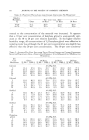
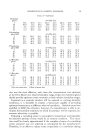
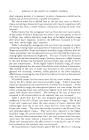
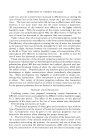
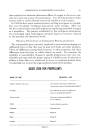
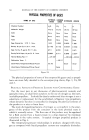
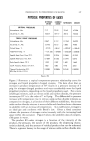
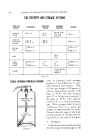
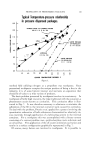
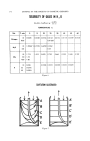
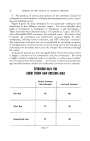
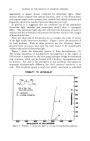
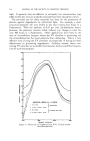
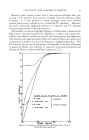
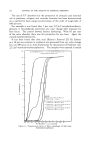
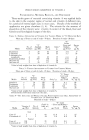
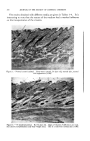
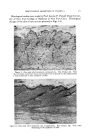
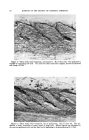
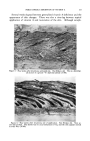
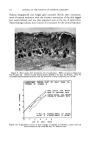
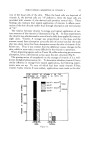
PROPELLENTS IN PRESSURIZED PACKAGING 353 All ooe the above data were obtained with a 7-ounce fill of toothpaste in a 6-ounce seamless can using 100 pounds of pressure. Commercially the dispensing spout is oriented or registered with the curvature of the dip tube which permits the bulk to gravitate down to the final usage of the product preventing undue tube exposure to the propelling gas. 2. Cosmetics Various cosmetic systems have been evaluated and one which appears to be gaining considerable consumer acceptance is the liquid cream hair dressing pressurized under nitrogen. An oil-in-water system of this type of product was studied in our laboratories. The viscosity of the bulk was 15,000 cps. at 70øF., using a Number 3 spindle at 4 r.p.m. with a Brook- field RVF viscometer. The fill was 4.75 ounces in a 6-ounce metal container with a pressure of 100 psig. Figure 9 gives the data concerning the ex- trusion both in lubricated and unlubricated containers. These data were obtained on an intermittent basis comparable to the use of the product at the consumer level. Additional experiments were conducted using 50 pounds of pressure instead of 100 pounds. The extrusion under 50 psig. using this same bulk was in excess of 95 per cent. No final conclusions as to the efficacy of the lubricated versus nonlubricated systems are to be drawn from this study since the experimental test methods are some- what subjective and the data garnered fall within the realm of human errors in dispensing, measuring and weighing. What is particularly significant is that the same order of magnitude of extrusion was obtained with the lower pressure, 50 pounds, as with the higher pressure, 100 pounds. It would appear that where the question is posed concerning the use of the minimum amount of pressure to satisfy extrusion requirements, it should be pointed out that the added pressure is advisable as an assurance measure. Thus, if for some reason the consumer misuses the container by inverting it he might at the first hiss of gas through the valve react by releasing the actuator and correcting the position of the can according to the directions on it. Although the total reservoir of gas is minute compared with lique- fied propellents, with the application of 100 pounds of pressure an adequate amount of gas may still be left after a slight accidental discharge to permit extrusion of a considerable supply of the product. Additional products were investigated and are in one respect or another similar to the previous two items discussed. For instance, an oil-in-water cream hair rinse with a viscosity of 10,000 cps. at 73øF., taken with a T-A spindle at 2 r.p.m., was pressurized to 100 pounds with nitrogen and showed an extrusion of 92 per cent of the contents on continuous actuation of the valve. Intermittent extrusion results showed 97.5 per cent. This differ- ential is entirely logical since on continuous actuation the product does not have the opportunity to drain clean from the walls of the container.

354 JOURNAL OF THE SOCIETY OF COSMETIC CHEMISTS Additional areas of research and development involve the dispensing of antibiotics, antiseptics, cough syrup, multivitamin preparations, nasal and oral sprays, corticoid derivatives and liquid sweeteners based on sac- charin and cyclamate. Limitations of Pressurized Packaging Certain limitations of nitrogen packaging may be noted here. 1. Misuse of the Product The major limitation of this type of packaging is the misuse of the prod- uct. Since the amount of inert gas is normally very small, and in the order of magnitude of approximately 0.5 gram, the accidental discharge of gas by inverting the container and actuating the valve would, in most instances, dissipate the bulk of the propelling force. The downward design of the dispensing spout visibly emphasizes the usage of the product in its correct position. In addition, it should be pointed out that of several million units that have been packed by our company, the incidence of complaints due to the loss of gas has been nil. 2. Limiting lZiscosi(y Nitrogen can propel products from thin liquids to fairly viscous products without altering the original physical states of these products. Beyond the optimum viscosity range for optimum extrusion, and this range may vary depending on the product under consideration, the nitrogen will not function as a piston uniformly over the entire surface but will vortex down through the bulk and discharge itself rather than the product. 3. Limitation of Spray Direction for Mists With refrigerant type of fluorinated propellent systems utilizing a vapor tap valve system a liquid may be sprayed in any direction because of the large reservoir of energy associated with the liquid portion of the propel- lent, a small amount of gas escaping through the vapor tap does not signifi- cantly affect the spray rate, the spray pattern and pressure system. With nitrogen the gas loss resulting from the inversion of the container would quantitatively exhaust this propellent. ¾. Coarseness of Spray Pattern At this time the mist spray pattern of pressurized nitrogen products is still fairly coarse and cannot be considered air-borne. An air-borne particle is judged to be in the order of 40 microns. Nevertheless, future valve developments undoubtedly will allow us to achieve a much finer spray pattern than is now available. 5. Engineering of Nitrogen Pressure Filling Unless adequate crimping and testing measures are assured, consider-
Purchased for the exclusive use of nofirst nolast (unknown)
From: SCC Media Library & Resource Center (library.scconline.org)