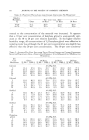
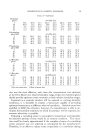
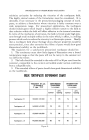
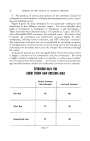
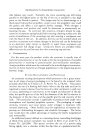
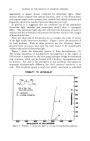
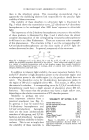
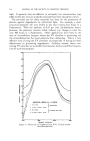
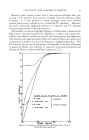
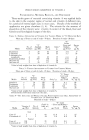
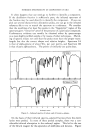
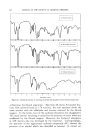
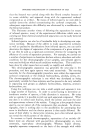
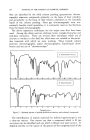
HUMECTANTS IN COSMETIC EMULSIONS 333 Propylene glycol 5 14.1 95.9 10 10.8 73.5 15 9.1 61.9 20 9.3 63.3 25 6.2 42.2 Polyethylene glycol 400 5 24.7 139.5 10 16.7 94.4 15 16.1 91.0 20 15.7 88.7 25 15.3 86.4 Polyethylene glycol 400 5 13.0 88.4 10 10.6 72.1 15 9.8 66.6 20 8.8 59.9 25 7.6 51.7 1,3 Butylene glycol 5 3O. 1 170.1 10 17.2 97.2 15 18.1 102.3 20 12.8 72.3 25 14.1 79.7 1,3 Butylene glycol 5 13.0 88.4 10 11.0 74.8 15 8.9 60.5 20 7.4 50.3 25 7.3 49.7 T^B LE 3--Continued 60-70% R.H. 25.5 102.0 35.6 106.3 42.4 18.6 74.4 25.9 77.3 30.9 16.8 67.2 25.0 74.6 30.2 12.7 50.8 19.3 57.6 23.4 12.1 48.4 19.3 57.6 23.0 10-20% R.H. 38.1 131.8 50.3 135.9 58.3 24.7 85.5 32.2 87.0 37.1 24.0 83.0 31.9 86.2 36.0 22.3 77.2 29.1 78.6 32.9 22.5 77.9 29.4 79.5 32.9 21.2 18.4 16 8 15 3 12 5 107.6 78.4 76.6 59.4 58.4 45 1 25.2 26.6 19.2 20.3 127.0 80.8 78.4 71.7 71.7 60-70% R.H. 84.8 28.0 83.6 33.1 84.0 73.6 24.8 74.0 29.9 75.9 67.2 23.4 69.9 27.8 70.6 61.2 21.4 63.9 25.3 64.2 50.0 17.1 51.0 19.9 50.5 10-20% R.H. 156.1 57.2 154.6 65.2 87.2 32.0 86.5 36.8 92.0 34.8 94.1 39.4 66.4 24.4 65.9 28.1 70.2 25.6 69.2 29.1 60-70% R.hr. 22.5 90.0 31.2 93.1 37.4 18.9 75.6 25.9 77.3 30.8 15.8 63.2 22.2 66.3 26.0 13.1 52.4 19.1 57.0 22.1 12.8 51.2 19.3 57.6 22.7 142.0 8O 2 85 8 61 2 63 4 94 9 78 2 66.0 56.1 57.6 * Per cent water loss. t Rate of water loss. tion was the most effective, and, since this concentration was optimum at the 10 to 20 per cent relative humidity range, 10 per cent butylene glycol should provide optimum water retention at both relative humidity ranges. Inasmuch as a cosmetic product will be exposed to varying humidity conditions, it is desirable to employ a humectant capable of providing optimum humectancy at different relative humidities. Sorbitol seems best qualified to fulfill this criterion however, if a manufacturer is able to an- ticipate the humidity conditions to which his product will be exposed, hu- mectant selectivity is possible. Exposing a vanishing cream to atmospheric temperature and humidity for extensive periods of time would be an extreme condition. This situa- tion could be closely approximated if the complete closure of a vanishing cream container was not achieved as anticipated by the manufacturer. Therefore, in an effort to reduce water evaporation to a minimum during

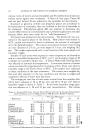
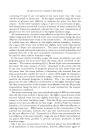
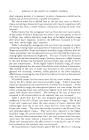
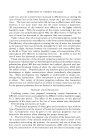
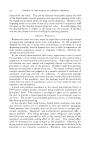
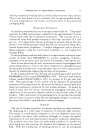
334 JOURNAL OF THE SOCIETY OF COSMETIC CHEMISTS short exposure periods, it is necessary to select a humectant which has the slowest rate of water loss from a specific formulation. The rate of water loss is defined here as the per cent ratio at which a cream containing a humectant loses water per unit time in comparison with the water loss from a cream without a humectant during the same time interval. Table 2 shows that the average per cent loss from the total water content of the creams without a humectant was about 3 per cent greater in the 10 to 20 per cent relative humidity range than at the higher humidity range after seven days' exposure however, the difference increased to 6.5 per cent after twenty-eight days' exposure. Table 3, showing the average per cent loss from four samples of creams containing varying types and quantities of humectants exposed to a 10 to 20 per cent and 60 to 70 per cent relative humidity range, indicates that the cream containing 5 per cent glycerol lost less water than did the cream con- taining higher concentrations ofglycerol. The rate of water loss decreased with time in the lower humidity range however, there was a slight increase in this rate between the fourteenth and twenty-first days except in the 15 per cent concentration. In the higher relative humidity range, all creams containing glycerol lost less water than did the cream without a humectant. The slowing of the rate of water loss increased as the concentration of glycerol was increased however, unlike glycerol at the lower humidity, effectiveness at slowing the rate of water loss did not increase as the exposure time was increased. All sorbitol creams lost less water than did the cream without a humec- rant at the 10 to 20 per cent relative humidity range. Table 3 shows that water loss decreased as the concentration of sorbitol was increased. At the higher humidity range, the same general pattern was true except that the cream containing 25 per cent sorbitol lost slightly more water than did the cream with 20 per cent sorbitol. The slowing of the rate of water loss increased in all concentrations as the exposure time was increased. Table 3 shows that the 5 per cent propylene glycol concentration was ineffective in the 10 to 20 per cent relative humidity range. The 10 and 15 per cent creams lost about the same amount of water however, after twenty-eight days the 15 per cent cream had lost more water than the 10 per cent cream. The same relationship occurred in the 20 and 25 per cent propylene glycol creams. After seven days' exposure to the higher humidity range, all concentrations of propylene glycol had reduced water loss however, after fourteen days the 5 per cent concentration lost more water than the cream without a humectant. With the exception of the 20 per cent concentration, the effectiveness at reducing the rate of water loss increased as the exposure time was increased. All concentrations of polyethylene glycol 400 were effective in reducing
Purchased for the exclusive use of nofirst nolast (unknown)
From: SCC Media Library & Resource Center (library.scconline.org)