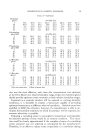
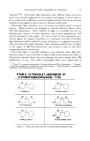
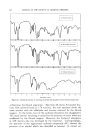
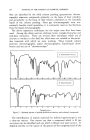
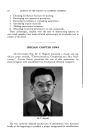
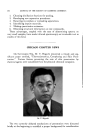
386 JOURNAL OF THE SOCIETY OF COSMETIC CHEMISTS 1. Choosing distillation fractions for pooling. 2. Developing new separation procedures. 3. Detecting incomplete or misleading separations. 4. Identifying impure materials. 5. Making quantitative estimates. 6. Obtaining structural information on new compounds. These advantages, coupled with the ease of determining spectra on very small samples, have made infrared spectroscopy an invaluable tool to studies of this kind. CHICAGO CHAPTER NEWS Os S•.PTEtaBv. R 9TI•, Dr. T. Higuchi presented a timely and sig- nificant paper entitled, "Thermodynamics, Complexing and Skin Pene- tration." Various factors governing the rate of skin penetration by chemical agents were considered from the physical chemical viewpoint. Dr. T. Higuchi The two currently debated mechanisms of penetration were discussed briefly at the beginning to establish a proper background for consideration

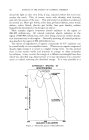
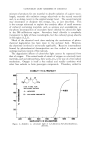
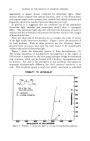
CHICAGO AND NEW YORK CHAPTER NEWS 387 of the relative importance of activity coefficients, diffusivity, viscosity, melting point, etc. After being graduated from the University of California (Berkeley) and the University of Wisconsin, obtaining the Ph.D. degree at the latter in 1943, Dr. Higuchi held a postdoctoral fellowship at the University of Wisconsin in 1943-1944, participated in the rubber program at the Uni- versity of Akron in 1944-1947 and returned to the University of Wiscon- sin to teach in the School of Pharmacy. Dr. Higuchi has held the rank of full professor since 1954. All meetings are held at Henrici's Restaurant in the Merchandise Mart on the second Tuesday of the month. NEW YORK CHAPTER NEWS THE rtRSq' fALL meeting was held on September 3rd at the Brass Rail Restaurant. A discussion of sunscreens was presented by Dr. Saul I. Kreps. Dr. Kreps is technical director of Van Dyk and Company, manufactur- ing chemists. In his talk, "Designing Sunscreens for Cosmetic Use," he discussed the physical and chemical requirements for a successful sunscreen agent in a cosmetic product. Relatively few types have been successful. Dr. Kreps showed how interaction between radiant energy of sunlight and the chemical system of the sunscreen produces changes in the molecular and electron structure of the chemical compound and how these changes affect the usefulness of such compounds as cosmetic sunscreens.
Purchased for the exclusive use of nofirst nolast (unknown)
From: SCC Media Library & Resource Center (library.scconline.org)