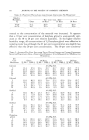
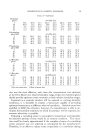
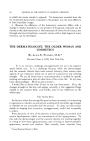
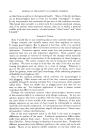
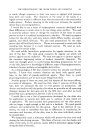
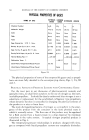
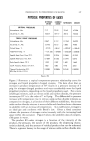
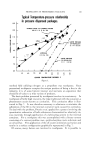
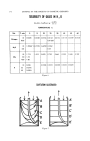
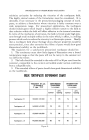
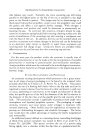
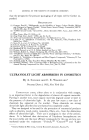
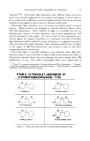
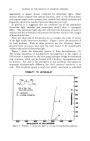
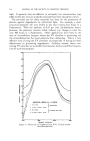
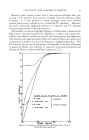
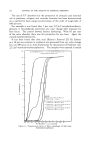
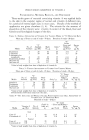
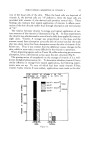
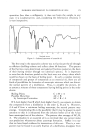
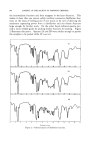
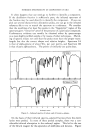
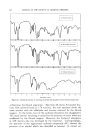
PROPELLENTS IN PRESSURIZED PACKAGING 347 PHYSICAL PROPERTIES OF GASES NITROUS CARBON NITROGEN ARGON OXIDE OXIDE CRITICAL PRESSURE Atmospheres, Abs. 71.7 72.92 33.49 47.996 Lb. per Sq. In., Abs. 1053.7 1071.7 492.2 705.36 TRIPLE POINT PRESSURE Atmospheres, Abs. 0.867 5.112 O. 1245 0.6739 Lb. per Sq. In., Abs. 12.742 75.13 1.830 9.904 Critical Temp. JF. 4•97.70 +88.41 --232.87 --188.43 Triple Point Temp. '•F. --131.456 -•69.884 --346.027 --308.83 Specific Heat Const. Press 70øF. 0.2095 0.2016 0.2484 0.1252 Specific Heat Const. Vol. 70"F. 0.1609 0.1543 0.1774 0.075 Ratio Specific Heats, 70' F. 1.302 1.307 1.400 1.669 Coeff. Viscosity, Poises x 107 70' F. 1462 1480 1770 2210 Thermal Conductivity• 32 c F. 0.0088 0.00884 0.0140 0.00925 BTU '(Sq. Ft.) (Hr.) (•F/Ft.) Figure 2B. Figure 5 illustrates a typical temperature-pressure relationship curve for nitrogen and liquid propellent charged systems. The data show that an increase in product temperature of 10 ø results in a pressure increase of 3 psig. for nitrogen-charged products and very considerably more for liquid propellent products, depending on the liquid propellents used. For a more soluble gas mixture, such as nitrous oxide and carbon dioxide, the pressure increase per 10 ø is in the order of 7 to 8 psig. The differential in pressure increase with temperature rise in nitrous oxide-carbon dioxide mixtures as compared to nitrogen, is a function of their different solubilities the nitrous oxide-carbon dioxide mixture is more soluble and therefore shows a decrease in solubility with an increase of temperature. As is well known, nitrogen is an ideal gas and conforms with Boyle's law. Given a fixed container volume the pressure of nitrogen varies inversely with the increasing head space within the container. Figure 6 shows the solubility data ofcompres- sine gases in water. The product fill under nitrogen is a function of the viscosity of the product, the pressure, the nature of the product, the dispensing charac- teristics desired, and the amount of residual product that can be tolerated. There is a greater leeway in the usage of nitrous oxide-carbon dioxide mix-

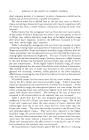
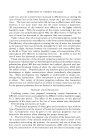
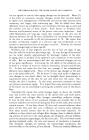
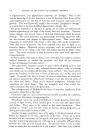
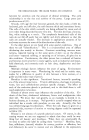
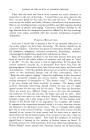
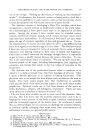
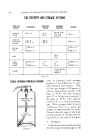
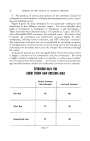
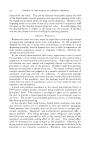
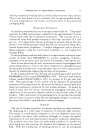
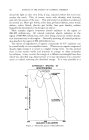
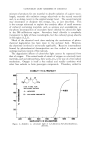
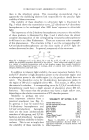
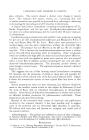
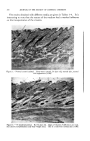
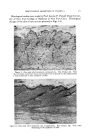
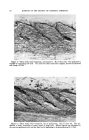
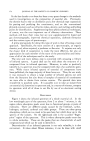
348 JOURNAL OF THE SOCIETY OF COSMETIC CHEMISTS GAS DELlVEInY AND STOIAGE SYSTEMS TYPE OF NITROUS CARBON ARGON SUPPLY N ITROGE N OXl DE DIOXI DE Standard 224 cu. ft. 56 lb. 20 and 50 lb. cylinder 64 lb. (174 and 330 cu. ft. 436 cu. ft.) Cradle of manifolded 6 cyl. & 336 lb. 1980 cu. ft. cylinders 1324 cu. ft. 384 lb. l 0,000 cu. ft. l 0,000 cu. ft. Bulk gas to to trailer 40,000 cu. ft. 45,000 cu. ft. 50 lb. Solid block Liquid 76,000 cu. ft. 1 ton 1 ton 106,000 cu. ft. storage to to to to station 190,000 cu. ft. 12 ton 60 ton 230,000 cu. ft. Dry Ice charge, Liquidor 150 lb. to 4000 lb. Figure 3. TYPICAL FlITBOGEN PIOPELLED PACKAGE COMPRESSED GAS PROP•I•LANT _1111111 1111111 Ill • ' ?,D I ß i Figure 4. tures as compared with nitrogen because of the differences in solu- bility between the two gases. With an inert gas weight of 3.0 grams of nitrous oxide-carbon dioxide at 90 psig. at 70øF., the end pressure after 97 to 98 per cent removal is 30 psig. at 70øF., with approxi- mately 1.25 to 1.50 grams remain- ing. With nitrogen under the same conditions, there is an initial gas weight of approximately 0.5 gram. Toward the end usage of the prod- uct the amount of nitrogen remain- ing will be in the order of 0.1 gram. Z. Toothpaste It has already been mentioned that the first major breakthrough in the
Purchased for the exclusive use of nofirst nolast (unknown)
From: SCC Media Library & Resource Center (library.scconline.org)