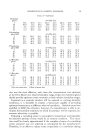
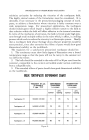
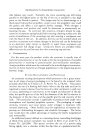
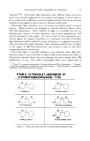
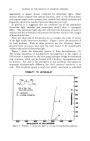
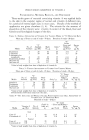
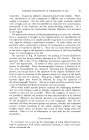
PROPELLENTS IN PRESSURIZED PACKAGING 351 minimize cavitation by reducing the viscosity of the toothpaste bulk. The highly critical nature of the formulation must be considered. It is desirable, if not necessary in the pressurized packaging concept of tooth- paste, to achieve a formulation whose viscosity is fairly constant over a wide temperature range. For pressurized applications, the toothpaste should include gums which impart a highly cohesive nature to the bulk so that cohesion within the bulk will offset adhesion to the internal container. In terms of the mechanics of extrusion, the bulk is forced under high pres- sure through small multiple orifices in the valve which, in effect, is a milling process which tends to reduce the viscosity in a thixotropic system. Ideally then a toothpaste bulk whose theology shows dilatant properties would be most practical, since after extrusion the ribbon of paste would show good dimensional stability on the toothbrush. The requisites for a satisfactory pressurized toothpaste should be: 1. The consistency must show little degree of fluctuation over a broad temperature range so that the paste will not be runny in the summer nor too stiff in the winter. 2. The bulk should be extruded in the order of 85 to 90 per cent from the container, comparable to the contents extrudable under normal conditions from a collapsible tube. 3. The extruded ribbon of paste should show good dimensional stability on the toothbrush. BULK TOOTHPASTE EXPERIMENT CHART VISCOSITY IN cps. CONTINUOUS INTERMITTENT TC-SPI NDLE EXTRUSION EXTRUSION 2 rpm. 73 F i O/o Extruded) (ø/o Extruded) A.T.I. A.T.I. Control Coating Control Coating Toothpaste .• 1 ! 02,000-107,000 71 85 74 84 Toothpaste •2 142,000-147,000 70 90 77 83 Toothpaste .•3 155,000-160,000 72 88 75 84 Toothpaste •4 192,000-202,000 80 93 80 87 Figure 8.

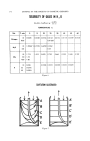
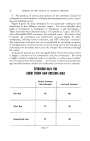
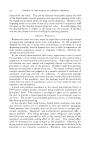
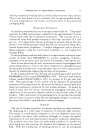
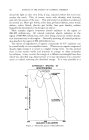
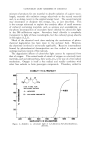
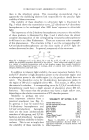
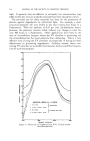
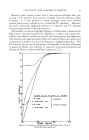
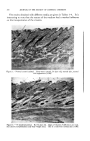
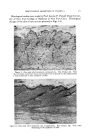
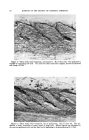
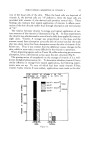
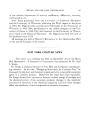
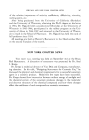
352 JOURNAL OF THE SOCIETY OF COSMETIC CHEMISTS 4. The product, of course, must possess all the attributes claimed for toothpaste by merchandisers including pleasing appearance, taste, cleans- ing and polishing action. Figure 8 gives the data developed for one particular toothpaste bulk formulated to four different viscosity ranges. The chart identifies these bulks as Toothpaste 1, Toothpaste 2, Toothpaste 3 and Toothpaste 4. These viscosities were obtained using a T-C spindle at 2 r.p.m. and 73øF., with a Brookfield RVF viscometer and helipath stand. The data in Fig. 8 include the continuous and intermittent extrusion figures for these toothpastes, utilizing control containers, and ATI lubricated containers. The intermittent extrusion test was accomplished by extruding two grams of toothpaste five consecutive times in the morning and in the evening and continuing this procedure daily until the nitrogen was exhausted through the valve. It should be pointed out that the applicability of the lubrication system is largely a function of the formulation and the consistency. By using a highly cohesive toothpaste bulk it is possible to achieve good exhaus- tion of contents from the container. As viscosity is decreased, the percent- age extruded between unlined and lubricated containers tend to coincide. EXTRUSION DATA FOR LIQUID CREAM HAIR DRESSING BULK First Day Third Day Seventy-Sixth Day Control Container Non-lubricc•ted Lubricated Container 10o 98 Figure 9.
Purchased for the exclusive use of nofirst nolast (unknown)
From: SCC Media Library & Resource Center (library.scconline.org)