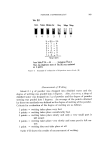
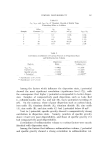
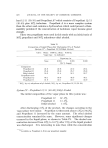
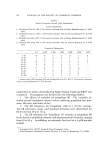
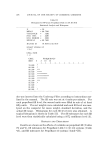
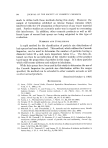
J. ,%'oc. Cosmetic Chemists, 20, 335-351 (May ')7, 1969) On Factors Influencing Dispersibility and Wettability of Powder in Water TAKEO MITSUI, B.S., and SUSUMU TAKADA, B.S.* Presented May 1•, 1963, Fifth IFSCC Congress, Tokyo, Japan Synopsis--A study was made on the factors which are supposed to influence ti•e dispersibility of powder in water, i.e., hydrophilicity of powder surface, particle size, specific gravity, and •-potential, and the correlations between them were examined. The hydrophilicity of powder surface was evaluated by the ratio •$'mo/Ss•, where ,¾N2 is the specific surface area obtained by adsorption of nitrogen gas on the surface of powder and Sn•o is the specific surface area obtained by adsorption of water vapor by the BET method. The dispersibility of sample powder in water was found to depend largely on •-potential and specific gravity, while the ratio ,5•H•()/SN• of the powder surface measured by the BET method had a strong correlation to wettability of powder with water. In dispersing powder in water, whether the surface of powder easily wets with water or not depends on the ratio SHo. o/.$'N• of the powder surface. However, after the powder is once forcibly dispersed by applying mechanical force, the degree of dispersibility depends mainly on its .•-potential and specific gravity. INTRODUCTION In the cosmetics industry, where powders dispersed in water, oil, and other organic solvents are used, the problem of dispersibility and wettability of powder is important. Poor dispersibility or wettability of powder causes difficulties in production processes and inferior stability of the products. Dispersibility of powder depends on lyophilicity of powder surface and particle size as well as on specific gravity and •-potential (Fig. 1). * Shiseido Laboratory, 1050, Nippa-Cho, Kohoku-Ku, Yokohama-Shi, Kanagawa-Ken, Japan. 335

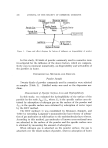
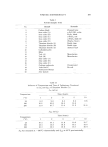
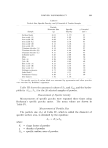
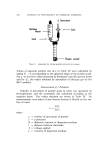
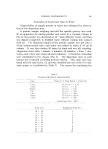
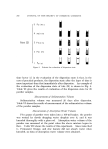
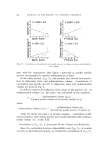
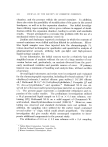
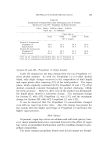
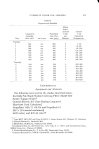
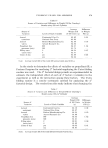
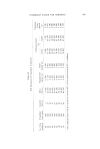
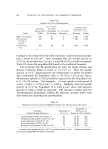
336 JOURNAL OF THE SOCIETY OF COSMETIC CHEMISTS Figure 1. ParticLe. Size Particle-Size Distribuhon Lyophilicity • I Surface of Particl.eJ PL• l Dispersion Mediuml of Particle /. •..osity ific Gravity • ..... .. Protective { :spec•.•hc L•ravlzy Action '¾ [ DispersibilityJ Surface Charge [ C-Potential ) Cause and effect diagram for factors of influence on dispersibility of powder In this study, 20 kinds of powder commonly used in cosmetics were investigated for the influence of the above factors, which are compara- tively easy to represent numerically, on dispersibility and wettability of the powders in water. EXPERIMENTAL METHODS AND RESULTS Powder Sample Twenty kinds of powder commonly used in cosmetics were selected as samples (Table I). Distilled water was used as the dispersion me- dium. Measurement of Specific Surface Area and IIydrophilicity In this study, we evaluated the hydrophilicity of the surface of the particle by the ratio Si-ho/SN2, where SN2 is the specific surface area ob- tained by adsorption of nitrogen gas on the surface of the powder and Sago is the specific surface area obtained by adsorption of water vapor by the BET method. The BET method (1) was established by Brunauer, Emmett, and Teller by extending Langmuir's monomolecular layer theory of adsorp- tion of gas molecules on solid surface to the multimolecular layer theory. According to this method, gas molecules of known cross-sectional area are adsorbed to the surface of the powder and the specific surface area is obtained by measuring the amount of adsorption. When nitrogen gas is adsorbed on the powder surface, the gas is adsorbed over the whole surface of powder, whereas adsorption of water
Purchased for the exclusive use of nofirst nolast (unknown)
From: SCC Media Library & Resource Center (library.scconline.org)