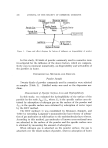
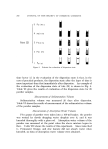
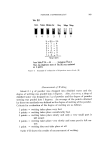
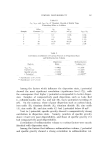
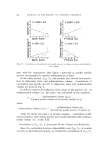
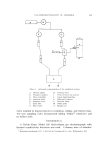
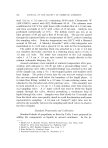
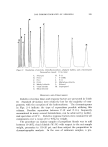
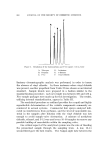
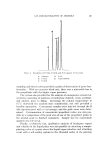
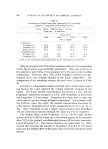
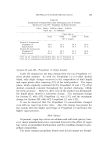
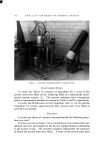
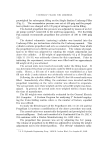
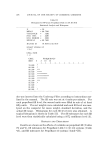
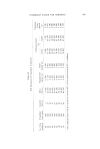
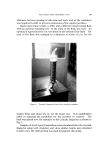
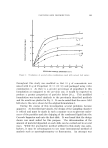
GAS CHROMATOGRAPHY OF AEROSOLS 361 Figure 4. Resolution of P-152a, P-142b, and P-22 (speed: 0.5 in./min) A. Nitrogen D. P-22 B. P-152a E. Vinylchloride C. P-142b sampling and bleed valves provided a point of observation of gross frac- rionation. With an excessive bleed rate, there was a noticeable loss in the propellants with the higher vapor pressures. The system also provided for the analysis of nonaqueous aerosol con- centrates consisting of mixtures of methylene chloride, resins, perfume, and alcohol, prior to filling. Increasing the column temperature to 87øC shortened the analysis time considerably, but still provided a baseline separation. Concentrate samples were injected through the B side injection port with a 5-/•1 syringe, and the peak areas were deter- mined. Determination of concentrate/propellant ratios was also pos- sible by a comparison of the peak area of one of the propellant peaks to the alcohol peak in finished containers. Sample size for concentrate analysis was 2.0-3.0 ul. Finally, a relatively fast, qualitative analysis of headspace vapors and volatiles in the liquid phase was also possible by attaching a sample- piercing valve at a point above the liquid-vapor interface and attaching a nut with a self-sealing septum to the threaded outlet of the piercing

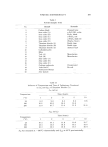
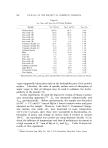
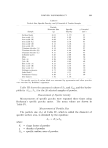
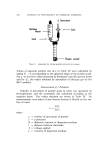
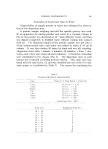
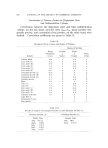
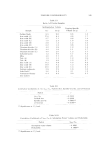
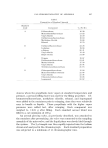
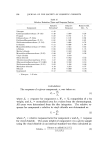
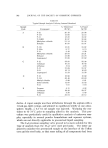
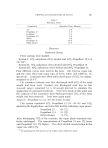
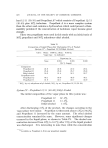
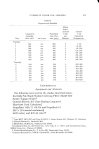
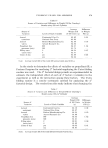
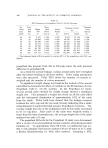
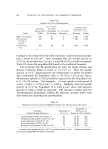
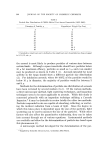
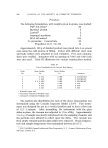
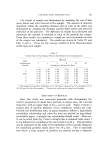
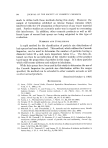
362 JOURNAL OF THE SOCIETY OF COSMETIC CHEMISTS Table III Typical Sample Analysis Utilizing Internal Standard Sample % Theoretical % Found Code Component (W/W) (W/W) A P-12 20.43 20.38 P-114 12.66 12.72 P-11 15.20 15.32 P-114B2 10.57 10.49 Methylene chloride 31.14 31.02 Ethanol 10.00 10.07 B P-115 15.21 15.32 P-152a 9.77 9.70 P-11 2.43 2.39 Methylene chloride 23.05 23.21 Ethanol 21.88 21.76 Isopropanol 27.66 27.62 C P-12 35.00 35.09 Isobutane 10.31 10.43 n-Butane 5.04 4.95 P-11 21.68 21.57 P-21 16.74 16.63 Isopropanol 11.23 11.33 D P-12 10.96 10.89 P-114 62.49 62.60 Methyl chloride 6.88 6.81 Ethyl chloride 12.60 12.52 P-21 7.07 7.18 E Propane 4.11 4.02 Isobutane 58.29 58.37 n-Butane 5.56 5.49 P-11 32.04 32.12 device. A vapor sample was then withdrawn through the septurn with a 1.0-ml gas-tight syringe, and allowed to equilibrate briefly at one atmo- sphere finally, a 0.3-0.5 ml sample was injected. Warming the con- tainer to 43-54 øC prior to sampling aided in the analysis. This pro- cedure was particularly useful in qualitative analysis of unknown sam- ples, especially in aerosol powder formulations and aqueous systems, which are not directly applicable to pressurized liquid sampling. The 2-ul precision sampling valve proved to be more suitable for this type of analysis than the 10-ul valve used previously. The latter ap- peared to monitor the pressurized sample at the interface of the Teflon core and the steel body, so that some tailing of all components had been
Purchased for the exclusive use of nofirst nolast (unknown)
From: SCC Media Library & Resource Center (library.scconline.org)