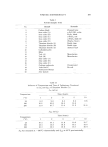
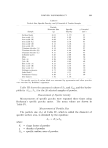
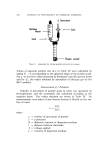
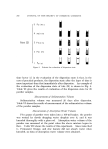
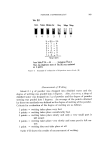
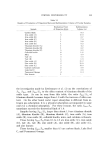
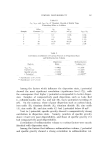
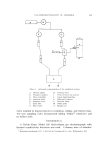
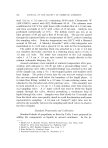
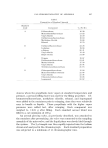
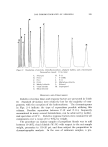
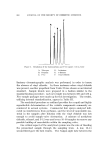
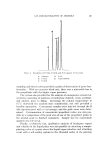
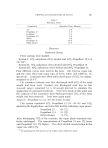
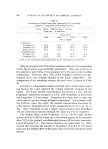
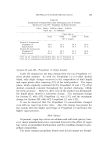
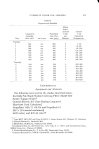
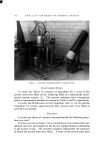
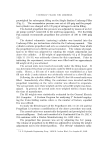
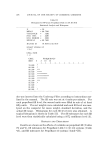
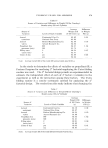
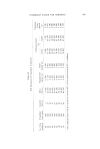
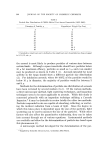
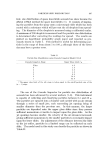
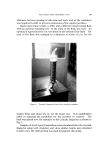
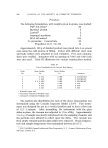
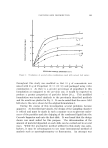
POWDER DISPERSIBILITY 843 Talc lB). lmin. 5mins. 30mins.1hr. 1day 3days 7days 5 4 3 3 2 2 1 5 x 0.5 = 2.5 4x 1 =4 3x 2 = 6 3x 3 - 9 2x 4 = 8 2x4.5 = 9 lx 5 = 5 Total 43.5 From Table V. 35 - 44 ..... Evaluation Point 4. Then, the dispersion state of Talc lB) was evaluated as 4 points. Figure 4. Example of evaluation o[ (lispersion state of tatc (B) Measurement of Wetting About 0.1 g of powder was dropped into distilled water and the degree of wetting was graded into ,5 degrees. Also, vice versa, a drop of distilled water was dropped on ,5 g of powder and the degree of powder wetting was graded into 5 degrees. An average of the points obtained by these two methods was defined as the degree of wetting of the powder. Criteria for evaluation of the degree of wetting are as follows: ,5 points = wetting takes place very fast 4 points = wetting takes place considerably fast 3 points = wetting takes place slowly and only a very small part is left unwet 2 points = wetting takes place very slowly and some part is left un- wet 1 point = wetting does not take place at all Table VII shows the results of measurement of wetting.

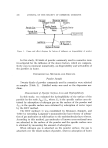
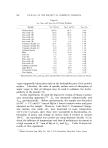
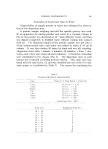
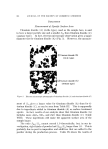
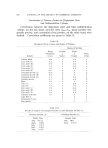
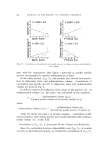
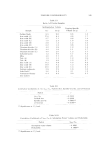
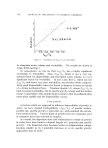
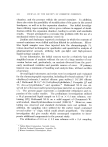
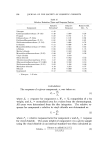
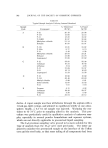
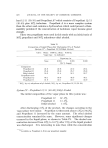
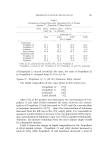
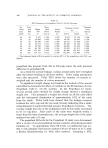
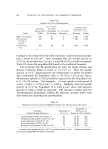
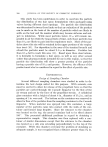
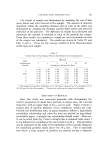
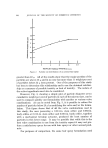
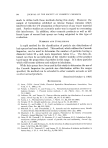
344 JOURNAL OF THE SOCIETY OF COSMETIC CHEMISTS DISCUSSION Measurement of Specific Surface Area Titanium dioxide (A) (rutile type), used as the sample here, is said to have a larger particle size and a smaller S• than titanium dioxide (C) (anatase type). In fact, electron microscopic observation gives a larger diameter size for titanium dioxide (A) (Fig. 5). However, the measure- (1) Titanium dioxide (A) ( rut ile type ) (2)Titanium dioxide ( anatase type) Figure 5. Electron microscopic photographs of titanium dioxide (A) and titanium dioxide (C) ment of S• gives a larger value for titanium dioxide (A) than for ti- tanium dioxide (C), as can be seen from Table III. This is supposedly due to ingredients added to titanium dioxide (A) as surface treatment agents. In fact, results of our analysis show that titanium dioxide (A) includes more A1203, SiO2, and ZnO than titanium dioxide (C) (Table VIII). These ingredients will make the apparent surface area of the sample larger. The ratio SI-i2o/SN• cannot exceed 1.0 theoretically, but, in our in- vestigation, eight kinds of powder had Smo/SN2 larger than 1.0. This is probably due in part to impurities and additives that are added to the powder during the production process. Table IX shows the results of
Purchased for the exclusive use of nofirst nolast (unknown)
From: SCC Media Library & Resource Center (library.scconline.org)