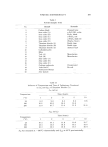
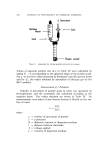
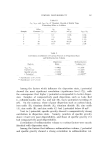
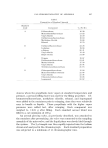
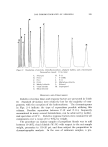
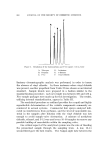
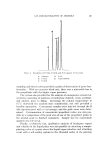
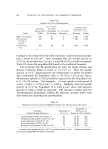
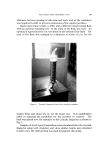
366 JOURNAL OF THE SOCIETY OF COSMETIC CHEMISTS To reduce the vapor pressure of these propellants and also to reduce the particle size of the spray, propellants having lower vapor pressures are often blended with these two propellants. Propellants 11' and 114' are frequently used with Propellant 12' to lower the vapor pressure, as well as for reasons of economy. In order to determine the changes in propellant composition when using vapor tap valves and restricted body orifices, a study was made of several propellant systems mixed, in different ratios, with anhydrous ethyl alcohol. These systems are normally used in personal products. Analytical Techniques It was recognized that system changes would be small in some cases therefore, analytical techniquest were developed to produce an accuracy of 0.4% by weight for each liquid component in the formulation. The test equipment consisted of a gas chromatography: having a 6-foot column of •/•-in. diameter and filled with Porapak © T,õ 35-60 mesh, as the absorbent medium. Helium, with a velocity of 35 cm per minute, was used as the carrier gas. The injection temperature was 145 øC and the dual thermal conduc- tivity detector was operated under isothermal conditions at 130 øC for seven minutes after injection of the sample, followed by a temperature rise to 180 øC. The temperature was programmed to rise at the rate of 8 øC per minute. Liquid samples, 5 /A each, were used in all analytical work and all analyses were performed in triplicate and the results were averaged. Calibration curves were made from carefully weighed samples. Table I shows the retention times for the various components under the stated conditions. These retention times represent the time elapsed from the injection of the liquid sample to the maximum peak height. * Genetron © 12, 11, and 114, Allied Chemical Corporation, Morristown, N.J. t The analytical techniques used in this study were developed by John J. Belles of the Industrial Chemicals Research Laboratories, Morristown, N.J. $ Model 820, Perkin-Elmer Corp., Norwalk, Conn. õ Waters Associates, Inc., Framingham, Mass.

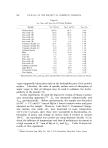
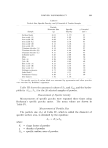
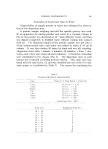
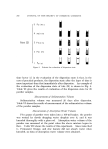
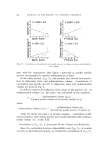
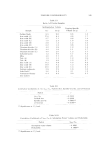
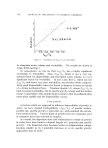
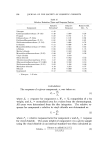
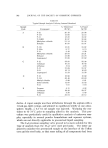
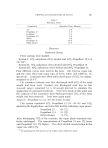
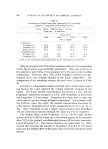
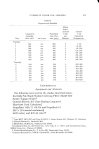
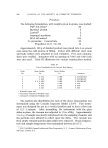
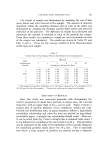
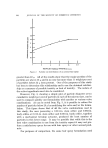
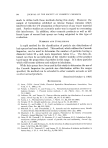
PROPELLANT/CONCENTRATE RATIO 867 Table I Retention Times Component Retention Time, Minutes Air 0.6 Propellant 12 3.0 Isobutane 4.4 Propellant 114 5.5 Water 7.8 Propellant 11 10.4 Ethyl alcohol 12.6 RESULTS Deodorant Sprays Three systems were studied: System I, 55% anhydrous ethyl alcohol and 45% Propellant 12/114 (50:50)* System II, 75% anhydrous ethyl alcohol and 25% Propellant 12 System III, 62% anhydrous ethyl alcohol and 38% Propellant 12 Four different valves were used in the tests. One had no vapor tap and the other three had vapor taps of 0.013, 0.016, and 0.020 in., re- spectively. Containers were filled until a head space of 15%, by volume, remained at 23.9 øC. The container contents were first discharged until 25% of the total weight had been used. Product was discharged each day in two 4-second sprays separated by a 30-second interval to simulate the application of a personal deodorant. Tests were made at this point and the contents of the containers then discharged until 75% of the total weight had been removed. Tests were again made. System I---Propellant ! 2 /11 • (50: 50)/Ethyl Alcohol This system contained 45% Propellant 12/114 (50:50) and 55% alcohol in the liquid phase, and when full, had the following vapor phase: Propellant 12 68.1% Propellant 114 31.2% Ethyl alcohol 0.7% After discharging 75% of the contents, the vapor phase remained rela- tively unchanged. The concentration of Propellant 12 was 1% lower and Propellant 114, 1% higher. The ethyl alcohol concentration in the vapor was still 0.7%. * All percentages in this section are by weight, unless otherwise noted.
Purchased for the exclusive use of nofirst nolast (unknown)
From: SCC Media Library & Resource Center (library.scconline.org)