J. •¾oc. Cosmetic Chemists, 20, 353 363 (May 27, 1969) Gas Chromatographic Analysis of Aerosols by Pressurized Liquid Sampling RICHARD D. CANNIZZARO, B.S.,* and DANIEL A. LEWIS* Synopsis A method is described for the resolution of 18 volatile COnlponents common to commercial aerosol formulations, utilizing gas chromatography with thermal conductivity detection. Mixtures of alcohols, hydrocarbons, chlorofiuorocarbons, and aliphatic halides were analyzed by pressurizing aerosol containers to 110- 120 psi with nitrogen, attaching a sample-piercing valve to the can, and introducing a 2-t•l pressurized homogeneous liquid sample to the chromatograph by on-column injection. Vinyl chloride was used as an internal standard for the improvement of quantitative results. Response factors rclative to vinyl chloride were determined. Hallcomid M-18 was used as the liquid substrate, providing excellent resolution, minimal tailing, and maximum speed of analysis for all components in- vestigated. Tcchniques are described for the analysis of propellant and concentrate phases prior to filling, utilizing pressurized and nonpressurized microliter sampling o[ nonaqueous systems. INTRODUCTION The majority of significant analytical procedures for volatile components in commercial aerosol formulations by gas chromatography have centered primarily on the analysis of headspace vapors or conver- sion of the liquid phase of the package to a vaporized state through evacuated systems prior to sample introduction into the chromatograph (1-4). This necessitates the use of conversion factors which must take into consideration the vapor pressures of the components of the liquid phase after expansion into the vaporized state, the extent of vacuum prior to expansion, temperature in the aerosol package and expansion * Aerosol Techniques, Inc., Milford, Conn. Present address: Geigy Chemical Corp., Research Division, Analytical Dept., Ardsley, N.Y. 353

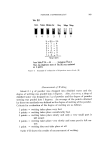
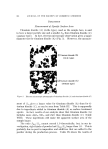
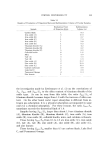
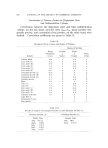
354 JOURNAL OF THE SOCIETY OF COSMETIC CHEMISTS chamber, and the pressure within the aerosol container. In addition, there also exists the possibility of stratification of the gases in the aerosol headspace, as well as in the expansion chamber. Our initial investiga- tions utilizing vapor-sampling valves gave evidence in support of strati- fication within the expansion chamber, leading to erratic and unreliable results. Thonet attempted to overcome this problem with the use of a mechanical stirrer in an expansion vessel (4). Jenkins and Amburgey reported a technique in which the contents of aerosol containers were chilled and then diluted in cyclohexane. Micro- liter liquid samples were then injected into the chromatograph (5). Cohen described techniques for qualitative and quantitative analysis of pharmaceutical aerosols, utilizing both gas-tight and high-pressure liquid syringe samples ((5). In our laboratories, the initial concern was for a relatively fast and simplified means of analysis without the use of a large number of con- version factors and, particularly, an analysis divorced from the previ- ously mentioned variables and possible sources of error. Of primary interest was a minimum of handling and analysis time, without sacrifice of accuracy. Several liquid substrates and resins were investigated and evaluated for the chromatographic separation, including di-n-butyl maleate, * di- (2- ethylhexyl)-sebacate,• methyl silicone gum rubber,• DC-200 silicone oil,• Hallcomid M-18,* di-(2-ethylhexyl)phthalate,• Poropaks Q•c and T+ +, di-n-octyl-phthalate,* and squalene.* Hallcomid M-18 was ob- served to be the most useful general-purpose material, as reported earlier (7). The present paper represents a considerable refinement and ex- pansion of the earlier studies. The preliminary investigations utilized a 10-/•1 pressurized liquid sample on 9.15 m X 6.4 mm columns, con- taining 20% Hallcomid M-18 on a solid support of Chromosorb W: acid-washed, dimethylchlorosilane-treated (DMCS).* However, some tailing was observed and standard deviations were not optimal. In addition, the sampling valve utilized for the earlier report contained several rubber "o" rings, which could absorb propellants. The initial investigation did give results which encouraged expansion to incor- porate additional components in the present study. The utilization of 9.15 m X 3.2 mm columns with a 2-•1 sampling * Perkin-Elmer Corporation, Norwalk, Conn. • Hewlett-Packard Corporation, Avondale, Pa. :• Waters Associates, Framingham, Mass.
Purchased for the exclusive use of nofirst nolast (unknown)
From: SCC Media Library & Resource Center (library.scconline.org)