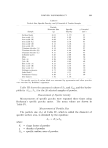
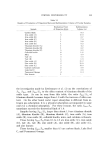
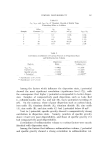
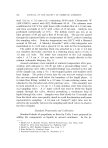
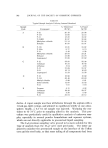
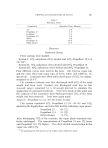
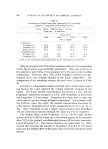
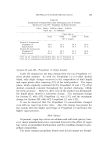
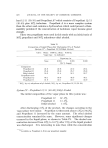
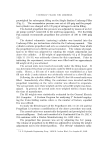
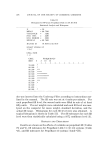
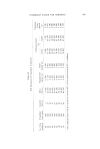
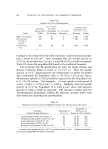
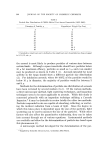
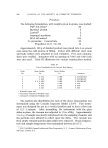
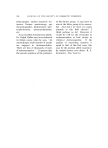
368 JOURNAL OF THE SOCIETY OF COSMETIC CHEMISTS Table II Composition of Liquid Phase after Discharging 75% of Product (System Ia--Propellant 12/114/Ethyl Alcohol) Valve: Body: 0.080 in. Stem' 0.018 in. Vapor tap: As indicated Vapor tap, in. None 0.013 0.016 0.020 Wt % Liquid Component Propellant 12 20.9 20.1 18.9 16.2 Propellant 114 22.8 22.9 23.8 23.0 Ethyl alcohol 56.3 57.0 57.8 60.8 Propellant Ratio Propellant 12 47.8 46.7 44.8 41.3 Propellant 114 52.2 53.3 55.2 58.7 55%, by wt, anhydrous ethyl alcohol 45%, by wt, Propellant 12/114 (50' 50). After discharging only 25% of the container contents, the composition of the liquid phase was practically unchanged. Since the accuracy of the analysis is only 0.4%, it was assumed to be the same as the starting composition. However, after 75% of the container contents were dis- charged, there were definite changes in the liquid composition. The composition of the remaining system, for each valve, is shown in Table II. A change in composition resulted with the valve which had no vapor tap because the vapor replaced the volume originally occupied by the liquid. The liquid alcohol concentration increased by 1.3%, and the propellant composition changed by 2.2% with Propellant 12 decreasing and Propellant 114 increasing. Removing the vapor with a vapor tap valve caused a greater change in liquid composition. For example, with the 0.020-in. vapor tap valve, the alcohol concentration increased by 5.8% and the Propellant 12/114 ratio changed from 50:50 to 41:59, or 9%. Since Propellant 12 has a higher vapor pressure than Propellant 114, its preferential removal through the vapor tap is to be expected. The chilling effect of this Propellant 12/114 (50:50)/ethyl alcohol system with an 0.020-in. vapor tap valve would appear to be increased after 75% of the product was discharged because of the lower concentra- tion of Propellant 12. This can be related to an earlier study (1), which showed that lowering the amount of Propellant 12 in the 12/114 blend increased the chilling effect of the spray when used with anhydrous ethyl alcohol.

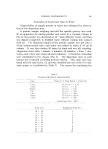
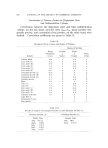
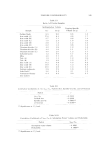
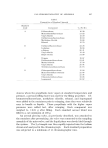
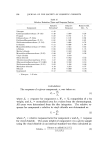
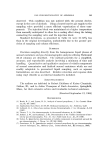
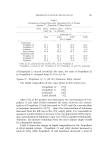
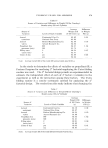
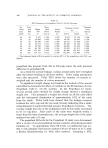
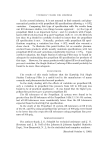
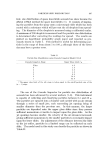
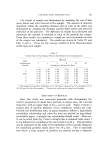
PROPELLANT/CONCENTRATE RATIO Table III Composition of Liquid Phase after Discharging 75% of Product (Systems II a and III•--Propdlant 12/Ethyl Alcohol) 369 Valve: Body: 0.080 in. Stem: 0.018 in. Vapor tap: As indicated Vapor tap, in. None 0.013 0.016 0.020 Wt % Liquid System II Components Propellant 12 24.8 24.2 23.6 22.5 Ethyl alcohol 75.2 75.8 76.4 77.5 System III Components Propellant 12 37.1 36.3 35.5 33.6 Ethyl alcohol 62.9 63.7 64.5 66.4 • 75%, by wt, anhydrous ethyl alcohol 25%, by wt, Propellant 12. b 62(•c, by wt, anhydrous ethyl alcohol 38c•, by wt, Propellant 12. Systems H and III--Propellant 12/Ethyl Alcohol Table III summarizes the data obtained for the two Propellant 12/ ethyl alcohol systems. As with the Propellant 12/114/ethyl alcohol blend, only slight changes occurred in the composition of both liquid and vapor phases after removing 25% of the total product. The vapor phase, which originally contained 98.3% Propellant 12 and 1.7% ethyl alcohol, remained constant throughout the product discharge, within the 0.4% accuracy. However, after 75c•0 of the product was discharged, the liquid phase showed a noticeable change. The maximum change for System II, with 25% Propellant 12, was 2.5% and the maximum change for System III, with 38% Propellant 12, was 4.4%. It can be observed that the Propellant 12 concentration changed even with no vapor tap in the valve. Also, this change was greater for the system with the higher percentage of Propellant 12 and hence the higher vapor pressure. Hair Sprays At present, vapor tap valves are seldom used with hair sprays how- ever, many manufacturers have expressed interest in the effect of vapor tap valves on propellant fractionation and the resulting changes in pro- pellant composition. The most common propellant blends used in hair sprays are Propel-
Purchased for the exclusive use of nofirst nolast (unknown)
From: SCC Media Library & Resource Center (library.scconline.org)