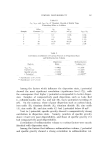
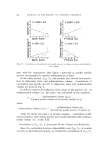
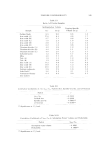
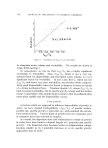
394 JOURNAL OF THE SOCIETY OF COSMETIC CHEMISTS made to utilize both these methods during this study. However, the sample of formulation exhibited an intense Raman emission which interfered with the UV absorption or fluorescence of any tracer material used. Further studies are currently under way in regard to overcoming this interference. In addition, other cosmetic products as well as dif- ferent types of aerosol hair sprays are being subjected to this type of evaluation. SUMMARY AND CONCLUSIONS A rapid method for the classification of particle size distribution of hair sprays has been described. This method, which utilizes the Cascade Impactor, can be used to determine the number of particles having a diameter below 20 t• and, more important, below 10 u. The data ob- tained can then be an indication of the relative toxicity of the product based upon the proportion of particles in this range. It is these particles which will become airborne and subject to inhalation. While hair sprays have been used in this study to determine the use of the Cascade Impactor for particle size distribution within the ranges specified, the method can be extended to other cosmetic aerosols as well as other aerosol products. (Received October 4, 1968) REFERENCES (1) Anon, CSMA Aerosol Guide, Chenfical Specialties Manufacturers Association, New York, N.Y., 1966, p. 55. (2) Porush, I., Thiel, C. G., and Young, J. G., Pressurized pharmaceutical aerosols for in- halation therapy. I. Physical testing methods, J. Am. Pharm. Assoc., Sci. Ed., 49, 70-2 (1960). (3) Lefebvre, M., and Tregan, R., Factors affecting particle size distribution of an aerosol spray, AerosolAge, 10, No. 7, 31 (1965) 10, No. 8, 32 (1965). (4) Kanig, J. L., Phar•naceutical aerosols, J. Pharm. Sci., 52,513-35 (1963). (5) Tarpley, W. B., Droplet particle size, Aerosol Age, 2, No. 12, 38 (1957). (6) Sinclair, D., and LaMer, V. K., Light scattering as a measurement of particle size in aerosols, Chem. Rev., 44,245 (1949). (7) Mitchell, R. I., and Tomashefski, J. F., Aerosols and the respiratory tract, Battelle Technical Review, Battelle Memorial Institute, Columbus, Ohio (Jan. 1964). (8) Marshall, J. R., Aerosol particle size analysis, Presented at the Society of Cosmetic Chemists, Annual Meeting, New York, N.Y., Dec., 1965. (9) Grim, W. M., Portnoff, J. B., Restaino, F. A., and Toberman, R. O., Inhalation of dexa- methasone sodium phosphate--control of particle size and uniformity, Aerosol Age, 13, No. 3, 22 (1968). (10) Landahl, H. D., and Hermann, R., On the retention of airborne particulates in the human lung, J. Ind. Hyg., 30, 181 (1948). (11) Landahl, H. D., Tracewell, T., and Lassen, W. H., Retention of airborne particulates in human lung, A.M. A. Arch. Ind.//y•., 3,359 (1951).

Editor, Journal of the Society of Cosmetic Chemists Sir: HeilingOtter (1) recently stated that Bandrowski's Base (BB) is of crucial importance to hair coloring from alkaline solutions of p-phe- nylenediamine (PPD) and hydrogen peroxide. We (2) have demonstrated that BB is not present in the colored sol- vent extracts of PPD-dyed hair and concluded therefrom that BB is not the main colorant of hair dyed with PPD alone. We assume that HeilingOtter agrees with our conclusion although he does not specifically state whether or not he believes that BB per se is a hair colorant. He (1, 3) does, however, assert that BB is a precursor of the dye deposited in hair during dyeing from PPD solutions. We believe that such a claim conflicts with recently published experimental evidence from several different laboratories. Two major arguments were presented by HeilingOtter: One of his arguments depends on the observation that a PPD solution which can no longer form BB is also one that can no longer dye hair. The other one is the supposition that freshly formed Bandrowski's Base (in statu uascendi) is extremely reactive and may undergo the frequently claimed reaction to an azine-keratin complex. The first of these arguments does not appear valid because it is to be expected that a solution, originally containing PPD and hydrogen peroxide, can form BB and can dye hair only as long as precursors (PPD and for quinone diimine) are present. As soon as the precursors are exhausted, both reactions, BB formation and hair dyeing, must stop. There can be little doubt about the fact that hair dyeing from a PPD/ H202 solution and formation of BB occur simultaneously. Any assertion that BB is a prerequisite for hair dyeing based exclusively on this ob- servation must be categorically rejected. The second argument used by Heiling6tter is based on the experi- mentally unsupported hypothesis that freshly formed BB undergoes further reactions within the hair fiber. On the basis of our own work with BB in various solvent solutions, under oxidative conditions, and in fairly strong alkali, there is no evidence that BB forms color bodies which could account for hair coloring. All published data (4-6) on the chemistry of BB suggest that BB is a relatively inert substance. To 395
Purchased for the exclusive use of nofirst nolast (unknown)
From: SCC Media Library & Resource Center (library.scconline.org)