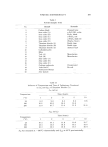
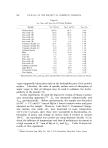
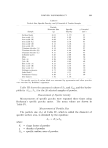
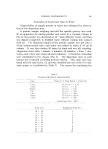
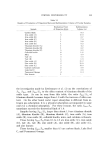
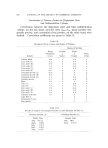
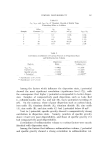
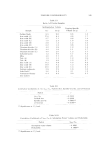
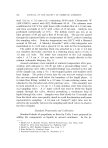
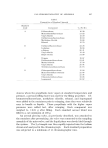
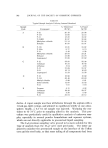
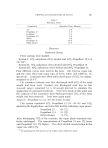
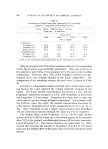
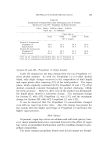
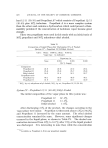
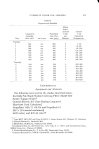
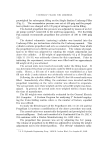
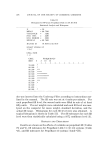
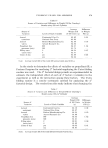
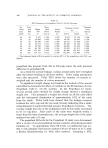
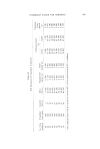
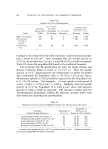
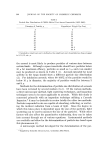
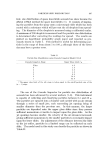
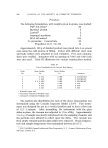
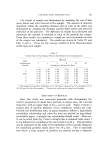
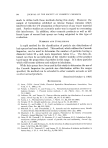
382 JOURNAL OF THE SOCIETY OF COSMETIC CHEMISTS Table VIII Leakage and Valve Measurements No. of Aero- Total No. sol Units Aerosol Units Reweighed No. of Valves Study Filled for Leakage Measured Diameter Depth Average Valve Parameters (in.) Effect of variables 640 50 8 1. 060 0. 186 Fill tolerance 400 20 5 1. 066 0.185 P-142b/11 (50: 50) Fill tolerance 450 All l0 1. 065 0.185 P-12 headspace, the actual theoretical fill of product (concentrate plus propel- lant ) would be 133 cm 3. Also, assuming that the specific gravity at 21 øC for the product was 1 g/cm 3, a total fill of 133 g would be required. Table IX shows the propellant fill found in the published formulas. The Kartridg Pak fill specification for both the Single Station and Rotary Undercap Fillers is listed at 4-2 cm a (5). Since the specific gravity at 21 øC (approximately the temperature at which all studies were conducted) for Propellant 142b/11 (50:50) is 1.275 g/cm •, then a fill tolerance spread of 5.100 g would be expected for the Propellant 142- b/11 (50:50) system. For example: 4-2 cm • equals a total spread of 4 cm• (4 cm 3) X (1.275 g/era •) = 5.100 g. Similarly, since the specific gravity at 21 øC for Propellant 12 is 1.325 g/era •, then a fill tolerance spread of 5.300 g would be expected. Fill tolerance studies with the aforementioned propellants yielded fill tolerance spreads which were well within the Kartridg Pak specifications. Table IX Propellant 12 Levels used in Published Cosmetic and Pharmaceutical Formulas Formula Propellant 12 (Allied Formula Reference) ( % w/w) Propellant 12 Fill Level (g) Based on 133 g Product a Antiperspirant powder (GAPF No. 9) 60 79.80 (80) Deodorant body powder (GAPF No. 40) 45 58.85 (60) Nasal relief spray (GAPF No. 76) 35 46.55 (47) Room deodorant (GAPF No. 81) 30 39.90 (40) Waterless hand cleaner (GAPF No. 60) 15 19.95 (20) a Assuming that specific gravity at 21øC of product equals 1 g/cm a. Numbers in parenthe- ses are approximate fill levels used in this study.

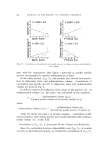
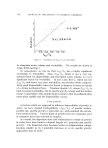
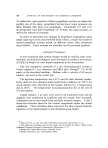
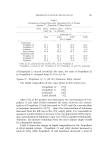
UNDERCAP FILLER FOR AEROSOLS 383 In the aerosol industry, it is not unusual to find cosmetic and phar- maceutical products with propellant fill specifications allowing a •-10% variation. Comparing this type of specification with the results from our fill tolerance studies, two things become apparent: (a) the type of propellant filled is an important factor and (b) products with Propel- lant 12 fill levels less than 20 g and Propellant 142b/11 (50:50) fill levels less than 10 g should be carefully checked to insure that the propellant fill specification is met. Naturally, products with propellant fill speci- fications requiring a variation less than •-10% would also warrant a closer check. To illustrate this point further, let us consider pharma- ceutical foam products which usually maintain specifications with low propellant fill levels and variations considerably less than + 10g. Upon careful evaluation, the Single Station Undercap Filler may be found in- adequate for maintaining the propellant fill specification for products of this type. However, for many products with higher fill levels and higher per cent variation, the Single Station Undercap Filler would probably be found to be more than adequate. CONCLUSIONS The results of this study indicate that the Kartridg Pak Single Station Undercap Filler is a useful tool in the manufacture of many cosmetic and pharmaceutical aerosol products. In the study dealing with the effects of variables on propellant fill, only a variation in propellant line pressure from 500 to 900 psig was found to be of practical significance. It was found that the higher pro- pellant line pressure gave a greater propellant fill. The fill tolerances of the Propellant 12 system were found to be greater than the fill tolerances of the Propellant 142b/11 (50:50) system, but all fill tolerances were considerably lower than the fill tolerances expected from the Kartridg Pak specification. In the study of the Propellant 12 system, fill tolerances at fill levels of 20, 60, and 80 g using propellant line pressures of 900 psig were found to be lower than the respective fill tolerances using propellant line pres- sures of 500 psig. ACKNOWLEDGMENT The authors thank J. E. Schmidt for technical assistance and J. N. Sivertson and J. B. Neff of the Johnson & Johnson Applied Statistics Dept., New Brunswick, N. J., for the statistical and computer analyses. (Received October 4, 1968)
Purchased for the exclusive use of nofirst nolast (unknown)
From: SCC Media Library & Resource Center (library.scconline.org)