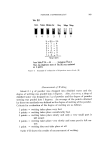
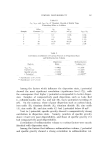
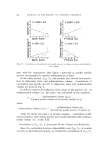
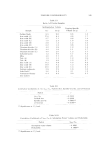
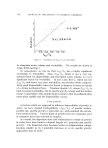
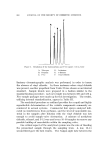
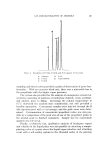
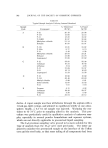
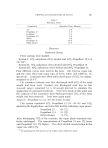
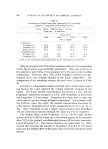
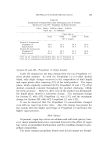
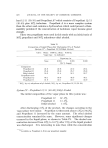
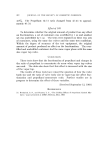
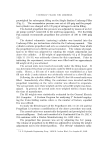
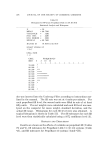
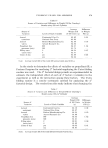
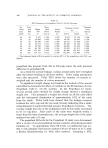
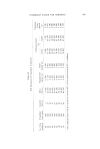
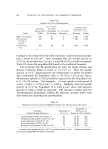
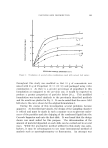
372 JOURNAL OF THE SOCIETY OF COSMETIC CHEMISTS 4.6%. The Propellant 12/11 ratio changed from 45:45 to approxi- mately 40:50. Effect of Fill To determine whether the original amount of product has any effect on fractionation, a set of containers was overfilled by 1 oz and another set was underfilled by 1 oz. The tests were repeated on these two sets of containers, using the same size valves and the same test conditions. Within the degree of accuracy of the test equipment, the original amount of product produced no effect on the fractionation. The over- filled and underfilled containers had the same vapor phase with the same size vapor tap valve. CONCLUSION These tests show that the fractionation of propellant and changes in the ratio of propellant to concentrate do occur when vapor tap valves are used. The data also show that this effect is increased with the size of the vapor tap. The results of these tests have raised the question of how the valve body size and the ratio of valve body size to vapor tap size affect frac- rionation and propellant/concentrate ratio. Further studies are in progress to determine the effect of these variables. (Received September 12, 1968) REFERENCES (1) Broderick, G. F., and Flanner, L. T., "The Chilling Effects of Propellant/Alcohol Mix- tures," paper presented at CSMA Meeting, May, 1965.

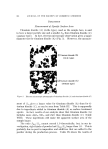
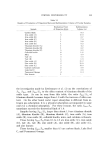
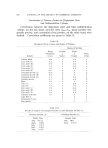
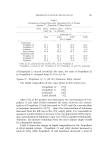
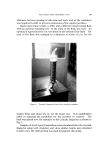
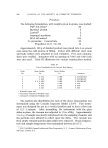
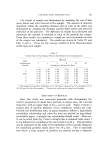
.1. Soc. Cosmetic Chemists, 20, 373 384 (May 27, 1969) An Evaluation of the Single Station Undercap Filler for Cosmetic and Pharmaceutical Products RAYMOND T. VOEGELI, B.S., JOHN B. WARD, Ph.D., and HASTINGS H. HUTCHINS, Ph.D.* Presented September 1,3, 1068, Seminar, Boston, Mass. Synopsis--A program was conducted on the Single Station Undercap Filler to determine the effects of variables and fill tolerances. Propellant line pressure was the only variable that caused a change in propellant fill. Fill tolerances varied according to fill level and the pro- pellant system employed. The Undercap Filler was judged as a useful tool in the manu- facture of cosmetic and pharmaceutical aerosols. INTRODUCTION Undercap filling involves injecting propellant at ambient tem- perature under the valve cup prior to valve crimping. This method of filling eliminates the necessity of refrigerating the product and propel- lant, as required in cold filling, and has a faster fill rate than valve in- jeetion filling. Although undercap filling has become popular in the manufacture of aerosol products, very little has been published on the capabilities of undercap equipment. For this reason, a program was * Johnson & Johnson Research Center, New Brunswick, N.J. 08903. 373
Purchased for the exclusive use of nofirst nolast (unknown)
From: SCC Media Library & Resource Center (library.scconline.org)