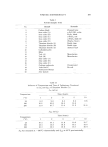
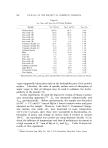
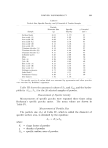
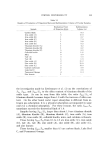
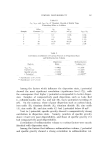
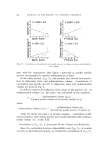
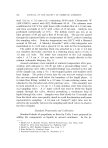
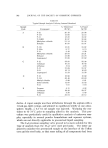
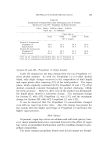
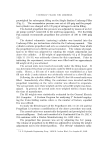
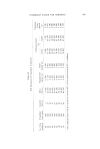
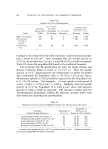
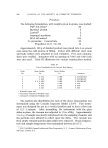
37O JOURNAL OF THE SOCIETY OF COSMETIC CHEMISTS lant 12/11 (50: 50) and Propellant A* which consists of Propellant 12/11 (45:45) plus 10% isobutane. Propellant A is a more complex system than the others and contains a hydrocarbon which could present a flam- mability problem if the concentration of isobutane vapor became great enough. These two propellants were used in this study with an initial ratio of 50% propellant and 50% anhydrous ethyl alcohol. Table IV Composition of Liquid Phase after Discharging 75% of Product (System IVa--Propellant 12/illEthyl Alcohol) Valve: Body: 0.080 in. Stem: 0.018 in. Vapor tap: As indicated Vapor tap, in. None 0.013 0.016 0.020 Wt % Liquid Component Propellant 12 23.9 22.8 22.2 20.4 Propellant 11 25.8 25.8 25.7 25.9 Ethyl alcohol 50.3 51.4 52.1 53.7 Propellant ratio Propellant 12 48.1 46.9 46.3 44.1 Propdlant 11 51.9 53.1 53.7 55.9 a 50%, by wt, anhydrous ethyl alcohol 50%, by wt, Propellant 12/11 (50:50). System I V--Propellant 18/11 (50: 50)/Ethyl Alcohol The initial composition of the vapor phase in this system was: Propellant 12 87.5% Propellant 11 11.5% Ethyl alcohol 1.0% After discharging 75% of the product, the changes occurring in the vapor phase were minor. Propellant 12 decreased about 1.3% to 86.2% and Propellant 11 increased by the same amount. The ethyl alcohol concentration remained the same. However, some significant changes occurred in the liquid phase, as shown in Table IV. The alcohol con- centration increased from 50% to 53.7% after 75% of the liquid product was discharged. It is interesting to note that, while the concentration * Available as Propellant A from any propellant supplier.

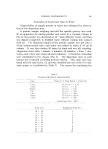
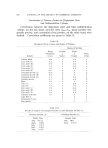
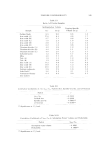
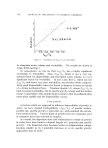
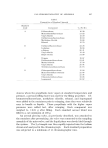
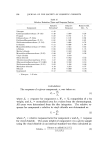
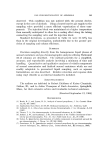
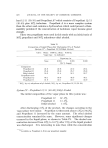
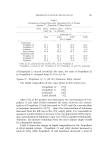
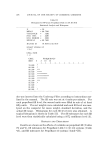
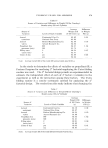
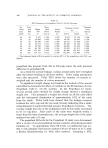
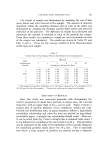
PROPELLANT/CONCENTRATE RATIO 371 Table V Composition of Liquid Phase after Discharging 75% of Product (System Va--Propellant Ab/Ethyl Alcohol) Valve: Body: 0.080 in. Stem: 0.018 in. Vapor tap: As indicated Vapor tap, in. None 0.013 0.016 0.020 Wt % Liquid Component Propellant 12 21.1 20.4 20.0 18.4 Propdlant 11 22.2 22.7 22.9 23.6 Isobutane 4.9 4.7 4.6 4.5 Ethyl alcohol 51.8 52.2 52.5 53.5 Propellant ratio Propdlant 12 43.7 42.7 42.0 40.0 Propdlant ll 46.1 47.4 48.2 50.3 Isobutane 10.2 9.9 9.8 9.7 50%, by wt, anhydrofts ethyl alcohol 50%, by wt, Propellant A. Propellant A consists of 45% Propellant 12, 45% Propellant 11, and 10% isobutane. of Propellant 11 stayed essentially the same, the ratio of Propellant 12 to Propellant 11 changed from 50: 50 to 44: 56. System F--Propellant 12/11 (50 : 50) /Isobutane/t]thyl Alcohol The initial composition of the vapor phase in this system was: Propellant 12 77% Propellant 11 10% Isobutane 12% Ethyl alcohol 1% After 75% of the product was discharged, the concentration of Pro- pellant 11 and ethyl alcohol remained the same however, the concen- tration of Propellant 12 had decreased to 76.3% and the concentration of isobutane increased to 12.7%. Since the concentration of isobutane increased from the full can to the 75% empty point, it is reasonable to assume it ..... •" ,, urn,, continue to nc•e ø •e as ,h• •n approached 100% empty. Any concentration of isobutane vapor over 12% is considered flammable. Therefore, the mixture remaining when the can is almost empty would be a flammable mixture. Table V shows the change in liquid composition for the Propdlant A/ethyl alcohol system. Propellant 11 and ethyl alcohol increased a total of 4.6% while Propellant 12 and isobutane decreased a total of
Purchased for the exclusive use of nofirst nolast (unknown)
From: SCC Media Library & Resource Center (library.scconline.org)