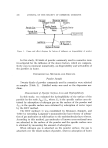
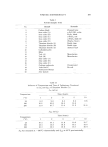
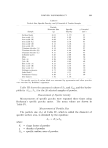
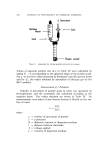
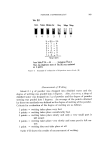
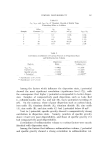
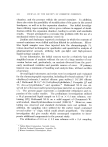
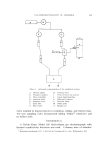
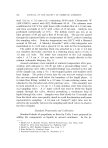
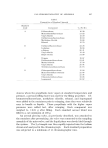
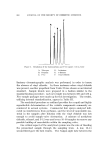
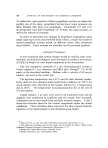
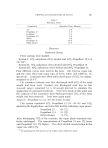
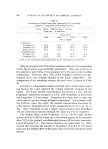
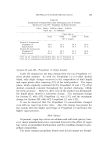
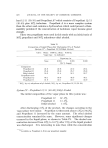
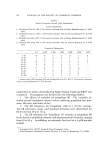
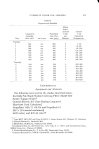
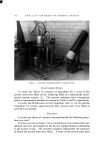
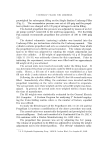
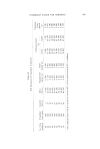
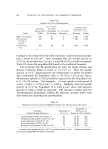
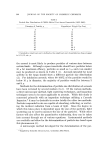
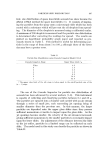
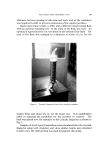
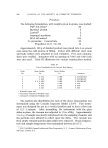
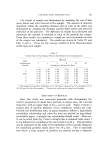
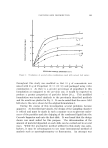
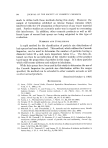
POWDER DISPERSIBILIT¾ 341 F•valuation of Dispersion State in Water Dispersibility of sample powder in water was estimated by observa- tion of the dispersion state. A powder sample weighing one-half the specific gravity was used. In an apparatus for mixing powder and water in a vacuum (shown in Fig. 2), the powder was deaerated at 10-4 mm of Hg for 1 hour, and then was dipped completely in distilled water without coming into contact with air. The dispersion liquid of the powder sample was put into a 30-ml sedimentation tube, and water was added to make it ,50 ml in volume. It was then shaken $0 times by hand and was left standing. Dispersion states after 1 minute, 5 minutes, 30 minutes, 1 hour, 1 day, 3 days, and 7 days were observed and evaluated. Criteria for evaluation were established in five classes (Fig. $). The dispersion state at each instant was evaluated according to these criteria. This value was com- bined with the time factor (f) and was classified into one of the 10 evalu- ation points as established in Table V. The reason for combining the Table V Evaluation Method of Dispersion State Time Point (I) X Time Factor = Point (Ii) lmin (5) X 0.5 = (2.5) .Stains (5) X 1 = (5) 30rains (5) X 2 = (10) lhr (5) X 3 = (15) lday (5) X 4 = (20) 3days (5) X 4.5 = (22.5) 7 days (5) X 5 -- (25) Total Point (III) (100) Point (III) Evaluation Point (IV) 20-• 23 1 ."4 • 27 o •8-• 34 3 35• 44 4 45-• 54 5 55--• 64 6 65--- 74 7 75-• 84 8 85--- 94 9 95 --• 100 10

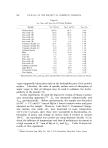
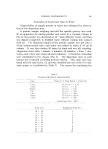
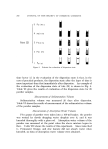
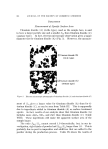
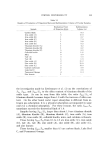
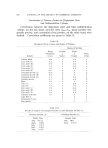
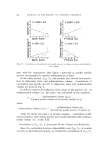
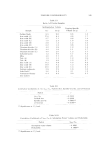
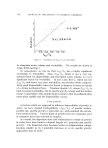
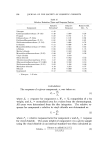
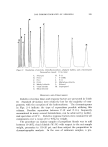
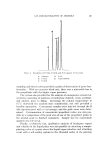
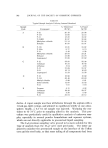
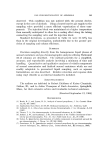
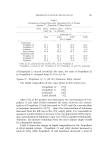
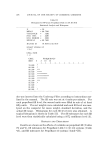
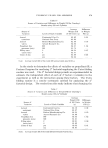
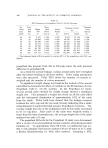
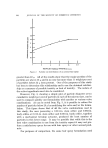
342 Point JOURNAL OF THE SOCIETY' OF COSMETIC CHEMISTS 5 Points i 2 Points i '•!'• ':"'•' Figure 3. Criteria for evaluation of dispersion state time factor (f) in the evaluation of the dispersion state is that, in the case of practical products, the dispersion state after the lapse of time is more important than that immediately after dispersion. An example of the evaluation of the dispersion state of talc (B) is shown in Fig. 4. Table VI gives the results of evaluation of the dispersion state for 20 powder samples. Measurement of Sedimentation Volume Sedimentation volume was measured 20 days after dispersion. Table VI shows the results of measurement of the sedimentation volume of the powder samples. Measurement of Absorption Water Volume Five grams of powder were taken into a 100-ml beaker, the powder was wetted by slowly dropping water droplets over it, and it was kneaded thoroughly with a glass rod. Absorption water volume of the powder was measured at the point when the above mixture began to flow. Table VII shows the results of this experiment. Since Lake Red C, Permanent Orange, and zinc laurate did not absorb water when kneaded, no data of absorption water volume were obtained.
Purchased for the exclusive use of nofirst nolast (unknown)
From: SCC Media Library & Resource Center (library.scconline.org)