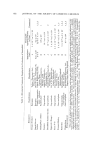
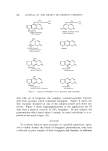
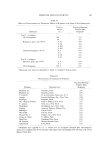
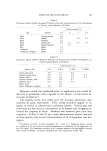
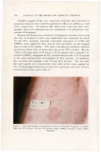
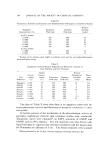
708 JOURNAL OF THE SOCIETY OF COSMETIC CHEMISTS for screening tests. Swine appear to duplicate more closely the human response and probably are more suitable for studies at the concentrations which affect humans. When photoactive compounds are irradiated they absorb photons and become electronically excited to a new energy level. On returning to the ground state, they fluoresce. The biologically significant event, that is, the production o[ tissue-damaging chemical reactivity o[ the molecule, probably occurs in the fraction o[ a second intervening between these two processes. The amount o[ this reactivity appears from our observa- tions to be independent of absorption peak, emission peak, or fluores- cence intensity. Thus, measurement of these parameters provided no clue as to phototoxic potential of the compounds studied. While a com- pound which is phototoxic is photoactive, the reverse is not necessarily true. Using irradiation time as a criterion, others have concluded that psora- len is significantly more phototoxic than bergapten or 8-MOP (16-19). The present studies, based on a comparison o[ minimum effective con- centration, showed that the three compounds had about the same photo- toxicity. In agreement with reports o[ others (18, 20), the presence o[ a methoxy group in the 5 or 8 position o[ the psoralen molecule was as- sociated with phototoxic activity, whereas the hydroxy group in these po- sitions was not. CONCLUSIONS 1. Various components ot5 bergamot were tested [or phototoxic effects on human skin. Results suggest that Berlock dermatitis is due to a single active component o[ bergamot, either bergapten or 5-methoxy- psoralen. It is there[ore appropriate to call this syndrome bergapten phototoxicity. 2. Data obtained on different areas o[ human skin and on different animal species show a relation between skin permeability and bergapten phototoxicity. In man, biologic effects were produced more easily on highly permeable scrotal or stripped skin. In animals, the more per- meable clipped skins ot5 rabbits and hairless mice were more reactive than those o[ monkeys and swine. Thus, individuals most susceptible to ber- gapten phototoxicity probably have a poorly developed skin barrier. 3. Bergapten produced phototoxicity in stripped human lorearms at concentrations down to 0.002%. This effect was produced in clipped rabbits at concentrations down to 0.0008%.

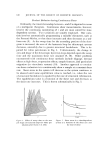
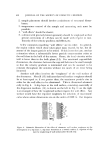
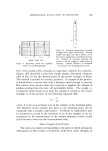
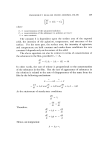
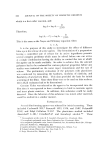
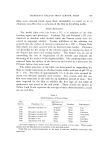
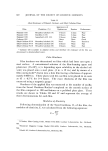
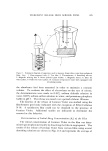
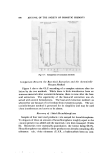
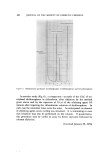
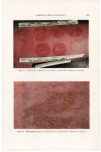
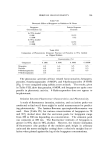
PERFUME PHOTOTOXICITY 709 4. On the basis of data obtained on stripped skin and estimates of the bergapten content of bergamot, it is expected that perfumes are likely to produce phototoxicity unless the furocoumarins are eliminated, the natural bergamot concentration reduced to 0.3%, or the bergapten re- duced to 0.001 5. In phototoxic experiments conducted on clipped rabbits, fewer skin effects were produced by bergapten in 955o than 705• ethyl alcohol. The difference was thought to be due to reduced skin surface spreading with the more aqueous solution. APPENDIX I ISOLATION OF COUMARINS AND PSORALENS FROM PgERGAMOT OIL RONALD YATES, DIVISION OF COLORS & COSMETICS, FOOD AND DRUG ADMINISTRATION Bergamot oil was first treated to produce a coumarin-psoralen (C-P) mixture containing two coumarins (limettin and 7-methoxy-5-geranoxy- coumarin) and three psoralens (bergapten, bergaptol, and bergamottin). This mixture was further separated into five fractions. Isolation of Coumarin-Psoralen (C-P) Mixture A 450-g sample of oil o.f bergamot (N.F.)* was placed in a•flask and the volatile fraction was removed at 35-65øC and 2 mm pressure. The C-P mixture was then isolated from the nonvolatile material (ca. 50 g) ac- cording to a method given by Guenther (21). Yield: 10 g. Fractionation of C-P Mixture Five fractions were separated from the C-P mixture by preparative thin-layer chromatography (TLC). The plates used were 20 X 20 cm coated with silica gel G of an average thickness of 500 v. Approximately 70 mg of the C-P mixture was spotted along the bottom of each plate. The TLC plates were developed with toluene-ethyl acetate-acetic acid (80:20:2). A total of 1.5 g of the C-P mixture was chromatographed by this procedure. The developed plates were divided into four fractions according to the scheme in Fig. 5. Each fraction was scraped from the plate, and the corresponding fractions from each plate were combined and extracted with a suitable solvent. The solvent was removed on the * Obtained from George Lueders and Co., New York, N.Y.
Purchased for the exclusive use of nofirst nolast (unknown)
From: SCC Media Library & Resource Center (library.scconline.org)