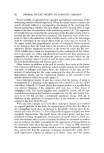
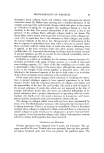
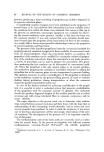
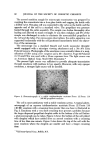
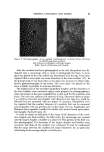
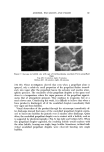
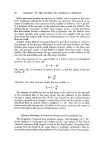
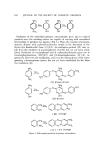
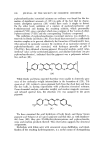
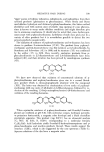
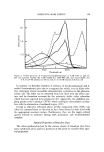
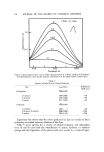
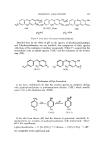
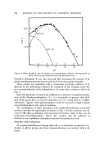
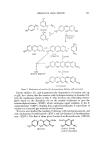
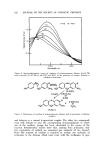
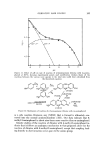
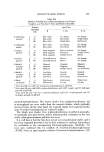
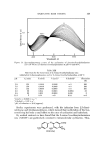
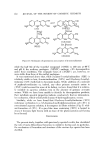
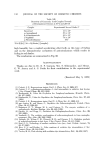
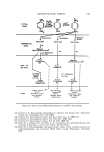
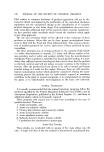
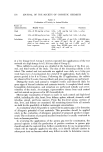
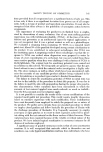
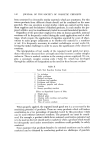
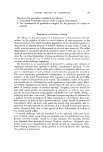
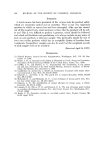
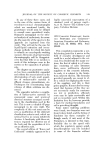
19.0 JOURNAL OF THE SOCIETY OF COSMETIC CHEMISTS 5.0 4.0 \ \o 9 10 11 12 13 pH Figure 6. Effect of pH on rate of reaction of p-benzoquinone diimine with resorcinol, at 30 ø C, showing experimental points and theoretical curve formed is decreased. It was also observed that increasing the amount of p- phenylenediamine present increases the rate of reaction proportionately. These results are consistent with a mechanism involving addition of p- diamine to the indoaniline followed by oxidation of the resulting leuco dye by a second molecule of the indoaniline or by some other oxidant as shown in Fig. 7. Since the green dye is formed by addition of a molecule of p-phenylenedia- mine to the 2-hydroxyindoaniline (V), it is reasonable to propose that addi- tion of the green dye, or its leuco derivative, to (V) would lead to a higher "polymeric" species. Such polymerization would be favored by high reactant concentrations and a slow rate of oxidation. The mechanism of color formation from p-phenylenediamine/resorcinol mixtures can thus be represented as shown in Fig. 7. Similar reactions are ob- served with other p-diamines and resorcinol derivatives. Only in the case of p-diamine/4-alkylindoanilines, where the reactive site for addition is blocked, is any significant aminophenoxazinone formation observed. Diimines with m-Diamines All m-phenylenediamines having either the 4- or 6-position occupied by hy- drogen or alkoxy groups give blue 2-aminoindamincs on reaction with a di- irainc.

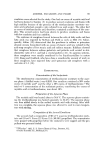
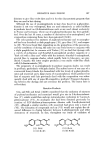
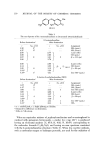
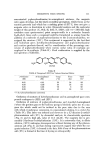
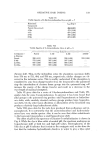
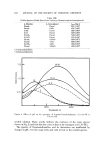
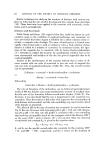
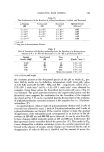
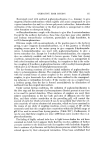
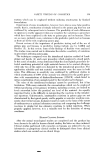
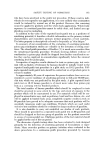
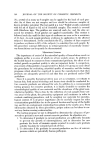
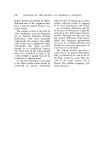
OXIDATIVE HAIR DYEING 121 • kl N-' "-.d" -F OH k..•r • H•.N' • "0 •"•'•/'•0 FI•N'•K•v •u t-I0 •'•-•0 (V:D .,,'/ ( V ) I NFIz •' "nc•gentc• •(slow) $ ( ]: X) Ox, brown polymer H•N' • lqO' • '-0 '• 'N,FI• (X) green Figure 7, •echa•ism ooe •eactio• ooe p-be•zoqui•o•e aiimi•e with •esorci•o] Kinetic studies (17), and in particular the dependence of reaction rate up- on pH, have shown that the reaction with hydrogen-bearing m-diamines fol- lows the mechanism shown in Fig. 9. This involves rate-controlling electro- philic attack by the diiminium ion on the neutral m-diamine to give the triaminodiphenylamine (XXIII) which undergoes rapid oxidation to the 2- aminoindamine (XXIV). Starting from p-phenylenediamine, 4 equivalents of oxidant are consumed per molecule of dye formed. We have now studied the reaction of diimines with 2,4-diaminoanisole, and with 2,4-diamino-5-methylanisole (XXV) and 2,4-diamino-l,5-dimethoxyben- zene (XXVI). The first of these gives 2-amino-5-methoxyindamine (XXVII) H•N• H•N" • '-NH H/N' • -NHz (XXYlI) (XXV) R:Me (XXV I) R:MeO
Purchased for the exclusive use of nofirst nolast (unknown)
From: SCC Media Library & Resource Center (library.scconline.org)