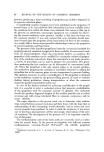
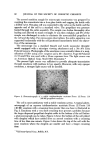
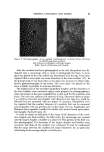
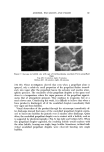
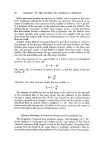
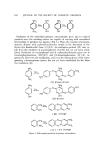
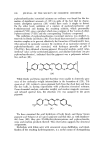
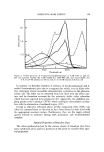
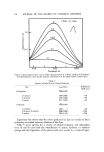
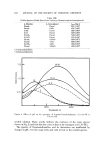
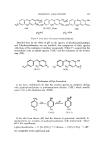
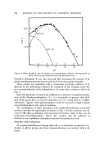
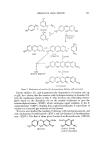
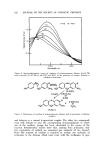
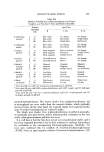
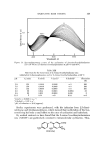
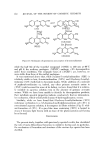
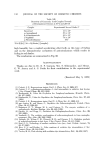
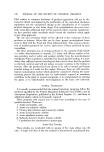
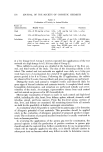
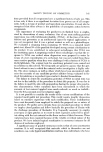
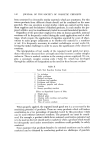
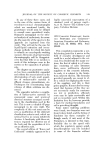
1'2'2 JOUBNAL OF THE SOCIETY OF COSMETIC CHEMISTS 1.5 42 2O TIME IN MIN. i I i I 50O 600 Wavelenglh, nm Figure 8. Spectrophotometric course of reaction of p-benzoquinone diimine (2x 10-*M) and resorcinol (1 x 10-•M) at pH 9.57 and 30øC in the presence of oxygen. Solution is colorless at ti•ne zero HN'""',,•' H:•N' • 'NH•, I-L,N' • I-I•N' • 'NH•. / (xxlH) ( fo•t)/,• di-irnine -I- or' H• N •'•'•,"' FInN •'•-'"•NH H•Oz (XXlV) Figure 9. Mechanism o[ reaction o[ p-benzoquinonc diimine with 4-equivalent m-diamine couplers and behaves as a normal 4-equivalent coupler. The other two compounds react with diimine to give the corresponding 2-aminoindamine in which one of the methoxy groups has been eliminated in the course of the reaction. Stoichiometry studies show that, starting from p-diamine, only two equivalents of oxidant are consumed per molecule of dye formed. Since this amount of oxidant is required to oxidize one molecule of p-diamine to the diimine which must react with the m-diamine to give

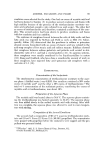
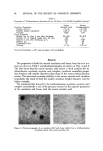
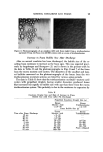
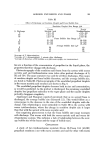
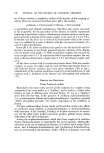
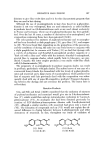
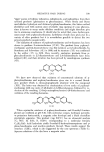
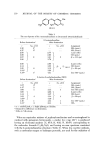
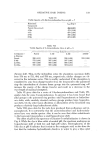
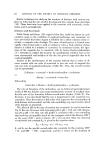
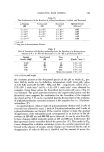
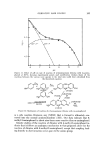
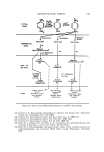
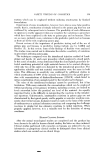
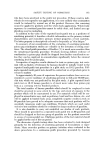
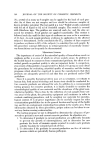
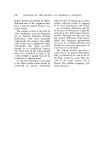
OXIDATIVE HAIR DYEING 123 + I•e MeO H N •,...• H•.N •"'•..,/" N Hz H•N NH z (xxviii) eOH ,,• N %..•• R H•N• H•N %"%./•NH R-- MeO or Me Figure 10. Mechanism of reaction of p-benzoqninone diilnine with 2-equivalent m-diamine couplers a ]euco dye, the conversion of the latter to the indamine dye must oc- cur with the elimination of methanol. Thus, the mechanism can be rep- resented as shown in Fig. 10, involving attack by the diiminium ion on the methoxy]ated carbon atom to give (XXVIII) followed by elimination of methanol. The kinetics of the reaction of these 2-equivalent couplers confirm this mechanism and are more complex than those for the 4-equivalent in- diamine couplers. Thus, we have found that at high pit ( 10.5) the coupling step is rate controlling, i.e., when stoichiometric amounts of reactant are used the rate of dye formation follows a second-order rate law. At low p It(8.5), color development follows a first-order rate law, being independent of initial reactant concentrations, i.e., the elimination of methanol is rate controlling. Obviously, the higher the reactant concentrations the higher will be the upper pit limit to which the first-order rate law will pertain. Table XI gives data for the relative rates of coupling of various diimines with various m-diamines. (It should be noted that the relative rates of cou- pling are independent of pit over the pit range 7-13, but that the absolute Table XI Relative Rates of Coupling of p-Benzoquinone Diimine and m-Phenylenediamines at pit 9.5 and 30øC p-Diamine Parent 2-Me 2,5-Me,, 2,6-Me,o Parent Parent 1.00 0.28 0.22 0.19 4-MeO 21.6 m-Diamine 4-Me 3.03 1.05 1.19 0.56 4,6-(MeO)2 •760 2-Me 5.33 1.11 0.76 0.83 4-MeO 21.5 6.8 1.8 2.1 4-Me-6-MeO ,-•30
Purchased for the exclusive use of nofirst nolast (unknown)
From: SCC Media Library & Resource Center (library.scconline.org)