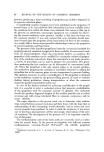
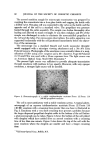
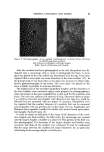
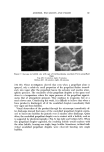
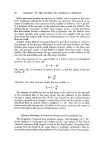
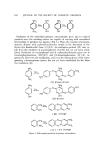
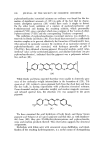
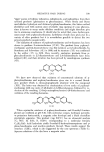
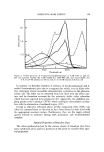
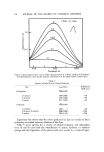
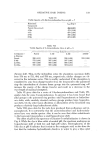
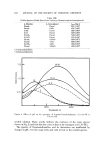
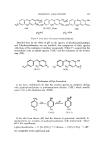
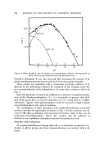
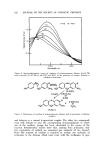
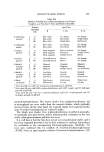
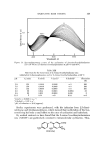
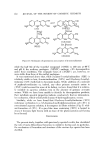
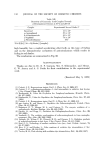
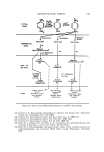
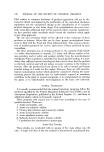
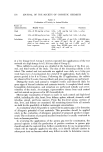
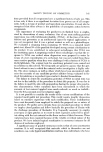
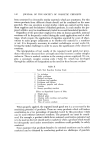
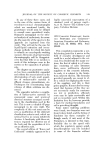
128 JOURNAL OF THE SOCIETY OF COSMETIC CHEMISTS •o.• 400 500 Wavelength, nm Figure 13. Effect of pH on the spectrum of 3,7-diamino-2-methylphenazine (1.0 x 10-•M) and from an aged hair tress which had been dyed with a mixture of p- phenylenediamine and 2,4-diaminotoluene. Figure 13 shows spectral data for the phenazine dye which is orange-yellow at pH 7.5 and red at lower pH, where it evidently exists as the aza-protonated species. That the intramo]ecu- lar cyclization of the aminoindamine is a clean reaction at pH~6 can be seen from its spectrophotometric course (Fig. 14). From similar spectrophotomet- ric studies, we have measured the rate of the cyclization reaction and have found it to follow a first-order rate law and to be virtually independent of pH over the range 5-8.5. At higher pH values, the rate of cyclization decreases with increasing pH, but the neutral aminoindamine dye is in fact ]ess stable than its conjugate acid and undergoes rapid decomposition to some species other than the diaminophenazine. The product of the latter reaction absorbs maximally at 490 nm, having a broad absorption which is independent of pH over the range 6-11. Isolation of the product formed at pH 11 showed it to be 2-amino-5-methylindoaniline (XIII), resulting from hydrolysis of the inda- mine at the terminal imino group. Analysis of the rate data for the consumption of 2-amino-5-methylindamine at 60øC is given in Table XIII. It is evident that the phenazine (XXXII) is formed by intramolecular cyclization of the conjugate acid (XVIII) of the indamine while the indoaniline (XIII) is formed by hydrolysis of the free base (XI), water being the active hydrolyric species. The mechanism of these reactions is shown in Fig. 15.

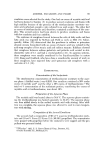
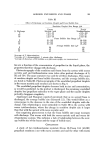
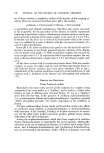
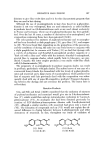
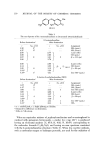
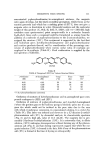
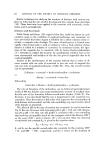
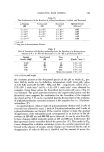
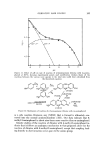
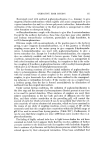
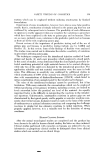
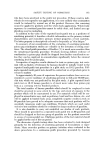
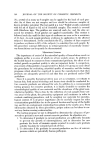
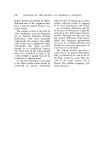
OXIDATIVE HAIB DYEING 10.9 ,400 500 6 O0 Wavelength, nm Figure 14. Spectrophotometric course of the cyclization of g-amino-5-methylindamine (1.0 x 10⁻⁴M) to 3,7-diamino-9.-methylphenazine at phi.,6 and 60øC Table XIII Rate Data for the Conversion of 2~Amino-5-methylindamine into 3-Methyl-2, 8-diaminophenazine and/or 2-Amino-5-methylindoaniline, at 60 ø C pH t,/2 (min) k (obsd) k (cycl.)" k (hydrol) b Phenazine (%) 5.9 150 0.0046 0.0046 -- 0 100 7.0 150 0.0046 0.0046 -- 0 100 8.0 150 0.0046 0.0046 -- 0 100 9.0 50 0.014 0.0043 0.0084 31 9.8 22 0.031 0.0010 0.030 3 11.2 5 0.14 -- 0 0.14 -- 0 "k(cycI.) = 0.0046 X aIII +0. • k(hydrol) = 0.15 X aI 0. c pK, of indamine -- 10.0 (approx.). Similar experiments were performed, with the indamine from 2,5-diami- notoluene and 2,4-diaminotoluene, which showed that methylation of the ben- zenoid ring had only a small effect on the rates of cyclization and hydrolysis. By marked contrast we have found that the 2-amino-5-methoxyindaminium ions (XXXIV) are particularly resistant to intramolecular cyclization. Thus, /•j,,, N ••r. OMe H•N• H,•N •)•..•'• H• (XXXlV)
Purchased for the exclusive use of nofirst nolast (unknown)
From: SCC Media Library & Resource Center (library.scconline.org)