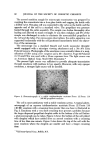
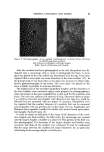
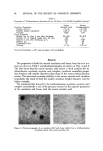
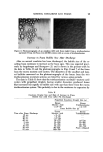
88 JOURNAL OF THE SOCIETY OF COSMETIC CHEMISTS pressure, producing a foam consisting of propellant gas bubbles dispersed in an aqueous surfactant phase. A considerable number of papers have been published on the properties of aerosol foams (1-8), but relatively little information has been available about the emulsions from which the foams were obtained. One reason is that, up to the present, no satisfactory microscopic equipment was available for observ- ing the aerosol emulsions under pressure. Another is that since the foam was the consumer product, it was only natural that more attention should have been focused upon the properties of the foam instead of those of the emulsion. As a result, little is known about possible relationships between the properties of aerosol emulsions and their foams. The pressure of the liquefied propellants limits the commercial methods for preparing aerosol emulsions compared to those available for nonaerosol emul- sions. In aerosol products, where the concentrate itself is an emulsion, the properties of the emulsion can be modified by varying the method of prepara- tion of the emulsion concentrate. Since the concentrate is not under pressure, a variety of procedures can be used to prepare the concentrate. The proce- dure producing the best emulsion can be determined by conventional meth- ods. When the propellant is the only organic phase in an aerosol emulsion, the method for preparing the emulsion is essentially restricted to adding the propellant last to the aqueous phase at room temperature by pressure loading. The agitation necessary to achieve emulsification of the propellant is obtained by the turbulence created by the pressure filling process, by hand or machine shaking during production, during transportation, or when the consumer shakes the product immediately before use. In view of the limited methods for achieving emulsification of the propel- lant, it is essential to select a surfactant system that promotes emulsification of the propellant with the minimum amount of agitation. The surfactant should also produce dispersed droplets of the smallest possible size to reduce creaming and with strong interfacial films to minimize coalescence and in- crease stability. The major objective in the present work was to determine what relation- ships existed between aerosol emulsions and their foams with the hope that an understanding of this relationship would ultimately lead to better and more aerosol cosmetic foam products. In order to study the emulsions, it was neces- sary to develop a glass pressure cell for microscopic observations of the aero- sol emulsions. The development of the pressure cell is an important contribu- tion of this paper. The triethanolamine salts of the fatty acids are commonly used as surfac- rants for aerosol foams. In the present investigation, two diffcrcnt aqueous triethanolamine myristate/Freon© 12/Freon©* 114 (40/60) propellant *Registered trademark of E. I. du Pont de Nemours & Co., Inc., Wilmington, Del. •9898.

AEROSOL EMULSIONS AND FOAMS 89 emulsions were selected for the study. One had an excess of myristic acid and had been shown by Sanders (8) to produce aerosol cmulsions and foams with high stability because of the presence of the triethanolamine myristatc-my- ristic acid surfactant complex (also referred to as acid soaps). The other had an excess of triethanolamine and, therefore, contained a minimum of the com- plex. This aerosol system had been shown to produce emulsions and foams with low emulsion and foam stability. The existence of complexes formed between the salts of fatty acids and free fatty acids was reported by McBain and Field as carly as 1933 (9). Subse- quently, Arkins (10) determined that the pearlincss in sodium or potassium stearate creams formulated with an excess of stearic acid was related to the acid-soap complex of free stcaric acid and sodium stearate. Kohlhass showed that complexes between sodium palmirate and palmitic acid existed in stoi- chiometric ratio of 1:1 and had a crystal pattern (11). In aqueous systems, these complexes were usually considered to be liquid-crystalline in nature (12). Kung and Goddard, who have done a considerable amount of work on these complexes, have reported fatty acid-potassium salt complexes with a tool ratio of 1:1 (13). EXPERIMENTAL Concentration ol ½ the Sur[actants The stoichiometric concentration of triethano]amine myristate in the aque- ous phase (distilled water) was 0.20M. One emulsion contained a 50% molar excess of myristic acid* and the other a 50% excess of triethanolamine.? The tota] wt % concentration of the surfactant portion, considering the excess of myristic acid or triethanolamine, was about 10%. Preparation o• the Aqueous Phase The myristic acid was heated alone to 54.4øC. The aqueous phase contain- ing the triethanolamine was heated separately to 54.4øC. The aqueous phase was then added slowly to the melted myristic acid xvith stirring. After addi- tion was complete, the aqueous phase xvas allowed to cool to room tempera- ture with stirring. Composition o• the Aerosol Emulsions The aerosols had a composition of 90 wt % aqueous tricthanolamine myris- rate and 10 wt % Freon 12/Freon 114 (40/60) propellant. The concentrates were purged with propellant before the containers were capped and the pro- pellant was pressure loaded. *"Wecoline" 1495, E. F. Drew Chemical Corp., Boonton, N.J. lFischer Scientific Co., Pittsburgh, Pa.
Purchased for the exclusive use of nofirst nolast (unknown)
From: SCC Media Library & Resource Center (library.scconline.org)