90 JOURNAL OF THE SOCIETY OF COSMETIC CHEMISTS Evaluation o[ the Aerosol Emulsions and Foams Emulsion Stability Emulsion stability was iudged visually with glass bottle samples by measur- ing the time interval between agitation of the samples and the first indication of phase separation. Before the determination, the samples were shaken 20 times by hand, allowed to stand overnight, and reshaken 20 times immediate- ly before the stability measurement. Phase separation, or creaming, as a method for judging emulsion stability, is commonly used. It is dependent upon such factors as droplet size, agglom- eration, viscosity, etc., but does not necessarily indicate a change in droplet size as a result of coalecsence. However, Schulman and Cockbain considered phase separation to be sufilciently valid for stability comparison purposes if all the samples were prepared in the same way (14). Phase separation was noticeable either by the appearance of propellant droplets that settled to the bottom of the glass bottles or by the separation of the emulsion into two lay- ers as a result of the initial settling of larger droplets. Foam Sti]Jness Foam stiffness was determined using a Curd Tension Meter* (15). Foam stiffness values are reported in grams and indicate the relative resistance of the foam to deformation by the downward penetration of a curd knife. Foam stiffness is considered to be related to foam viscosity. Foam Drainage Foam drainage rates were obtained by discharging a known quantity of foam into a glass funnel positioned over a graduate and determining the amount of liquid that drained from the foam into the graduate at various time intervals (16). The per cent drainage of the foam at given time intervals could then be calculated. Foam Stability Foam stability is another term that has various interpretations depending upon the particular investigator. True foam stability is a function of a number of factors, such as drainage, change in bubble size, bubble coalescence and foam collapse, etc. In this paper, it is defined as persistence of foam structure. The foam was discharged in front of a backboard with lines drawn horizon- tally at ¾4 in. intervals. The rate of collapse of the foam with time could then be determined. OThe Curd Tension Meter is no longer available from the Cherry-Burrell Corp., Des Moines, Iowa, but can be obtained from Marine Colloids and is now designated as the Marine Colloids Gel Tester.

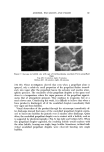
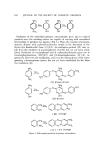
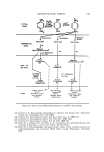
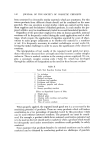
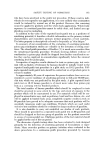
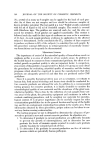
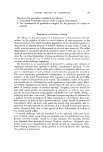
AEROSOL EMULSIONS AND FOAMS 91 Foam Density Foam density was obtained by weighing 350 cc of the foam within one minute after discharge. Wetting Wetting was determined by discharging the foam onto a paper towel and noting the time until visual wetting of the paper was observed. Microscopic Apparatus The apparatus for microscopic examination of aerosol emulsions was con- structed as follows: a 4-oz glass bottle was capped with a standard Precision valve with an 0.08-in. i.d. tail piece. A hole, 0.08 in. in diameter, thus corre- sponding to the diameter of the tail piece, was drilled through the entire valve to the dip tube. This essentially converted the valve into an extension of the dip tube. A glass pressm'e cell was prepared by placing an oval brass shim, I rail thick, between two pieces of ordinary glass and fusing the edges of the glass together, leaving the brass shim sandwiched between the sheets of glass. The brass shim inside the cell was removed by immersion in nitric acid, leaving a cell with a uniform, inside depth of I rail. The ends of the oval cell were fused to short lengths of 0.08-in. i.d. glass tubing. The outside dimensions of the cell were 2 mm thick, 5 mm wide, and 7 mm long. One end of the cell was connected to the stem of the valve on the bottle and the other end to the tail piece of a standard Precision valve with a 0.018-in. inlet orifice and foam actuator. The apparatus is illustrated in Fig. 1. The oval cell is located midway between the top valve and the valve on the glass bottle. Figure 1. Apparatus for microscopic observation of aerosol emulsions
Purchased for the exclusive use of nofirst nolast (unknown)
From: SCC Media Library & Resource Center (library.scconline.org)