COMPARISON OF GUINEA PIG AND FETAL HOG SKIN 377 sample was quickly blotted dry to remove excess water and mounted, epidermal side up, on the dermal (receiving) half of the diffusion cell. The O-ring was put in place, defining a 1.6 cm diameter circle (2.0 cm2) a 10/x1-aliquot of 0.5 M oz-naphthol in ethanol was piperred into the center of the circle and allowed to spread. When the solvent evaporated, the diffusion cell was assembled. In the epidermal chamber well was placed I ml of saturated aqueous monobasic ammonium phosphate to yield 91% R.H. at 30øC. The derreal chamber was filled with 6 ml isotonic solution (0.140 M NaCI, 0.002 M K2HPO4, and 0.0004 M KH2PO4) containing I mg/100 ml of chloramphenicol (to prevent bacterial growth). The closed cell was immersed in a 30øC water bath and shaken at 80 oscillations per minute. Aliquots of the dermal chamber solution were removed after several intervals, ranging from 0.5 to 24 hr. DETERMINATION OF o•-NAPHTHOL A1pha-naphthol fluoresces in alkaline aqueous solutions (pH 11 and above), with an excitation maximum at 335 nm and an emission peak at 455 nm. Concentrations in the range of 10 -6 to 10 -7 M were measured with a Turner Fluorometer using filter//7-60 (110-811) as the primary and//2A (110-816) as the secondary filter. Aliquots removed from the diffusion chamber (50 to 200/al) were diluted with 0.01 N NaOH to final volumes of 2, 5 or 10 ml and assayed fluorometrically. Controls, in which the skin was not treated with oz-naphthol, were run simultaneously. No fluorescence was observed in dermal solutions of the control samples under the condition in which o•-naphthol fluoresces. Results were expressed as a percentage of applied amount of o•-naphthol diffused to the dermal side, and plotted as a function of time. EXTRACTION OF STRATUM CORNEUM Lipid content was estimated from the difference in the dry weights of stratum corneum samples before and after ether extraction. Water soluble compounds were obtained by extracting the delipidized samples with distilled water. Each aqueous extract was subjected to amino acid analysis. Total amounts of water-extractable materials were estimated by difference (dry weights of stratum corneum samples before and after water extraction). AMINO ACID ANALYSIS Stratum comeurn and periderm were hydrolyzed in 6 N HC1, according to standard procedures (4). The amino acid analyses were carried out with a Beckman HPl!9 analyzer using conditions developed by Moore and Stein (4). FOURIER TRANSFORM INFRARED SPECTROSCOPY (FTIR) Samples of stratum corneum and periderm were mounted over slits in cardboard holders. FTIR absorbance spectra were obtained between 3,800-500 cm -1. Each spectrum represents the results of 1,000 scans with a resolution of 8 cm -•.

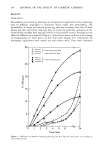
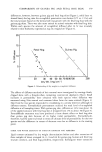
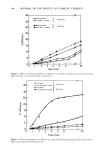
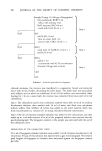
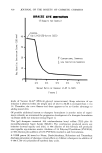
378 JOURNAL OF THE SOCIETY OF COSMETIC CHEMISTS RESULTS PERMEABILITY Permeability was studied by selecting one compound (oz-naphthol) and then observing how its diffusion responded to treatments which might alter permeability. The permeability of frozen and thawed guinea pig skin was compared with that of fresh guinea pig skin and frozen fetal hog skin, to assess the potential usefulness of the commercially available fetal hog skin (which is only available frozen). Freezing did not affect the diffusion of o•-naphthol (Figure 2, dotted lines, where each line is the average of measurements on three pieces of skin from each animal). For convenience, all subsequent experiments were carried out with frozen skins. There were consistent 30 \\ 25 c 20 o 15 10 O Animal l } Frozen Guinea Pig Skin A Animal II [] Animal III Fresh Guinea Pig Skin ß Animal I ß Animal II Frozen Fetal Hog Skin I• Animal III I I I I I / i I /I øo 1 2 3 4 5 6 24 Time (hrs) Figure 2. Diffusion of o•-naphthol through guinea pig and fetal hog skin (each point is an average of three measurements).
Purchased for the exclusive use of nofirst nolast (unknown)
From: SCC Media Library & Resource Center (library.scconline.org)