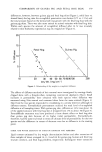
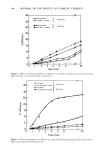
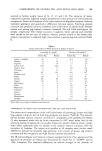
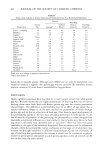
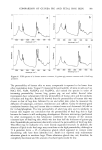
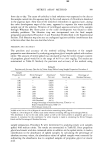
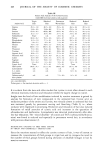
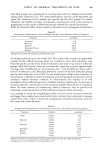
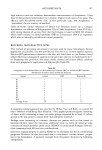
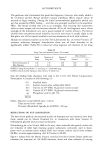
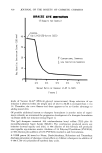
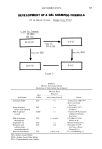
ANTI-IRRITANTS 417 high scores to zero eye irritation. Intermediate concentrations of Amphoteric 2 (less than 0.14%) produced intermediate eye irritation. Higher levels were of no value. The efficacy ratio (0.14/0.70) shows that, in this particular case, 20% Amphoteric 2 "neutralizes" the eye irritancy of menthol. Table II shows similar reduction of Draize Eye Irritation scores for a Cologne formulation, via addition of Polypropylene Glycol 2000, Amphoteric 2 and PVP (etc.) with varying degrees of success. Note that this Cologne is based on SDA 39C ethanol, which itself contains 1% diethyl phthalate (DIP) as a denaturant. DIP is an ingredient which also occasionally provides anti-irritant properties. BLOCKING SKIN-REACTIVE SITES This method of providing anti-irritancy has been used by many formulators. Several approaches are possible: one was provided by Faucher et al. (3) who applied aqueous Polymer JR © pretreatment solutions to the skin and dried them in situ. Sodium lauryl sulfate (SLS) was subsequently applied to the same skin site (via occluded patch) for 1 hr. Repeating this procedure five times clearly showed anti-irritant effects resulting from such prophylactic applications of Polymer JR (Table III). Table III Comparison of Anti-Irritant Effects of 2% Hydroxyethyl Cellulose (HEC) vs 2% Polymer JR © Solutions (Moderation of Sodium Lauryl Sulfate Eye Irritation) Subject Control HEC Polymer JR #1 3 2 1 #2 3 3 • #3 4 2 2 if4 4 3 1 #5 4 3 2 //6 4 3 2 #7 3 2 1 #8 4 2 2 if9 4 2 1 #•0 3 2 • -- -- -- Average Scores: 3.4 2.4 1.4 A somewhat similar approach was provided by Willer, Yust and Kelly, in a patent (6) titled "Method of Inhibiting Skin Irritation." They applied protective agents consisting of dimer acids (containing at least two polar groups separated by at least 15 carbon atoms) to the skin prior to contact with "skin allergenic materials." Perhaps more interesting to cosmetic chemists are patents such as that issued to Gerstein (4) who noted the fortuitous additional value (in terms of reducing scalp irritation) of stearyl dimethyl amine oxide (SDAO) in antidandruff shampoo formula- tions containing both SLS and zinc pyridinethione. Gerstein's original purpose in adding SDAO to his shampoo was for its conditioning properties. However, he also discovered that it contributed "counter irritant" proper- ties to his formulation. A pertinent example from this patent discloses the following composition:

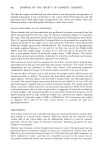
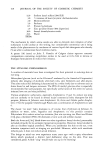
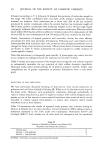
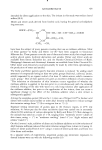
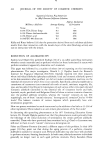
418 JOURNAL OF THE SOCIETY OF COSMETIC CHEMISTS 32.0 3.0 2.0 1.0 0.5 1.9 30.0 29.6 lOO.O% Sodium lauryl sulfate (28% SLS) 7:3 mixture of lauric/myristic diethanolamides Montmorillonite Perfume Protein hydrolysate Zinc pyridine-thione (48% dispersion) Stearyl dimethylamine oxide Water The mechanism by which amine oxides are able to diminish skin irritation of other surfactants is still unclear at this writing, but considerable commercial use is being made of the phenomenon by marketers of various liquid dish detergents who thereby (5) are able to substantiate hand mildness claims. A patent (10) issued to John F. Gerecht of Colgate claims aqueous cosmetic compositions containing morpholine oxides to be used at 0.2%-5.0% in lotions or shampoo formulations to reduce their irritancy. THE STINGING PHENOMEMON A number of materials have been investigated for their potential in reducing skin or eye sting. Alkoxylated glucose (such as the Glucams © marketed by the Amerchol Corporation) reduces skin stinging of alcoholic after-bath rubs, skin fresheners and after-shaves. They also reduce skin defatting (characterized by a white look) due to solvents such as those found in nail lacquer removers. The PPG-20 methyl glucose ether is especially recommended for such purposes, but specifically useful ratios of this ether (to various irritants) have not yet been published. Various amphoteric surfactants--especially Amphoterics 17 and 19--reduce eye sting and are currently to be found in several major commercial baby shampoos for this purpose. Johnson & Johnson uses Amphoteric 19 Avon and Gilette prefer Ampho- teric 17 for the purpose. Chesebrough Ponds uses a combination of Amphoterics 2 and 6. The classic "no tears" baby shampoo is, of course, that of Johnson & Johnson. In addition to water, color, fragrance and Ampho.teric 19, this product contains Polysorbate 20 to reduce actual eye irritation, [but not eye sting, see Masci and Poirier (11)], plus a thickener (PEG-150 distearate,), boric acid and sorbitan laurate. Both the Avon andJ &J labels show one other ingredient: benzyl alcohol, presumably included primarily for its antiseptic/preservative properties. However, benzyl alcohol is also an excellent topical anesthetic. When you anesthetize the skin or the eye, overt irritation symptoms such as stinging are precluded. However, while such anesthesia reduces pain, it does not reduce actual irritation. This brings to mind our own experience many years ago--with a spicy after-shave lotion which produced a distinct (and deliberate) sting on the skin. That was considered good. A little "zing" would wake you up in the morning!
Purchased for the exclusive use of nofirst nolast (unknown)
From: SCC Media Library & Resource Center (library.scconline.org)