j. Soc. Cosmet. Chem., 33, 157-167 (July 1982) Factors in the occlusivity of aqueous emulsions J. WEPIERRE and M. ADRANGUI, Laboratoire de Pharmacologie, Universite de Paris- Sud, Rue Jean- Baptiste Clement, 92290 Chateney-Malabry, France J. P. MARTY, Laboratoire de Pharmacie Galenique, Universite d'Amiens, F 8000 Amiens, France. Received May 22, 1981. Synopsis The effects of various formulation parameters on occlusive properties of O/W emulsions were studied. Four oils of increasing polarities: perhydrosqualen, mineral oil, sweet almond oil and Miglyol 812 © were used. The non-ionic surfactants chosen were of the ester group: sorbitan monooleate-polyoxyethylene (20) and sorbitan monooleate (Montane 80 © and Montanox 80 © ) and of the ether group: polyoxyethylene-(2)-oleyl-ether and polyoxyethylene-(10)-oleyl-ether (Simulso192 © and Simulso196©). The proportion of $urfactants for each group was such as to obtain an HLB between 4.3 and 15. Finally three groups of emulsions were prepared by phase inversion using three oil-surfactant$-water ratios: 15-5-80 10-10-80 10-5-85. Occlusivity of emulsions was evaluated using hydrated gelatin as the substrate. The occlusivity of oils in decreasing order is: perhydrosqualen Miglyo1812 mineral oil sweet almond oil. This property is not related to the dielectric constant of the oils. Occlusive effects of an emulsion were not in correlation with occlusivity of the oil. At the opposite, an occlusivity decrease with the proportion of surfactant and increase with the % of oil in the emulsion. The occlusivity of emulsions varied in the same manner as that of the corresponding oily phase. Activity of emulsions was the greatest at the HLB to which the isotropic oily phase was the most easily formed. INTRODUCTION Water exerts a major role in skin appearance and properties. A minimum water content of at least 15% is believed to be necessary to maintain the desirable softness and pliability of stratum comeurn (1,2,3). The lack of adequate water in stratum comeurn can contribute to dry and chapped skin. Various cosmetics are used to reduce the evaporative water loss from the stratum comeurn by occlusive effects and thus to enhance skin moisturization. Petrolatum, lanolin, beeswax and various oils function as occlusive moisturizers (4). Occlusivity of emulsions containing these products is not completely known though it is admitted that W/O emulsions are more occlusive than O/W emulsions (4,5). Handjani-Vila et al. (6) have postulated that the moisturization effect of W/O emulsion is not due to occlusivity of oily components of the cream but to regulation of water loss by the specific nature of emulsifiers permitting a lameliar organization of lipids. 157

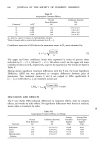
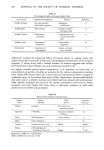
158 JOURNAL OF THE SOCIETY OF COSMETIC CHEMISTS In this work an attempt has been made to explain some aspects of occlusivity of emulsions using a model of highly hydrated gelatin (7). Measurements of water loss were made with various emulsions prepared via ternary phase diagrams. Some of the experimental objectives were: 1) to assess the importance of the concentration of constituents of the emulsions 2) to evaluate the role of the nature of surfactants and oils and 3) to determine the role of the physical structure of emulsions made by the same procedure and of their oily phase. EXPERIMENTAL MATERIALS Four oils of different polarity were chosen. Their classification according to the dielectric constant was as follows: Perhydrosqualen (P.H.S.) mineral oil sweet almond oil Miglyol 812 ©* (Table I). Table I Occlusivity and Delectric Constant of Oils P.H.S. Mineral Oil Sweet Almond Oil Miglyol 812 © Occlusivity % 78 _+ 5 35 -+ 4 28 +_ 4 57 + 3 Dielectric Constant 2,08 2,18 3,09 3,78 Two main groups of nonionic surface active agents were used for this study. One, with ester bonds: Montanox 80 ©** a sorbitan monooleate ester with an average of 20 ethylene oxide residues and Montane 80 ©** a sorbitan monooleate ester the other with ether bonds: Simulso192 ©** an oleyl alcohol derivative with an average of two ethylene oxide residues and Simulsol 96 ©** with an average of 10 ethylene oxide residues. The following HLB values suggested by the manufacturers were used for computing the HLB of the surfactant mixtures: esters { Montane 80©: 4.3 Montanox 80©: 15 Ethers { 92©: 4.9 Simulsol 96©: 12.4
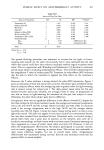
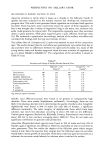
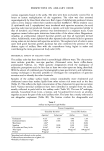
Simulsol The emulsions were prepared by emulsifying the oil phase in demineralized water, after which they were stabilized with a mixture of surfactants by phase inversion (8). Three common formulae of emulsions were prepared (Table II). The binary mixtures of oil surfactant having the same oil/surfactant (O/S) ratio as in the emulsions were also carried out for various HLB. *Fatty acids triglycerid (C8-C•2) **Seppic-Montanoir, Paris, France.
Purchased for the exclusive use of nofirst nolast (unknown)
From: SCC Media Library & Resource Center (library.scconline.org)