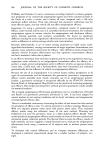
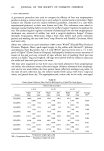
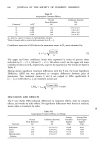
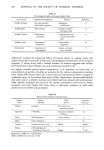
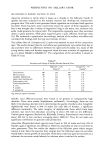
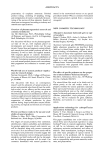
PERSPECTIVES ON AXILLARY ODOR 195 control. They do not function before puberty and gradually regress in old age, reflecting the blood level of testosterone. Males have larger and more numerous apocrine glands than females and as a whole have higher odor levels. The secretory coil of the apocrine gland is considerably larger than the eccrine sweat gland and produces its product continuously. Despite this, the amount of apocrine secretion made daily is miniscular, less than 1 ul in the whole axillary organ. Microdroplets of milky apocrine secretion can be made to appear at the follicular orifices by stimuli which cause contraction of the myoepithelium, the smooth muscle sheath surrounding the long, capacious ducts. Experimentally, injection of epinephrine will squeeze pre-formed sweat to the surface. Strong emotions have the same effect. Still, the sudden appearance of apocrine droplets does not result in a wave of pungent odor. The secretion is odorless and sterile when it first emerges through the follicular opening. The axillary odor is generated by the action of resident bacteria living on the surface. It is surprising how little we know about this odor and its effects on human behavior. Comfort suggested that it might communicate sexual and social messages (10). From antiquity come stories suggesting that it is a sexual stimulant, a signal of virility to receptive females (11). In modern, Western cultures axillary odor has only negative connotations. When presented to uninstructed females, it is uniformly regarded as offensive and disagreeable. The unacceptability of body odor in properly groomed individuals may reflect training and cultural influences since there is some evidence that in poorer, less developed countries it is viewed very differently, perhaps according to the original design as a positive sexual message. Published studies indicate that when presented with three odorous T-shirts, individuals can discriminate odors of the shirts on the basis of sex. They can also distinguish their own odor (12). Another study, using cotton pads worn overnight in the axilla, found a positive correlation of odor intensity with male subjects (13). Couples wearing T-shirts were subsequently asked to identify their own shirt, their partners and to rate the pleasantness of the odors. Approximately one-third were able to identify their own odor and that of their partner and distinguish male/female differences. Female odors were more often judged as pleasant in contrast to male odors (14). Aliphatic acids and androstenol because of their possible relation to human vaginal and axillary odors have also been evaluated. Female subjects applied a mixture of aliphatic acids to their chests prior to retiring. No differences in the amount of sexual activity were found between this group and a control group which used either alcohol, water or a perfume (15). In another study, female subjects were asked to wear face masks impregnated with either the acids or androstenol while judging the suitability of males for a specified job. The male candidates were rated more favorably in the presence of androstenol while aliphatic acids reversed their ratings (16). In a further study of androstenol also using face masks, subjects were asked to rate photographs of people on a bipolar scale--unsexy-sexy, cold-warm, etc. Photographs of women were judged sexually more attractive in the presence of androstenol by both men and women (17). The results of psychological studies are summarized in Table II. These studies deal with subjective opinions on a compound, androstenol, which has a sexual connotation, i.e., a sexy perfume contains musk. In addition, as with animal bioassays, it is necessary to present the stimulus in the proper context. Thus a study to

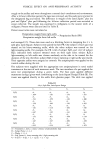
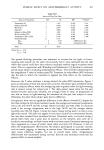
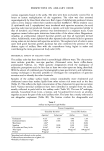
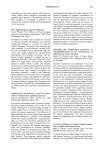
196 JOURNAL OF THE SOCIETY OF COSMETIC CHEMISTS Table II Psychological Studies on Human Axillary Odor Odor Source Experimental Approach Results Reference Axillae (T-shirts) Sex discrimination Distinguish 12 Individual recognition male/female Axillae (pads) Rate intensity Intensity correlates 13 with male odors Axillae (T-shirts) Interpersonal Unpleasantness with 37 perception socially undesirable traits Aliphatic acids Assessment of Odors modify 16 people test judgments Androstenol Assessment of women--attractive 17 photographs men--friendlier objectively evaluate the behavioral effects of human odors, i.e. axillary odors, will require the proper emotional setting and a physiological measurement of the subjects response. A recent study with a limited number of subjects suggests that axillary secretions from a donor female can cause menstrual synchrony (15). As regards possible psycho-sexual implications, it is important to know that an extraordinary proportion of adults are anosmic for the various components of axillary odor. About 40% cannot detect the urinous odor of androstenone which is judged as unpleasant more so by women than men (19,20a). Surprisingly, women preferentially also used a seat in a dentist's waiting room which had been sprayed with androstenone (20b). Specific anosmias also exist for the musky androstenol (12%) and the sweaty isovaleric acid (3%) (Table III). Thus there is individual variation in both odor production (see below) and perception. Table III Primary Odors Related to Human Odors Primary Primary Od or Anosmia Odor Odorant Source (percent) Sweaty Isovaleric Skin bacteria on 3 Apocrine secretion Spermous 1-Pyrroline Enzymatic oxidation 16 of Semen Fishy Trimethylamine Uremic breath 6 Malty Isobutyraldehyde -- 36 Urinous 5ce-Androst-16-en-3-one Axillae 49(36)* Musky c0-Pentadecalactone -- 12 5c•-Androst-16-en-3-ol Axillae 12 (6)* *Reported sex difference--male (female) [Table modified from Amoore, ref. 38]
Purchased for the exclusive use of nofirst nolast (unknown)
From: SCC Media Library & Resource Center (library.scconline.org)