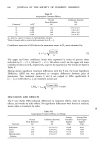
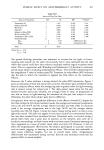
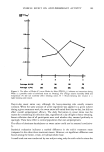
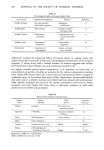
j. Soc. Cosmet. Chem., 34, 193-202 (July 1982) Perspectives on axillary odor JOHN N. LABOWS, Monell Chemical Senses Center, 3500 Market Street, Philadelphia, PA 19104, KENNETH J. McGINLEY and ALBERT M. KLIGMAN, Duhring Laboratories, Department of Dermatology, University of Pennsylvania, Philadelphia, PA 19104. Received March 1, 1981. Presented at Society of Cosmetic Chemists, New York Chapter, April 1, 1981. Synopsis The study of axillary odors involves the characterization of the responsible skin bacteria and an understanding of their interaction with apocrine secretion. Two bacterial populations are responsible for the differences in odor profiles found in individuals. Androstenone, androstenol and isovaleric acid contribute to these odor profiles. Control measures should be directed at masking these odorants or interfering with their bacterial production. The human axillary odor may have a communicative role analogous to that of the odors from specialized skin glands in animals. INTRODUCTION Every region of the human body has a different odor sometimes so distinctive as to allow immediate identification of its origin. For instance, the scalp and feet are easily recognized. Trained observers can identify individuals merely by smelling their hands (1). Of all the human scents, those arising in the axillae, are the most pungent and have been the object of broadreaching studies by psychologists, bacteriologists, biochem- ists, anthropologists, even poets and novelists (2). Scent glands, which give many animals their unique smell (rabbity, elephanty), are either apocrine or apocrine-sebaceous glands, similar to those of the human axilla (Table I). These glands have prominent social functions, comprising a complex system of chemical messages (pheromones) that provoke specific types of behaviors. Scent glands are used to mark territory, to express dominance, to produce sexual excitement in the male or sexual attraction in the female, to repel enemies and as individual signatures. In some cultures, body odor seems to have positive connections intense odor signifies greater sexual attractiveness and perhaps greater sexual powers. In modern western cultures, axillary odor is universally regarded as offensive and repulsive to be suppressed at any cost. Apart from the psychosocial contexts, the study of axillary odor is powerfully stimulated by the fact that the manufacture and sale of deodorants is a large commercial enterprise. There is considerable interest in identifying the odorif- 193

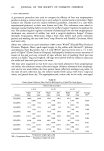
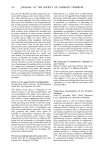
194 JOURNAL OF THE SOCIETY OF COSMETIC CHEMISTS Table I Mammalian Scent Glands Gland Mammal [apocrine-se baceous] Odorant Reference Rabbit "odor" anal/apocrine cis-undeo4-enal 29 Beaver castor castoramine 30 Elephant temporal/apocrine 31 Deer interdigital short-chain-acids 32, 33 subauricular isovaleric acid 34 tarsal aldehydes 35 Musk deer sebaceous muscone 27 Human apocrine bacterial action -- on secretion Marmoset monkey circumgenital butyrate esters of 36 long chain alcohols Bactrian camel occipital isovaleric acid 45 androst-16-en-3-one erous chemicals in axillary odor and understanding the factors which control their generation. ODOR ANALYSIS The present interest in the characterization of human odors has paralleled the development of sophisticated analytical techniques, primarily combined gas chroma- tography/mass spectrometry (gc/ms), which have made it possible to routinely separate and identify submicrogram quantities of organic compounds. Total body volatiles have been sampled by placing individuals in glass tubes and sweeping with air to concentrate the odors (3). A telephone booth-like chamber was also used to sample human volatiles and over 100 chemicals were identified (4). These experiments examined the possibility that body odors might be unique enough to serve as personal signatures. Techniques for the concentration of vaginal, oral, skin and axillary odors have also been developed (3,5). In addition, devices have been made for monitoring skin volatiles for mosquito attractants (6). The sampling and identification of volatiles from different body sites and their application for the diagnosis of disease has recently been reviewed (7). Our approach to the study of skin odors has been to duplicate the natural odors in vitro by incubating the resident bacteria with the appropriate skin secretion. The contribu- tion of the scalp yeast, Pityrosporum ovale, to scalp odor has been determined by this approach (8). GENERAL BIOLOGY: It has long been appreciated that axillary odor is traceable to the apocrine glands which are attached to hair follicles (9). Apocrine glands are larger and more numerous in the axilla than anywhere else indeed, except for the axilla, pubic area, and ear canal they are mere vestiges in humans. Apocrine glands, like sebaceous glands, are under androgen
Purchased for the exclusive use of nofirst nolast (unknown)
From: SCC Media Library & Resource Center (library.scconline.org)