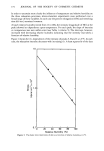
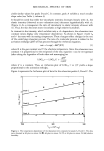
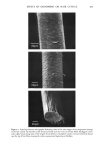
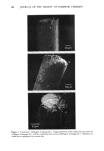
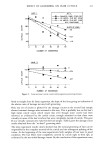
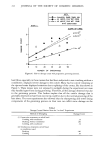
EFFECT OF GROOMING ON HAIR CUTICLE 215 by Swift and Brown (7). It would appear that the process of shampooing, towel drying, and wet combing is the dominant factor in the deterioration of the cuticle, with dry combing and other forms of mechanical handling being of less consequence. The most damaging of these processes appears to be detangling of wet hair. While the hair is wet, with the hydrogen bonds broken, it has a much lower resistance to abrasion than when dry, and it is at this time that the hair is subjected to the very strong abrasive forces that are associated with combing or brushing out the knots. Hence quite severe damage can be inflicted during this relatively short stage of the grooming process. This study has verified that the damage inflicted can be reduced considerably by applying a conditioner to the hair before removing the knots, with a reduction in the rate of damage with grooming of up to 82% being observed. The conditioner acts by reducing the friction in the hair during combing and therefore reducing the abrasion forces to which the hair is subjected. In addition it was noted that as a consequence of preserving the cuticle in this way, the use of a conditioner also effectively reduced the subsequent degree of entanglement that occurred during shampooing, therefore further reducing the subsequent damage due to combing. Exposure to sunlight was not necessary for cuticle breakdown to occur. However, exposure to sunlight and chemical treatment weakens the hair and therefore probably makes it more susceptible to damage by grooming. ACKNOWLEDGEMENTS This project was funded by Reckitts Toiletries International, whose support is gratefully acknowledged. The authors also wish to thank Professor M. Feughelman for his helpful discussions. REFERENCES (1) R. A. Wall and L. D. Hunter, Normal adult hair--structure and properties, Cosmet. Perfum. 89, 31-36 (1974). (2) M. L. Garcia, J. A. Epps, R. S. Yare, and L. D. Hunter, Normal cuticle wear patterns in human hair,J. Soc. Cosmet. Chem. 29, 155-178 (1978). (3) A. C. Brown andJ. A. Swift, Hair breakage: the scanning electron microscope as a diagnostic tool,J. Soc. Cosmet. Chem. 26, 289-297 (1975). (4) V. N. E. Robinson, Split ends: a scientific study of hair, Cosmet. Perfum. 90, 25-30 (1975). (5) V. N. E. Robinson, A study of damaged hair,J. Soc. Cosmet. Chem. 27, 155-161 (1976). (6) T. Okumura, A. Ishida, T. Sasaki, and S. Hayashi, Hair and brushing, Int. Fed. Soc. Cosmet. Chem. 3, 727-749 (1976). (7) J. A. Swift and A. C. Brown, The critical determination of fine changes in the surface architecture of human hair due to cosmetic treatment,J. Soc. Cosmet. Chem. 23,695-702 (1972). (8) J. A. Swift, Scanning electron microscope study of Jane Austen's hair, Nature 238, 161-162 (1972). (9) M. M. Breuer, G. K. Gikas, and I. T. Smith, Physical chemistry of hair condition, Cosmet. Toiletdes 94, 29-34 (1979). (10) T. G. Schoenberg and A. A. Scafidi, Role of alkylamidoamine salts in the modern hair conditioner, Cosmet. Toiletties 94, 57-64 (1979). (11) V. N. E. Robinson, Backscattered electron imaging, in "Scanning Electron Microscopy 1975," IITRI, Chicago, pp 51-60.

Abstracts The Annual Scientific Meetings and Seminars of the Society of Cosmetic Chemists are important venues for informing the participants about the state of the art and recent technical advances in the field of Cosmetic Science. To provide broader dissemination of that information, the Publication Committee has decided to publish in the Journal abstracts of the technical presentations made at these Meetings and Seminars.--The Editor. Society of Cosmetic Chemists Annual Scientific Seminar Memphis, TN, May 13-14, 1982 ANTI-IRRITANTS In vitro tests for mildness additives E. D. Goddard, Ph.D., and P.S. Leung, Union Carbide Corp., Old Saw Mill River Road, Tarry- town, NY 10591. A high level of interest exists in liquid soaps which, in general, are aqueous solutions of high surfactant concentration. As such, they have a potential for skin irritation, and thus it is desirable to identify "mildness" additives for these compositions. Our program involved devising an in vivo screening test. For this purpose, a stratum corneum membrane swelling test was developed to evaluate the peroeor- mance of mildness additives. A cationic cellulose polymer was found to be the most effective for reducing the swelling of membranes caused by a number of different surfactant bases. Dr. Goddard, Corporate Research Fellow, Union Carbide Corpo- ration, earned his Ph.D. in Physical Cfiemistry from Cambridge University, England and his B.S. and M.S. degrees from Rhodes University, South Afri- ca. He has been a member of the SCC since 1975. dough conditioners and food emulsifiers since 1969. These compounds are non-toxic and non- irritating to the skin or eye at the 100% active level or in aqueous dispersions. Similar compounds derived from coconut oil show these same non- toxic, non-irritating properties. Ethoxylated mono- and diglycerides, when properly formulated with fatty alcohol sulfates, fatty ether alcohol sulfates, or alpha olefin sulfonates, dramatically reduce the irritation properties of the amionic surfactant. These nonionics are functioning here as anti- irritants. As more ethylene oxide is introduced into the mono- and diglyceride molecules, greater vis- cosity-increasing characteristics for aqueous liquid systems are obtained without the use of gums or other thickening agents or sodium chloride. These properties make ethoxylated mono- and diglycer- ides ideal components for low irritation shampoos, having low to high active surfactant concentrations and low to high (gel) viscosities. They are also excellent emulsifiers for cosmetic creams and lotions. They can be used as emulsifiers and solu- bilizers for perfume oils. Ethoxylated mono- and diglycerides as non- ionic surface active agents and anti-irritants-- part II Richard Egan, Sherex Chemical Co., P.O. Box 646, Dublin, OH 43017. Ethoxylated mono- and diglycerides derived from tallow have been used in the United States as bread Skin--Some anti-irritant effects due to treat- ments with cosmetic proteins R. Richard Riso, Maybrook, Inc., P.O. Box 68, 690 Broadway, Lawrence, MA 01842. Protein hydrolyzates, soluble collagen, amino acids, and their condensates with fatty acids are very popular functional ingredients used in products for 217
Purchased for the exclusive use of nofirst nolast (unknown)
From: SCC Media Library & Resource Center (library.scconline.org)