180 JOURNAL OF THE SOCIETY OF COSMETIC CHEMISTS O'Malley and Christian (2) used a continuous recording method to evaluate perspira- tion properties of six commercial antiperspirant agents and three commercial bases in the forms of a stick, a cream, and a lotion all were compared with a 24% w/w aluminum sulfate solution. Their tests indicated that aluminum methionate was the most effective agent, and that vehicle did not affect antiperspirant efficacy. Jungerman (1), using a gravimetric procedure, compared results of antiperspirant efficacy under normal activity and in a controlled thermal environment. He evaluated antiperspirant agents in various vehicles for antiperspirant and deodorant efficacy, safety, staining potential, and cosmetic acceptability. He found no significant difference among the active ingredients' effectiveness in the same formulation, but did notice a difference in activity among vehicles and concentrations. Recently, Bretschneider, et al. (7) tested varying aluminum to halide ratios, multi- ingredient formulations, varying concentrations of single-ingredient formulations, and aqueous versus anhydrous dose forms for efficacy. Their definitive results showed that aqueous vehicles increased effectiveness and that optimum concentration efficacy reached a maximum rather than a plateau. In an effort to determine how vehicular excipients and the active ingredient's state (e.g., suspension versus solution) in an antiperspirant formulation affect the efficacy of a product, a single, proven antiperspirant entity in different vehicles, an aqueous lotion, a cream base, a solid stick, and a hydroalcoholic base were formulated and evaluated gravimetrically for the influence of vehicle on antiperspirant efficiency. Because the aim of an antiperspirant is to control human axillary perspiration in all types of environments and aid situations, the gravimetric procedure's antiperspirant efficacy results resemble most closely consumer use of an antiperspirant product. Further, a gravimetric technique is recognized officially by the FDA-OTC Advisory Review Panel on Antiperspirant Drug Products as the method of measuring antiperspi- rant efficacy. This simple and inexpensive method provides quantitative results suitable for statistical analysis. The accepted antiperspirant effectiveness qualification test is a modification of Fredell and Read's (12) gravimetric procedure introduced in 1951. It has been adapted by various workers to suit varying conditions and to clarify calculation and interpretation of antiperspirant efficacy data. There is considerable controversy concerning the effect of side treated and the method of calculation of efficacy data. To control asymmetry in axillary sweating, Majors and Wild (13) adjusted posttest sweat ratios with pretest sweat ratios. They evaluated efficacy results using the arithmetic mean of the ratio method. Wooding and Finklestein (14) used the geometric mean in a Sides Subjects Effects Model. Their model produced antiperspirant efficacy results similar to those of the ratio method and eliminated pretest collection periods. The Review Panel accepts the efficacy results of both methods, and even suggests a simple binomial test to evaluate the antiperspirant effectiveness levels using a minimum of 20 subjects with or without pretest sweat ratios. To eliminate side treated differences and to compare treatment differences, we developed a statistical experimental design for a smaller number of subjects, viz., eight.

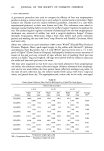
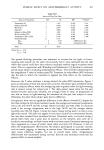
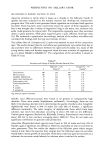
VEHICLE EFFECT ON ANTI-PERSPIRANT ACTIVITY 181 EXPERIMENTAL 1. FORMULATIONS A number of preliminary formulations were tested and compared for physical and chemical compatibility, stability, and cosmetic appeal. Twenty percent aluminum chlorhydrate was used as the active agent. Aluminum chlorhydroxy allantoinate in concentrations of 0.25% was added to the formulations for its beneficial therapeutic and cosmetic properties. These ingredients were incorporated into four widely used vehicular forms: a cream base, an aqueous roll-on lotion, a solid stick, and a hydroalcoholic base such as one used in the manual pump sprays (8-11). One product from each vehicular form was selected for use as the test antiperspirant. All test products were formulated to provide 100 mg of active ingredient per 500 mg of test antiperspirant product. The test antiperspirant formulas are listed in Table I. Table I Test Antiperspirant Formulas %, weight Solid Stick Crodesta A 10 ©• 38.5 Procetyl AWS ©• 9.6 MicroDry, Ultrafine ©2 38.5 Alcohol soluble aluminum chloryhydroxy allantoinate 3 0.5 Crodamul IPM ©• 12.9 100.0 Cream Cetyl alcohol 5.00 Arlacel 165 ©4 5.00 Distilled Water 49.75 Aluminum chlorhydroxy allantoinate 3 0.25 Chlorhydrol, 50% w/w solution ©2 40.00 Lotion Veegum ©5 1.00 Distilled water 50.75 Arlacel 165 ©4 8.00 Chlorhydrol, 50% w/w solution ©2 40.00 Aluminum chlorhydroxy allantoinate 4 0.25 Hydroalcoholic Solution Ethanol, 95% 50.00 Arlamol E •4 5.00 Chlorhydrol, 50% w/w solution ©• 40.00 Alcohol soluble aluminum chlorhydroxy allantoinate 3 0.25 Distilled water 4.75 •Croda, Inc., New York, New York. 2Reheis Chemical Co., Berkeley Heights, New Jersey. •Schuylkill Chemical Co., Philadelphia, Pennsylvania. 4ICI Americas Inc., Wilmington, Delaware. 5R. T. Vanderbilt Co., Inc., New York, New York.
Purchased for the exclusive use of nofirst nolast (unknown)
From: SCC Media Library & Resource Center (library.scconline.org)