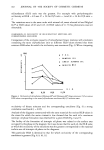
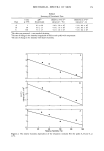
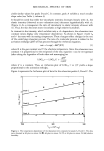
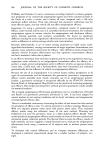
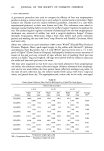
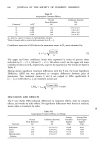
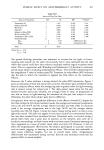
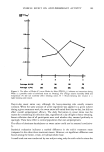
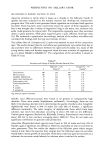
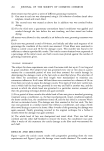
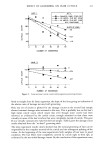
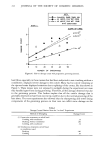
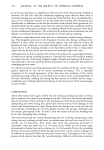
OCCLUSIVITY OF AQUEOUS EMULSIONS 161 35 + 4 respectively. For Miglyol 812 ©, the dielectric constant was 3.78 the occlusivity being 57 _+ 3. RELATION BETWEEN OCCLUSIVITY OF EMULSIONS AND HLB VALUES The occlusivity of emulsions having an oil/surfactant ratio equal to three was measured for various HLB. The results obtained from emulsions stabilized with ester surfactants (Fig. 1) and those stabilized with ether's one (Fig. 2) showed that for each oil, there was an HLB value for which the occlusivity of the emulsions was maximal whatever the surfactant used. As an example the occlusivity was maximum for an emulsion containing P.H.S. and ester surfactants to HLB = 9.25 (Oc%: 61 + 2). It was of interest to note that for the P.H.S. two O/W emulsions at HLB = 9.25 (Oc% -- 61 ___ 2) and HLB = 8.5 (Oc% = 47 ___ 5) were significantly more occlusive than a W/O emulsion at HLB = 4.3 (Oc% = 39 + 3). OCCLUSIVITY AND OIL/SURFACTANT RATIO Emulsions with the greatest occlusivity were chosen, the range of HLB was between 8.5 and 11.5, and the surfactants used were only the Montane-Montanox 80 © mixtures. As shown in Fig. 3, whatever the nature of the oil, occlusivity was higher when the I-Ip. H.S. /lB [] MINERAL OIL / /-t • •1" / I SWEET ALMOND ,LYOL,2 50 25 ** * - 8,5 9,25 10,5 11,75 Figure 3. Relationship between the occlusivity of emulsions and the proportion of oil and surfactants (Montane 80©-Montanox 80 ©) they contain at various HLB's 1: water/oil/surfactant: 80/10/10 2: water/oil/surfactant: 85/10/5 3: water/oil/surfactant: 80/15/5 Significance of the difference between the emulsions for each oil with various oil-surfactant ratio: *p 0.05 **p • 0.01 *Fatty acids triglycerid **Seppic-Montanoir, Paris, France.

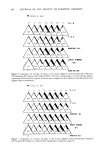
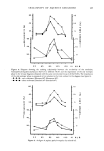
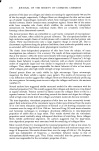
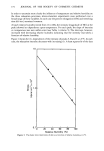
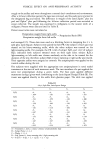
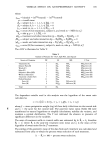
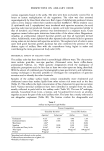
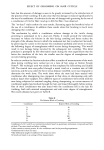
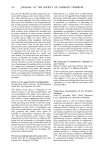
162 JOURNAL OF THE SOCIETY OF COSMETIC CHEMISTS oil/surfactant (O/S) ratio was the greatest. For example with perhydrosqualen occlusivity at HLB = 8.5 was 47 _+ 5% for O/S ratio -- 3 and 30 _+ 2% for O/S ratio = 2. The variations were in the same order with mineral oil, sweet almond oil and Miglyol 812 © at HLB values of 8.5 and 9.25. At HLB values of 11.75 this phenomena was not observable. COMPARISON OF OCCLUSIVITY OF OIL-SURFACTANT MIXTURES AND CORRESPONDING EMULSIONS Comparison of the occlusive capacity of oil-surfactant binary mixtures with emulsions containing the same oil/surfactant ratio at different HLB values showed that there exists an HLB value for which the occlusivity was maximum (Fig. 4). When comparing 100 _ © P.H.S. o MINERAL OIL ß SWEET ALMOND OIL IGLYOL 81 2 ,,/ H.L.e. 8,5 9,25 10,5 11,75 Figure 4. Occlusivity of oil/surfactant (Montane 80 © and Montanox 80 ©) binary mixtures: 15/5 at various HLB values corresponding to the water/oil/surfactant emulsions: 80/15/5 without water. occlusivity of binary mixtures and the corresponding emulsions (Fig. 5) a strong correlation was found (r = 0.95). Analysis of the diagrams constructed with the same materials for various HLB values in the zones for which the water content is low showed that for each oil a maximum isotropic oil phase formation was observed for a given HLB (Fig. 6 and 7). The facility of the formation of isotropic oil phase was related to the surface area occupied by this phase in the diagram. So it was shown that for each oil, the HLB value at which the occlusivity of the emulsions was the greatest corresponded to the maximal surface area of isotropic oil phase on the diagrams. This particular HLB is identical to that for which occlusivity of the corresponding emulsions is greatest (Fig. 8, 9, 10, 11).
Purchased for the exclusive use of nofirst nolast (unknown)
From: SCC Media Library & Resource Center (library.scconline.org)