286 JOURNAL OF THE SOCIETY OF COSMETIC CHEMISTS polymer shrinkresist finishes, where it has been shown that a long-chain aliphatic aliamine or a polyamine (such as polyethyleneimine) pretreatment improves the efficiency of the applied polymer (7-8). In work carried out thus far, the pretreatment reagent has been applied by pad rolls followed by a heat fixation step. For commercial processes, however, an exhaust application would be more economical, and therefore a knowledge of the factors affecting the affinity of simple long chain ammonium ions on wool is required. An additional property of amine-treated wool which may be of greater relevance to cosmetic chemistry, is the greatly enhanced dye affinity--even at ambient temperatures. Thus hair dyeing could be facilitated by a pre-treatment which effectively incorporates a polyamine (preferably surface-active) into the hair fiber surface. As a preliminary investigation, an examination was made on the effects of increasing chain-length in alkyl monoamines on their equilibrium uptakes on the fiber, comparing these with the uptakes of c•,c0-diamines of the same chain lengths. In addition, the effects of pH, temperature, and the presence of various inorganic salts in the sorption medium were also examined. The results are presented as adsorption isotherms no attempt was made to gain information on rates of uptake. EXPERIMENTAL MATERIALS Octyl-, decyl-, and dodecylamine were obtained from commercial sources and purified by conversion to the hydrochloride salt, which was then repeatedly crystallized from chloroform/ether. Three diamines--l,8-diamino-octane, 1,10-diaminodecane, and 1,12- diaminododecane--were purchased as high purity reagents and used as such. The monoamines were made up into 0.1 34 solutions from their hydrochloride salts, and the diamines were dissolved in water containing two equivalents of HCI to the same concentration. The Merino wool used was originally in the form of greasy staples. The tips were cut off and the remainder cleaned by Soxhlet extraction with petroleum ether (400-60 ø fraction) for four hours, followed by diethyl ether for two hours. After the solvent had evaporated, the degreased wool was washed repeatedly with deionised water the wool was then squeezed dry, dried in a forced-air oven, and carded to remove vegetable matter. Finally the wool was conditioned to constant weight at 20 ø and 65% humidity. The average fiber diameter was found to be 21 microns and the moisture content 12.7%. The solution used in each sorption isotherm was prepared by adding 5 ml of electrolyte solution and the appropriate volume of 0.1 34 amine hydrochloride solution to a 20 ml volumetric flask and making up to the mark with deionized water. The electrolyte solution compositions were as follows with the pH referring to that found after equilibrium with wool: (a) pH 8:0.4 34 sodium chloride containing boric acid (0.02 34) and sodium hydroxide (0.006 34). For isotherms determined in the presence of thiocyanate, acetate, nitrate, and sulfate, the sodium chloride is replaced with the sodium salt of the appropriate anion (0.4 34). (b) pH 4: Sodium chloride (0.4 34) containing hydrochloric acid (0.016 34).

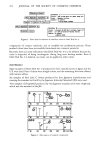
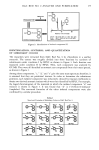
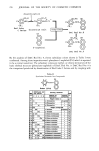
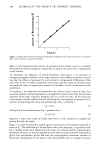
AMINE ADSORPTION ON KERATIN 287 For isotherms determined in the absence of electrolyte, a buffer was prepared by adjusting the initial pH of a boric acid solution (0.02 M) with small amounts of 2 M NaOH or HCI. As wool itself acts as a buffer agent, the pH at equilibrium varies considerably from the initial pH many iterative trials were required to attain uniform pH increments over the pH range 2-9. DETERMINATION OF ISOTHERMS The weighed wool sample (approx. 200 mg) was placed in a 25 ml screw-capped culture tube along with the amine solution (20 ml). After removing the entrained air bubbles by careful evacuation in a vacuum dessicator, the wool sample was teased out with a narrow glass rod so as to fill as completely as possible the volume occupied by the liquid. The tubes were capped and placed in a thermostated water bath. The contents of the tube were periodically mixed by inversion of the tube or movement of the wool through the solution with a glass rod. Equilibrium was considered to be established when the concentration of the amine was constant over a period of 30 mins. By this criterion equilibria were found to be established in 30-60 mins at 40 ø in the case of the monoamines, while at 60 ø and 80 ø the times were 10-15 mins and 5 mins respectively. Longer periods were found necessary for the diamines with times of 6-8, 3, and 1-2 hours for temperature of 40 ø , 60 ø , and 80 ø respectively.* DETERMINATION OF AMINE CONCENTRATION (a) Monoamines Concentrations of amine in this series were estimated by a two-phase titration against standard sodium lauryl sulfate (5 x 10⁻³M) using methyl yellow as indicator (9). The aqueous phase contained dilute sulfuric acid (approx. I M) for determinations of the C•0 and C• amines, while the C8 amine was found to give the sharpest end-point indication at a pH of 1.6 _+ 0.1. [The underlying theory of the significance of pH control in this type of volumetric estimation is discussed by Jansson et al. (10)]. Precision and reproducibility were found to be a maximum when the sample size required less than I ml of titrant. The presence of inorganic salts did not interfere with the end-point. (b) Diamines The determination of diamine concentrations in the sorption media was by a method adapted from that of Fields (11), which is based on the color resulting from reaction of an amino group with trinitrobenzenesulfonic acid (TNBS). This method was found to be unsuitable for long-chain amines and, more particularly, diamines, due to the water-insolubility of the yellow arylsulfonylamine. If, however, this derivative was extracted with a water-immiscible polar solvent such as butanone, the optical density of the butanone extract vs concentration relationship was found to be linear and *The times required to attain equilibrium refer to amine concentrations resulting in saturation uptake by the fiber. For low amine concentrations (log C = ca. -3) the times were much less. Several isotherms were determined in a stirred solution-fiber system the difference between the saturation uptake given by a stirred and intermittently mixed solution was found to be within the experimental error of the amine analysis.
Purchased for the exclusive use of nofirst nolast (unknown)
From: SCC Media Library & Resource Center (library.scconline.org)