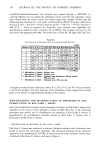
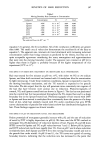
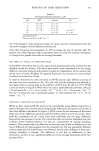
322 JOURNAL OF THE SOCIETY OF COSMETIC CHEMISTS Microscopic examination of thin sections of dry skin and normal skin (N = 10 of each) stained with hematoxylin and eosin did not reveal any differences in viable epidermal thickness and basal layer mitotic index, indicating the lack of hyperproliferation in dry skin. There were no indications of irritation or inflammation. NATURAL MOISTURIZING FACTOR The weight of total natural moisturizing factor (NMF) and the content of individual components (amino acids, lactate, and pyrrolidone carboxylate) were found to be the same from normal skin and dry skin (N = 3 of each). Assuming that NMF is important in the water-binding capacity of stratum corneum, these results would predict that the capacities should be similar. Indeed, they were found to be the same at 30%, 50%, 70%, 85%, and 95% relative humidity values. TRANSEPIDERMAL WATER LOSS Whole pig skin, the surface of which had been swabbed briefly with hexane to remove superficial lipid, was used to determine transepidermal water loss (TEWL) in vitro (Table III). There is a marked reduction in TEWL for dry skin. Extraction of the surface Table III Transepidermal Water Loss (TEWL) through Pig Skin Tissue TEWL (mg water/hr cm 2) Normal 0.39 + 0.04 Hexane-extracted normal 0.38 + 0.03 Dry 0.15 _+ 0.07 Hexane-extracted dry 0.42 + 0.02 aThe numbers represent duplicate measurements on tissue from each of three animals. of dry skin with hexane for 5 minutes resulted in a normal TEWL, suggesting that there is an increased content of nonpolar lipid, probably sebaceous lipid, in dry skin. STRATUM CORNEUM LIPID CONTENT Isolated stratum corneum was extracted with hexane and ether to estimate the content of nonpolar and polar lipids, respectively. We found an increased content of nonpolar lipid in dry skin (16.0 _+ 3.5%, N = 3) relative to normal skin (6.0 _+ 0.9%, N = 3). There was no difference in polar lipid content of dry skin (6.4 _+ 1.1%, N = 3) relative to normal skin (6.9 _+ 0.2%, N = 3). Thin-layer chromatography of this nonpolar lipid and pig skin surface lipid revealed that they had identical components, which appeared to be present at similar ratios. These lipid fractions were distinctly sebaceous in composition (21-22) and lacking in the more polar fractions characteristic of epidermal lipid (22). Thin-layer chromatography of the polar lipids of dry skin and normal skin revealed that they had identical components, which appeared to be present at similar ratios. The data suggest that the increased content of lipid in dry skin is sebaceous in origin.

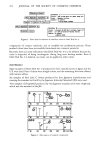
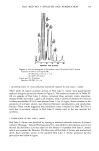
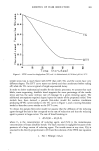
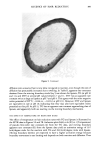
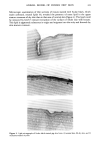
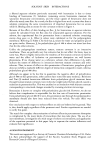
ANIMAL MODEL OF HUMAN DRY SKIN 323 Microscopic examination of thin sections of tissues stained with Sudan black, which stains unbound, neutral lipids (9), revealed the presence of more lipid in the upper stratum corneum of dry skin than in that area of normal skin (Figure 3). This lipid could be removed by brief (5 minute) extraction of the surface of whole skin with hexane. This lipid is apparently sebaceous in origin and migrates into the scaly and fissured dry skin stratum corneum. Figure 3. Light micrographs of Sudan black-stained pig skin from: A) normal skin, B) dry skin, and C) occlusion-treated dry skin.
Purchased for the exclusive use of nofirst nolast (unknown)
From: SCC Media Library & Resource Center (library.scconline.org)