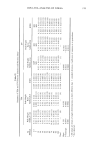
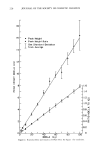
j. Soc. Cosmet. Chem., 36, 231-236 (May/June 1985) Evaluation of substantivity and antibacterial activity of soap bars on human skin by an in vivo agar patch method FRANK YACKOVICH and JOHN E. HEINZE, Armour-Dial, Inc., Armour Research Center, 15101 N. Scottsdale Road, Scottsdale, AZ 85260. Received February 28, 1984. Synopsis An in vivo method, the "agar patch test," has been developed for determining the efficacy of antibacterial agents deposited on human skin from soap bars. This method has the advantage over previously published methods of eliminating the need for germicides to migrate through agar to reach the bacteria since the test bacteria are streaked on the surface of the agar medium and placed in direct contact with the soap- washed skin. This method was used to demonstrate the buildup of germicide activity as a function of the number of washings on forearms washed with a deodorant soap containing 1.5 % 3,4,4'-trichlorocarbanilide (triclocarban) compared to forearms washed with a placebo soap (no active ingredient). The results indicate that the extent of triclocarban residual activity deposited on skin washed with the deodorant bar (1.5% triclocarban) in the agar patch test reaches a statistically significant level after 7 washes and remains at that level at least through 13 washes. INTRODUCTION There are a number of in vivo methods for measuring the number of bacteria on skin, the substantivity of germicides on skin, or the degerming activity of soaps and soap germicides (1-9). Eigen et al. (9) stated that their in vivo seeded contact plate method could demonstrate differences in residual antibacterial activity remaining on skin after washing with a liquid antibacterial cleanser or antibacterial soap and thoroughly rinsing with water. The advantages of this method over previously published methods were that it allowed free movement of the•a-nelists, controlled the size and type of bacterial population, measured efficacy and not quantity of antibacterial agents found on the skin, and was easy to perform. The disadvantage is that only soap germicides that readily desorb off the skin and migrate through the agar to reach deeply seeded bacteria can be tested by this method. Thus, this method does not work well with the triclocarban (3,4,4'-trichlorocarbanilide) because it has very low water solubility and does not rap- idly diffuse in agar media. The "agar patch test" was developed as a modification of the method of Eigen et al. (9). The newly developed method eliminates the need for an antibacterial agent to migrate through agar to reach the bacteria since the bacteria are surface-streaked on the agar which is in contact with soap-washed skin. EXPERIMENTAL AGAR PLATES Falcon 1008 petri dishes (35 X 10 ram) without lids containing 11 ml of nutrient agar (Difco), mannitol salt agar (Difco), or trypticase soy agar (BBL) with 1 mg/ml 231

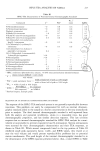
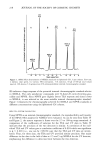
232 JOURNAL OF THE SOCIETY OF COSMETIC CHEMISTS streptomycin sulfate (Sigma) were placed in 150 X 25-mm petri dishes and dried overnight at 35øC prior to inoculation. The convex surface of the agar plates was streaked with the diluted cultures and allowed to air dry for 30 minutes before attaching to panelists' forearms. CULTURES The bacterial cultures were grown overnight in AATCC bacteriostasis broth (Difco) at 35øC. The third to seventh consecutive overnight cultures were used to prepare the diluted inoculums for each experiment. (A) Staphylococcus epidermidis ATCC 155 was maintained on trypticase soy agar (BBL). A 4-mm loopful of an appropriate dilution of a 23-hour-old culture was streaked on the dried agar plates to obtain the desired number of colony-forming units (CFU) per plate. (B) Staphylococcus epidermidis JEH 51 was maintained on trypticase soy agar containing 1 mg/ml streptomycin sulfate. This culture was isolated as a spontaneous streptomycin- resistant colony from S, epidermidis ATCC 14990 and has the same agar media growth rate and biochemical properties on Staph-Indent Strips (API) as the parent strain. A 4-ram loopful of the diluted 23-hour-old culture in 0.1% peptone broth was streaked on trypticase soy agar containing 1 mg/ml streptomycin sulfate to obtain approximately 1000-2000 CFU per plate. PROCEDURE Six to eight panelists were used for comparing two soap bars in each test. The panelists were instructed to use a placebo soap for all bathing and washing of hands and forearms for 1 week prior to the test. On test days supervised washings of the forearms with the randomly assigned soap bars were conducted in the laboratory. Three agar plates streaked with S. epidermidis ATCC 155 were attached to the volar surface of the washed forearms with Blenderm © Surgical (3M) or Dermilite II © (Johnson & Johnson) tape for either 2 or 4 hours. For later experiments trypticase soy agar + 1 mg/ml streptomycin sulfate plates streaked with JEH-51 were taped to the volar surface of the forearms with 1" by 3" strips of Microfoam © tape (3M) and wrapped with an Ace © type elastic bandage (Becton-Dickinson) for 30 minutes. • The plates were removed, placed in 150 x 25-mm petri dishes, and incubated at 35øC. Control plates were not attached to panelists' forearms but were placed directly in the 35øC incubator. After 24 hours, colonies were counted using a 10 x dissecting microscope. The regimen for the supervised laboratory washings consisted of washing the hands with the placebo soap bar, wetting the volar surface of the forearms and the assigned soap bar under the tap, rubbing the soap bar to the volar surface of the forearm for 15 seconds, lathering for 30 seconds, rinsing under tap water for 30 seconds, blotting forearms dry with paper towels, and repeating the whole procedure for the other forearm and soap bar. In all the experiments performed there was at least a 2-hour drying out time between the different washes conducted over a 2 to 4 day period. • All three taping methods held the entire inoculated portion of the agar plates firmly to the panelists' forearms. However, the Microfoam strips were the easiest and least painful to remove from panelists' skin.
Purchased for the exclusive use of nofirst nolast (unknown)
From: SCC Media Library & Resource Center (library.scconline.org)