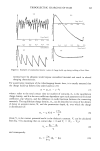
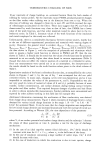
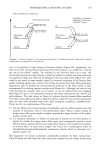
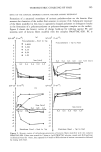
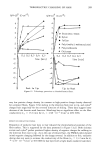
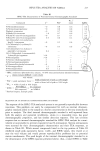
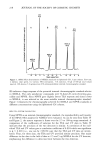
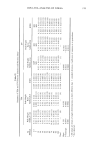
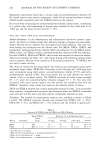
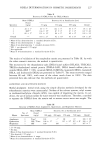
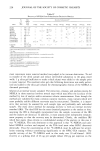
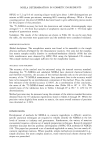
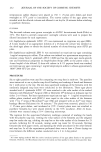
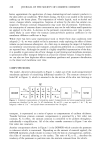
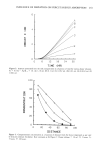
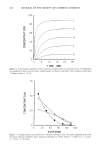
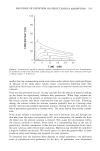
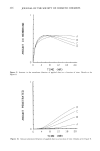
INFLUENCE OF DEPLETION ON PERCUTANEOUS ABSORPTION 243 Z O n• Z •_• Z 0 •_• lOO 8o 6o 2o 1 0 6 12 18 24 30 TIME (HR) Figure 6. Concentration (mg/ml) in stratum comeurn compartments as a function of time. Compartments are numbered in order with the lowest number being the closest to the donor. Rate constants as for Figure 2. Donor volume = 0.0032 mi. smaller than the corresponding steady-state values under infinite dose conditions (Figure 4). Because of the small donor volume, donor concentration following finite dose application falls from the start of the experiment as material enters the stratum corneum. From the data presented thus far, we may conclude that the amount of material making up the donor can significantly influence skin penetration. When large volumes are applied to the skin, the amount of permeant lost via transport is so small relative to the vehicle content that donor concentration does not change over time. Following dosing, the amount within the stratum corneum gradually rises to a limiting value and the concentration gradient approaches linearity. During the same time period, the rate of penetration approaches a constant value. The entire system thus reaches a steady state. If the donor volume is extremely small, then loss of permeant into and through the skin may cause the donor concentration to fall. As a consequence, the transfer rate from the donor into the stratum corneum is reduced. This causes the concentration within the stratum corneum to decline, which leads to a corresponding drop in the rate of penetration. Another consequence is that stratum corneum concentrations do not reach the same values as under infinite dose conditions. Depletion may therefore be considered a negative feedback mechanism. We would expect it to have the greatest effect in those situations where partitioning and transport are most extensive. To determine how the depletion effect depends on model parameters, two additional series of simulations were performed. In the first, all parameters were maintained

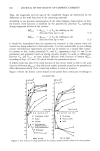
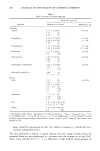
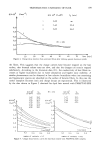
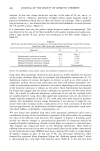
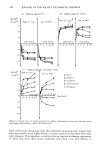
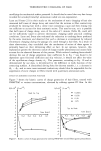
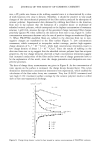
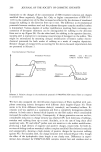
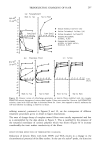
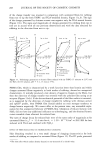
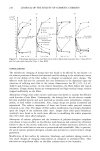
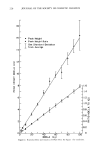
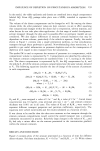
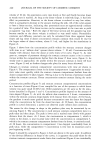
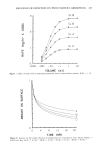
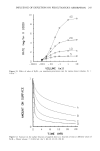
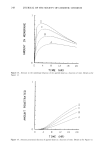
244 JOURNAL OF THE SOCIETY OF COSMETIC CHEMISTS constant except for K, the transport coefficient, which varied from 0.2 to 0.8 hr-• In the second series, K was set at 0.6 hr- • and the ratio of Ki to K_i, which represents a stratum corneum/vehicle partition coefficient, varied from 5 to 40. The effect of transfer coefficient (K) on the relationship between maximum flux and donor volume is shown in Figure 7. Under infinite dose conditions (large donor volume) the flux is the steady-state value. At very small donor volumes, significant reduction in the value of the maximum flux is found. This is due to depletion. The decrease in penetration rate at small donor volumes takes place to more or less the same extent regardless of the value of K. For example, the maximum penetration rate following application of 0.0032 ml is between 35 and 36% of the steady-state value in every case. Among the infinite dose systems, penetration rate is essentially proportional to K and approximately the same dependence of penetration rate on K is found under finite dose conditions. The time dependence of the amount of permeant found on the surface, in the stratum corneum, and in the sink for a donor volume of 0.0032 ml is represented in Figures 8-10, which should be looked at together. These three locations account for at least 98% of the permeant at all times. In the figures, amount is represented as the fraction of the applied dose so that it is possible to get an idea of major distributional patterns by inspection. (The dose is, of course, the same for all of the simulations.) Following application, the amount in the donor (Figure 8) drops in all cases, but most rapidly for the system which has the highest value of K. The total amount within the stratum corneum is largest at early times when the value of K is highest (Figure 9). This is because uptake by the sections of the stratum corneum farthest from the donor is limited by transport within the membrane and rapidity of transport is related to K. After a time, because depletion of permeant occurs most rapidly from systems with the higher K values, the curves in Figure 9 cross each other so that, past 12 hours in the examples shown, the amount in the stratum corneum is inversely related to K. Although peak stratum corneum accumulation takes place at different times, the peak amount is essentially independent of K. Figure 10 shows that the amount penetrated at all times is positively related to the value of K. Figure 11 depicts the way in which changes in the K•/K_i ratio affect maximum penetration rate at different donor volumes. With large donor volumes, the rate (steady state) is proportional to Ki/K_•. Although the rate decreases at small donor volumes in all cases, the degree of reduction is disproportionally greater at high partition coef- ficient values. For example, with a donor volume of 0.0032 ml, the maximum pene- tration rate for the system with a partition coefficient of 40 is only twice that for the system with a partition coefficient of 5. It is also instructive to compute the ratio of penetration rate with a donor volume of 0.0032 to that at steady state for each partition coefficient. With partition coefficients of 5, 10, 20, and 40, this ratio is 0.51, 0.35, 0.22, and 0.13, respectively. As the partition coefficient is increased, the rate of penetration following application of very small donor volumes becomes a progressively smaller fraction of the rate under steady-state conditions. Further insight may be obtained from Figures 12 to 14, which show how the amount of permeant on the surface, in the membrane, and in the sink changes with time for a donor volume of 0.0032 mi. Again, amounts in these figures are expressed as a fraction of the applied dose. As the partition coefficient is increased, there is a greater
Purchased for the exclusive use of nofirst nolast (unknown)
From: SCC Media Library & Resource Center (library.scconline.org)