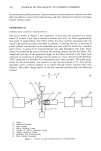
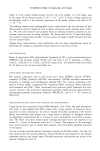
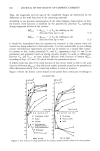
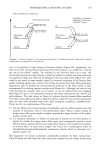
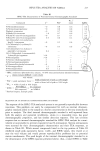
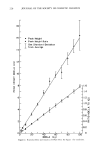
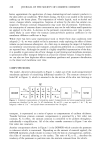
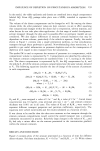
TRIBOELECTRIC CHARGING OF HAIR 193 where g is the surface charge density (C/cm2), Q is the charge, A is the surface area of the target of the detector probe (3. 142 x 10 -2 cm2), E is the voltage read by the electrometer, and C is the internal capacitance of the probe, adapter and cable (2.45 x 10⁻¹⁰ F). The rubbing element was exchangeable so we could evaluate the electrification of hair fibers using a variety of materials such as teflon, aluminum, gold, stainless steel, nylon, etc. We also used solution-cast polymer films as rubbing materials mounted on alu- minum, stainless steel, or teflon cylinders. We found that for 20-30 •m thick films, the cylinder material has no effect on the process of charge transfer between the film and the keratin fibers. Charge decay measurements were performed with the same experimental setup by following the changes in generated charge density as a function of time. FILM PREPARATION Films of polystyrene (PS), polycarbonate bisphenol-A (PC), poly(methylmethacrylate) (PMMA), and chitosan acetate (ChA) were cast from 5 wt % solutions in CHC13, CH2C12 - C2H4C12 (1:1), CHC13, and H20, respectively. The polymer films were dried for 24 hours in the vacuum oven before use. SURFACTANTS AND POLYMER SAMPLES The cationic surfactants used in this study were: decyl (DTAB), dodecyl (DTAC), tetradecyl (TTAB), hexadecyl (HTAB), and octadecyl (OTAB) trimethyl ammonium bromides or chlorides and steralkonium chloride (SC). The anionic surfactants were: sodium dodecyl (SDS), tetradecyl(TTS), hexadecyl (SHS), octadecyl (SOS) sulfonates, and eicosanoic acid (EA). These compounds were practical grade chemicals and were used as received. The quaternary ammonium polymer employed was poly(methacryl- amidopropyltrimethyl ammonium chloride) [PMAPTAC, mw 4.3 X 10⁵ relative to PEO (22)]. PREPARATION OF HAIR SAMPLES FOR TRIBOELECTRIC MEASUREMENTS Virgin brown hair, purchased from deMeo Brothers, New York, was used throughout this work. It was washed with SDS, rinsed with a large amount of deionized water, and dried at room temperature. In order to modify the surface properties of the keratin fibers, hair swatches were placed into a large excess of polymer or detergent solution of appropriate concentration for 2-6 hours at room temperature, and stirred occasion- ally. The fibers were then rinsed under running deionized water and exposed to an excess (2-3 liters) of deionized water for 2-4 hours. The purpose of the prolonged pure water exposure was to obtain fiber samples with irreversibly adsorbed polymers or detergents. To cast a cationic polymer-anionic detergent complex on the fiber surface, the hair was first treated with the cationic polymer, rinsed with H20, then exposed to the anionic surfactant solution and rinsed again. Detailed procedure descriptions are given in the legends of Figures 9 and 10.

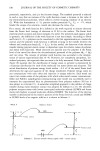
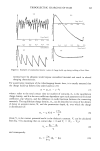
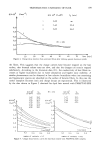
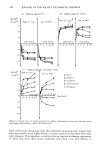
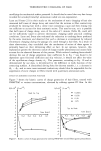
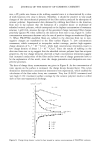
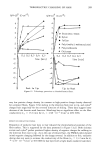
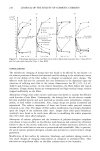
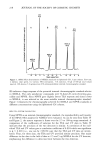
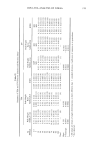
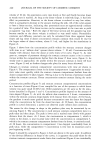
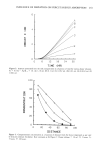
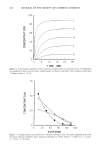
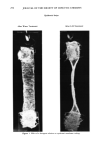
194 JOURNAL OF THE SOCIETY OF COSMETIC CHEMISTS REDUCTION Hair reduction was performed by the use of: (1) tetraukis(hydroxymethyl)-phosphonium chloride-P(CH2OH)4 + C1- (THPC) (0.2 M solution in sodium acetate buffer at pH = 5.2, liquor/hair = 50, 15 minute treatment followed by either 1 minute H20 rinse or 3 minute 2% H202 treatment and H2 ¸ rinse) and (2) thioglycolic acid- HSCH2COOH (TGA) (0.5% solution of TGA was adjusted to pH = 9.2 using NaOH, liquor/hair = 50. Hair tresses were treated for 15 minutes at 37øC. Then they were either only rinsed with H20 for 1 minute or immersed in 2% H202 solution followed by 1 minute rinse with water). BLEACHING AND DYEING Bleaching was performed with a peroxide-based commercial product (Clairoxide, © Clairol Inc.) for 1 hour at room temperature, following the instructions provided with the product. The tresses were then rinsed and dried. Commercially available oxidative haircolors in light and dark shades (Nice'n Easy © #99 and #121, respectively, Clairol Inc.) were used according to the instructions given by the manufacturer. They were applied to hair for 20 min., followed by rinsing with water for 1 minute. RESULTS AND DISCUSSION GENERAL COMMENTS Typical examples of unsmoothed kinetic curves of charge build-up during rubbing of hair fibers in the direction from root to tip or from tip to root are shown in Figure 2. One general feature of the charging process is that the electrical breakdowns of the surrounding atmosphere limit the surface charge densities to less than 7 ß 10-9 C/cm 2. This is illustrated by the charging characteristics shown in Figures 2a and 2c. The recorder trace presented in Figure 2a corresponds to very fast positive charging. Three contacts between the rotating cylinder and the fibers produce the maximum charge density, while the fourth one results in electrical breakdown and reduction of accu- mulated tribo-charges. Charge buildup represented by the curve shown in Figure 2c is slower but enough to cause the electrical breakdown after the threshold value of charge density is reached. The kinetic curve presented in Figure 2d illustrates the case in which the negative charge density on the fiber surface does not reach a value sufficiently high for electrical discharge. In the case of treated fibers, we have occasionally observed initial slow positive or negative charging followed by charge reversal as is indicated by the data in Figure 2b. The reasons for such behavior are not clear. It should be noted, however, that the sliding contact between the fibers and the probe might involve, apart from electron or ion transfer, additional processes affecting tribocharging, such as: (1) Mass transfer between the contacting surfaces leading to the modification of their electrochemical potentials. (2) Surface abrasion. It is plausible that the surface layers of the polymer film or surface of the hair epicuticle might be characterized by a different work function value as compared to the bulk material (12). This could happen, for example, as a result of chemical reactions of the surface groups with oxygen. Subsequent removal of the
Purchased for the exclusive use of nofirst nolast (unknown)
From: SCC Media Library & Resource Center (library.scconline.org)