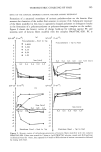
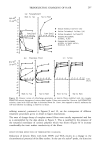
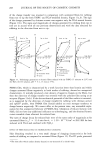
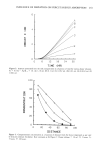
j. Soc. Cosmet. Chem., 36, 237-249 (May/June 1985) Influence of depletion on percutaneous absorption characteristics JOEL L. ZATZ, Rutgers College of Pharmacy, P.O. Box 789, Piscataway, NJ 08854. Received October 12, 1984. Synopsis The effect of donor volume on percutaneous absorption has been studied by computer simulation. When relatively large volumes are applied to the skin surface (infinite dose conditions), the amount of permeant that leaves the donor is a small fraction of the original amount present and donor concentration does not change appreciably. Stratum corneum concentration rises gradually, as does the penetration rate, until a steady state is reached. With very small donor volumes, depletion of permeant leads to a decrease in donor concentration over time. As a result, stratum corneum concentrations and the rate of penetration rise to a peak and then fall, attaining much lower maximum values than with infinite dosing. The stratum corneum concentration gradient patterns are also influenced by depletion. If the transfer coefficient (K) is varied, donor concentration drops most rapidly and penetration rate is highest for the system with the largest value of K. However, the percentage reduction in penetration rate due to depletion is essentially independent of K. If the membrane/vehicle partition coefficient is varied, depletion affects the system with the highest partition coefficient to the greatest extent. With a donor volume of 0.0032 ml and K equal to 0.6 hr-2, an increase in partition coefficient of eight times resulted in only a doubling of penetration rate. INTRODUCTION Much of our current understanding of the quantitative aspects of percutaneous absorp- tion has been derived from in vitro experiments utilizing excised skin. It is common practice to mount whole skin or epidermis in a cell so that the dermal side is bathed with normal saline while a solution, gel, or some other system containing the permeant of interest is applied to the outer surface. If the volume of the applied preparation (donor) is relatively large, the small quantity of material that enters the skin during a typical experiment leaves the concentration within the donor essentially unchanged. Under these conditions, the amount of material permeating the skin rises until a steady state is reached (1). At steady state, a constant amount of permeant passes through the membrane while the amount within remains constant. These experimental conditions involving application of so-called infinite doses are useful because they permit calculation of a permeability constant, a measure of the influence of different membranes or of permeant chemical structure on skin penetration. Fur- thermore, from measurement of lag times or partitioning behavior and estimation of membrane (usually stratum corneum) thickness, it is possible to calculate an effective diffusion coefficient from the permeability constant. However, there are many instances where it would be more advantageous to study percutaneous absorption by applying small quantities to the skin. Such finite doses (2) 237

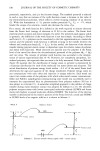
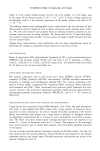
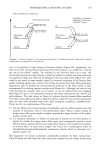
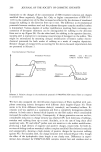
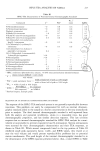
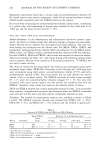
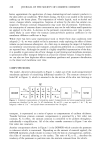
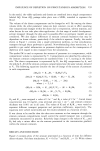
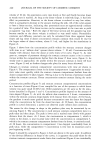
238 JOURNAL OF THE SOCIETY OF COSMETIC CHEMISTS better approximate the application of many dermatological and cosmetic products to the skin under use conditions. With finite dosing, the skin is not soaked in the material making up the donor phase. The evaporation of volatile liquids, such as alcohol and water, changes vehicle composition. Sorption of solvent by the skin has similar con- sequences. Stratum corneum desquamation may cause loss of permeant. Furthermore, the assumption of constant donor concentration may not be valid when small quantities are applied to the skin. A decrease in the permeant concentration over time is partic- ularly likely in cases where the stratum corneum/vehicle partition coefficient or the membrane diffusion coefficient is large. While there has been some experimental work in which finite dose conditions were adopted (2-4), we were unable to find a systematic study exploring the effect of donor volume on percutaneous absorption. As a first step in assessing the impact of depletion on membrane concentration and transport, simulations performed on a computer model are reported here. Although the model is a highly simplified representation of the skin, it is possible to gain some idea of how changes in partitioning and membrane resistance to permeation affect transport behavior as a function of donor volume. Using the model, we can also see how depletion affects membrane gradients and permeant distribution in the donor and membrane over time. COMPUTER MODEL The model, depicted schematically in Figure 1, makes use of the multicompartmented membrane approach of mimicking diffusional transfer (5). The stratum corneum (la- beled SC in Figure 1), which is assumed to be the section of the skin rate limiting to SC KS DONOR •- Figure 1. Schematic representation of simulation model. Compartments and intercompartmental transfer processes are described in the text. In all simulations, K^ and K_^ were set equal to 1 hr -•, K s was assigned a value of 2 hr- 1 and initial donor concentration was 10 mg/ml. transport, is represented as a series of spaces or compartments of uniform thickness. Transfer between stratum corneum compartments is governed by a first order rate constant, K. In effect, the stratum corneum is considered to be uniform throughout, undoubtedly a simplification. All of the other transfer constants in Figure 1 are also first order rate constants. Another compartment shown in Figure 1 is the DONOR which contains the permeant in whatever vehicle is envisioned. Depending on the amount of material applied, the DONOR represents a bulk volume in contact with the skin or a homogeneous, uniform, thin film of material adhering to the surface. The ratio of K• to K_• describes the tendency of the permeant to partition into the stratum corneum from the vehicle.
Purchased for the exclusive use of nofirst nolast (unknown)
From: SCC Media Library & Resource Center (library.scconline.org)