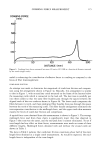
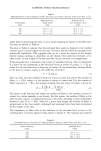
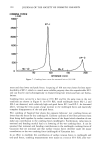
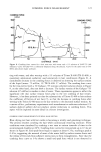
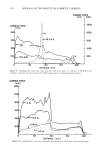
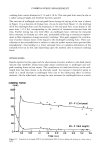
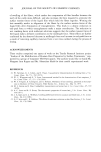
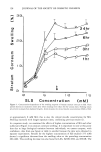
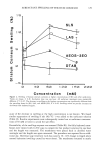
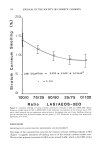
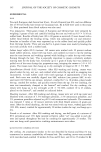
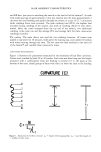
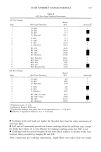
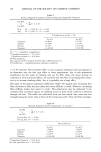
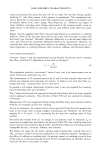
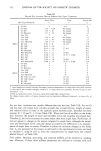
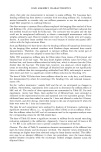
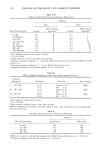
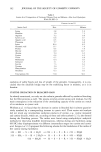
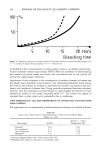
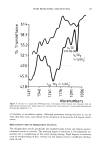
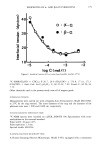
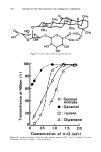
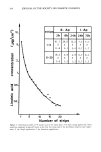
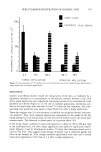
SURFACTANT SWELLING OF STRATUM CORNEUM 129 SLS LAS E AEOS-3EO DTAB Concentration (mM) Figure 2. Swelling of human stratum corneum at higher concentrations of SLS and other surfactants. Values are means ___ $.D. Incubation time was one hour. A11 surfactant treatments were statistically different, P • 0.0•. The decrease in swelling at the highest concentration was significantly different from the preceding doses for SLS, LAS, and AEOS-3EO, P • 0.0•. Swelling values are percent increases (or decreases) from hydrated lengths. cause of the decrease in swelling at the high concentration is not known. We found similar suppression of swelling if salt (Na+C1 -) was added to the surfactant solution (Table II). Routine experiments were subsequently carried out at surfactant concentra- tions of 30 mM or lower to avoid the salt effect. Reversibility of the swelling response was assessed (Table III). Six fully hydrated mem- branes were treated with 0.26% soap (a competitive bar product) solution for one hour and the length was measured. The membranes were placed back in distilled water overnight and the length was again measured. The procedure was repeated for an addi- tional day. One-hour soap treatment each day caused a 10- 12% change in length above normal hydration (swelling caused by water alone). The membranes returned to nearly

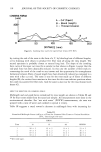
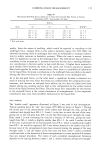
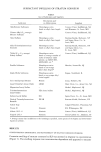
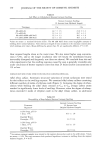
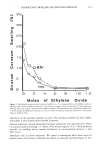
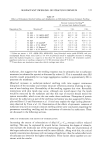
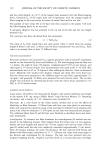
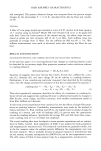
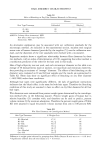
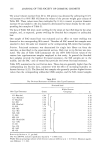
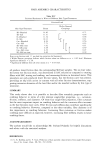
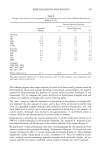
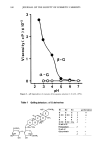
130 JOURNAL OF THE SOCIETY OF COSMETIC CHEMISTS Table II Salt Effect on LAS-Induced Stratum Corneum Swelling Stratum Corneum Swelling (% Increase from Hydrated Length) Treatment 1 hr 3 hr 88 mM LAS 14.7 q- 1.5 23.0 --- 1.3 174 mM LAS 13.1 --- 1.2 20.7 q- 1.1 88 mM LAS/88 mM NaC1 12.3 q- 1.3 18.3 q- 1.6 174 mM LAS/88 mM NaC1 12.4 q- 1.6 18.3 + 1.6 Values are means q- standard deviation (S.D.). The 88 mM NaCI alone caused negligible amounts of swelling above normal hydration. Times shown are length of time incubated in the treatment solution after which readings were taken. Means differing by greater than 2% are significantly different, P • 0.05. their original lengths when in the water rinse. We also tested higher soap concentra- tions (2%), and at the longer incubation time (24 hours) the membranes became irreversibly disrupted and frequently tore (data not shown). We conclude from this and other experiments that the swelling response caused by soap is generally reversible only under conditions of shorter exposure times (less than 24 hours) and/or concentrations of 1% or less. SURFACTANT STRUCTURE EFFECTS ON STRATUM CORNEUM SWELLING A/hyl ethoxy sMfates. Systematic structural variations of several surfactants were tested for their effects on the swelling response. We examined alkyl ethoxy sulfates containing different numbers of moles of ethylene oxide (Figure 3). Increasing the degree of ethox- ylation while holding the alkyl chain constant at C•2 to C•4 average carbon atoms resulted in significantly lower levels of swelling. However, when the degree of ethoxy- lation exceeded 6 moles of ethylene oxide in the alkyl ethoxy sulfate, no additional Table III Reversibility of Soap-Induced Stratum Corneum Swelling Treatment Regimen* Stratum Corneum Swelling (% Increase from Original Hydrated Length) 0.26% Soap, pH 10 1 hour, 37øC 10.5 q- 1.8 Distilled Water Overnight, 25øC 1.4 q- 0.4 0.26% Soap, pH 10 1 Hour, 37øC 11.6 --- 1.6 Distilled Water Overnight, 25øC 1.8 --- 0.4 * Six stratum corneum samples were treated in the regimen shown above and in the order shown. Values are means q- S.D. The soap treatments both produced significant increases in swelling above the original hydrated lengths, P • 0.05.
Purchased for the exclusive use of nofirst nolast (unknown)
From: SCC Media Library & Resource Center (library.scconline.org)