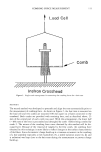
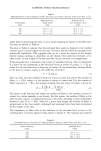
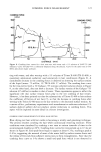
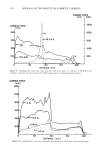
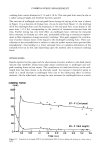
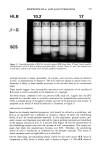
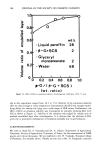
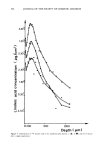
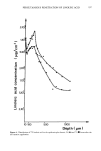
142 JOURNAL OF THE SOCIETY OF COSMETIC CHEMISTS EXPERIMENTAL HAIR Ten-inch European dark brown hair (Cau), 10-inch Oriental hair (O), and two different lots of 10-inch kinky hair (steam set Caucasian hair, KI & KII) were used in this study (2). Hair purchased from black subjects was also used. Tress preparatio,, Three-gram tresses of European and Oriental hair were prepared by weighing 3 grams of hair and carefully binding the root end with an 8.9 X 0.16-cm rubber band. Bundles of kinky hair (30 to 40 grams as received) (2) were bound with a rubber band behind the binding string, which was subsequently cut and removed. Swatches or bundles of hair were separated up to the rubber band and quickly pulled from the large bundle. Three and one-half to 4-gram tresses were made by binding the root ends carefully with a rubber band. Sodium lauryl sulfate (SLS) treatment. All tresses were washed with 10 percent sodium lauryl sulfate solution, rinsed with tap water, and combed out (root to tip) by starting near the tress bottom and working upward while holding it under the tap with water flowing through the hair. This is especially important to insure a relatively uniform starting state for the kinky hair. Generally up to ! gram of kinky hair was combed or pulled out of the tress during this preparation step, bringing the tresses to 3.0 -+ 0.5 grams. The tresses were then hung up to dry overnight or longer at 60 _+ 5% RH. Stearalkonium chloride (SAC) treatment. After SLS washing and drying, tresses were placed under the tap, wet out, and combed while under the tap until no snagging was encountered. A hard rubber comb with tooth spacings of approximately 2 mm was used. Each tress was carefully dipped into SAC solution [one percent SAC in eth- anol:water (30:70)] for one minute, removed, combed for 5 to 10 strokes, placed under the tap, combed five strokes, and quickly removed from the tap. For wet combing, the tress was immediately clamped to the Instron © and combed. For dry combing, the tresses were hung up to dry overnight at 60 -+ 5% RH, combed 10 to 25 strokes, placed on the Instron ©, and combed as indicated below. Bleaching treatment. After SLS washing and drying, tresses were wet with tap water and bleached with a mixture of 3.5% hydrogen peroxide, 2.5 % ammonium persulfate, and 5% potassium persulfate adjusted to pH 10 with ammonium hydroxide. The treatment was repeated 3 times at 10 minute intervals with fresh bleach solution (6 grams per tress). After the third bleaching, the hair was rinsed with tap water, washed again with 10% SLS, rinsed, combed for approximately 20 strokes (under the tap), and hung up to dry. Pomade or oil treatment. After SLS washing and drying, one-half gram of a mixture of 85% petrolatum and 15% light mineral oil herein called "oil" was added to each dry tress and spread throughout the hair by combing for approximately 25 strokes. The tress was hung until quantitative combing measurements were taken. QUANTITATIVE COMBING OF HAIR Dry combing. An attachment similar to the one described by Garcia and Diaz (3) was constructed to measure combability of human hair. Dry combing curves were recorded with swatches hand-combed 10 strokes for Cau and O hair, and 20 to 25 strokes for KI

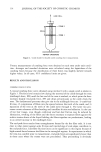
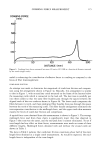
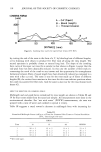
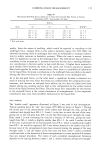
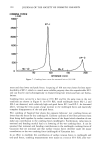
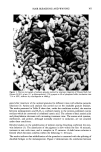
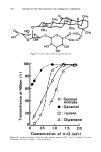
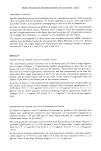
HAIR ASSEMBLY CHARACTERISTICS 143 and KII hair, just prior to attac•ing the swatch to the load cell of the Instron ©. A comb with tooth spacings of approximately 2 mm was inserted into the tress approximately 2 cm from the tress binding and pulled through the swatch at a rate of 12.7 cm/minute while combing forces were recorded. The peak combing load (PCL), the highest load recorded during combing of the swatch, and work of combing (ACL) (3) were deter- mined. After the comb emerged from the tip end of the swatch, two additional combing cycles were run and the average PCL and average ACL for three consecutive combings recorded. Wet combing. The same device was used for wet combing however, all tresses were soaked in tap water for 10 minutes, held under the running tap, and combed 20 strokes with water running through the tress. The wet tress was than attached to the load cell of the Instron © and combed three consecutive times. CURVATURE MEASUREMENT Figure 1 illustrates the parameters measured for the estimation of hair fiber curvature. Tresses were combed by hand 20 to 30 strokes. Each tress was then hung and the length measured with a cathetometer from the binding to several (15 to 20) spots at the bottom of the tress. Small groups of hairs were then cut from the tress at the binding CURVATURE (C) o I I T N C= LC/L l Figure 1. Estimation of the fiber curvature. L c = number of wave crests. = length of free-hanging fiber. L T = taut fiber length. N
Purchased for the exclusive use of nofirst nolast (unknown)
From: SCC Media Library & Resource Center (library.scconline.org)