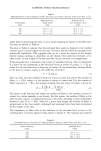
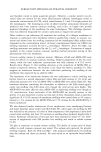
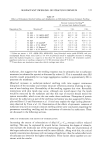
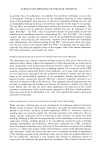
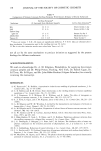
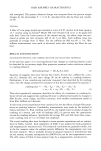
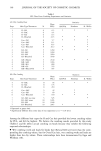
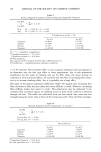
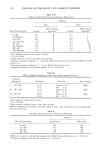
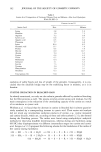
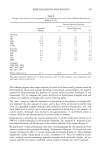
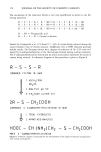
162 JOURNAL OF THE SOCIETY OF COSMETIC CHEMISTS Table I Amino Acid Composition of Untreated Chinese Hair and Melanin, After Acid Hydrolysis With 6N-HC1 (3) Content in mol % Amino Acid Hair Melanin Lysine 2.8 5.9 Histidine 1.0 7.5 Arginine 7.2 9.9 Cysteic acid 0.6 0.7 Aspartic acid 6.5 6.6 Threonine 7.7 6.0 Serine 10.4 8.2 Glutamic acid 13.7 7.6 Proline 9.5 7.9 Glycine 6.9 10.7 Alanine 5.4 6.2 Cystine 6.6 4.5 Valine 6.7 6.6 Methionine 0.4 0.3 Isoleucine 3.1 3.5 Leucine 7.3 6.3 Tyrosine 2.0 3.7 Phenylalanine 2.0 2.1 Ornithine 0.3 0.3 Total protein (%) 73.8 30.1 oxidation of sulfur bonds and loss of weight of the granules. Consequently, it is con- cluded that the disulfide bridge may be the stabilizing factor in melanin, as it is in keratins. CYSTINE OXIDATION IN BLEACHED HAiR As already mentioned, not only are the melanin granules affected by oxidative bleaching but the fiber proteins as well. The process involves several amino acid residues, but the main consequence is the reduction of the crosslinking capacity of the cystine as a result of its oxidation to cysteic acid. Wolfram et al. (1) found that the decrease in cystine in bleached hair is almost quantita- tively matched by a corresponding increase in cysteic acid. Their amino acid analysis did not reveal any intermediate oxidation products of cystine, e.g. cystine monoxide and cystine dioxide, which are, according to these and other authors (1,11), also formed during the bleaching process. The oxides were found using nonhydrolytic analytical methods for thiol plus disulfide determinations, whereas during acid hydrolysis using 6N HC1 they disproportionate via different intermediate stages into cystine and cysteic acid. Savige et al. (12) proposed the following scheme for the breakdown of the oxides of free cystine during hydrolysis: 3R - SO - S - R + H20 --- 2R - S - S - R + 2 R - SO2H 3 R - SO• - S - R + 2 H•O--- R - S - S - R + 4R - SO•H 5 R - SO•H --- R - S - S - R + 3R - SO3H + H20

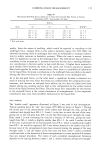
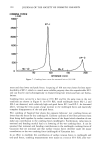
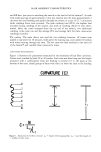
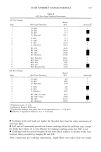
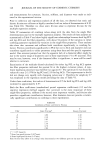
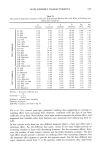
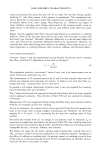
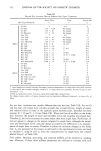
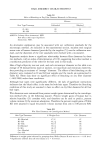
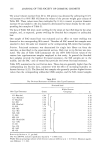
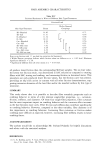
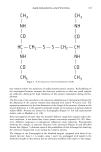
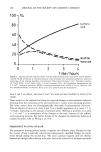
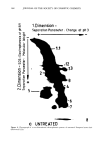
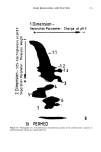
HAIR BLEACHING AND WAVING 163 Table II Changes in the Amino Acid Composition of the Melanoprotein (tool%) After Alkaline Bleaching for Different Times Bleached Melanin Residues Untreated Time of Bleaching Melanin 5' 10' 15' Decreasing.' LYS 7.6 7.7 6.7 6.4 HIS 2.5 2.6 2.2 2.2 ARG 15.8 14.4 12.9 12.0 PHE 4.0 3.2 3.1 3.1 (CYS)2 3.1 2.5 2.2 1.3 Increasing.' CYSO3H 0.5 1.9 2.2 4.5 ASP 6.1 6.5 6.9 7.1 GLU 6.6 7.1 7.7 8.0 VAL 4.6 4.7 5.2 5.2 ORN 0 0 0.2 0.2 Unchanged THR, SER, PRO, GLY, ALA, MET, ILE, LEU, TYR Protein content in % 23.1 22.0 18.3 18.2 Bleaching conditions: solution of 1% H202, adjusted to pH 10 with ammonia, room temperature mel- anin:liquor ratio/1 g:100 ml (3). This scheme suggests that larger amounts of cysteic acid than actually present would be determined by amino acid analysis following conventional acid hydrolysis. An indirect method for demonstrating the presence of cystine oxides has been developed in our laboratories (13). It compares the cysteic acid levels in hydrolysates prepared with and without the addition of thioglycollic acid as reducing agent. The "true" values in Table Ill obtained by hydrolyzing in the presence of thioglycol!ic acid represent the true amount of cysteic acid in hair. They are obviously smaller than those of comparable samples obtained after hydrolysis without thioglycollic acid, and these differences in cysteic acid content are explained as being due to the presence of cystine oxides. Although this method is an approximation, it nevertheless allows a routine check for the determination of cystine oxides in keratins. Investigations concerning the reaction mechanisms of cystine oxides were carried out at DWI on a model substance by Schumacher-Hamedat (14), using N,N'-bisacetyl-L-cys- tine-bismethylamide (ACM) because of the relative stability of its oxides (Figure 3). By application of high performance thin layer chromatography for the separation of the reaction products after peroxide bleaching, Schumacher-Hamedat (14) found that even during treatments at pH 9.5, cystine monoxides are formed (Figure 4). These findings supplement earlier results based on acidic treatments (15). Since the stability of par- tially oxidized cystine-containing peptides increases with molecular weight, an op- timum stability for protein-combined cystine oxides in human hair can be assumed.
Purchased for the exclusive use of nofirst nolast (unknown)
From: SCC Media Library & Resource Center (library.scconline.org)