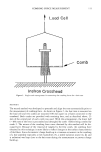
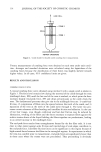
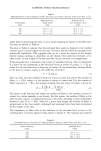
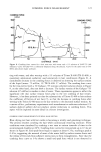
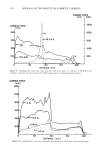
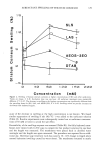
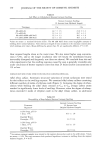
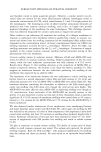
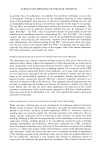
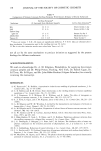
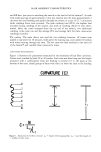
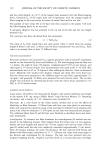
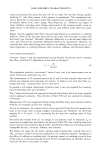
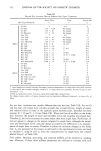
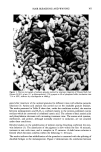
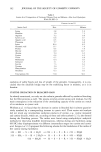
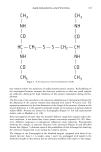
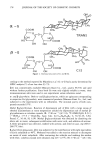
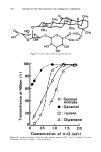
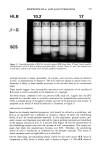
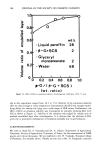
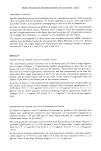
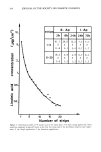
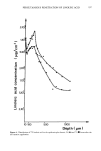
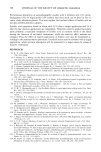
COMBING FORCE MEASUREMENT 113 Lood Cell Comb Instron Crosshead Figure 1. Single-comb arrangement for measuring the combing forces for a hair tress. METHOD II The second method was developed to precomb and align the tress automatically prior to the measurement of combing force. As shown in Figure 2, the hair tress is mounted on the load cell and two combs are mounted 100 mm apart on a frame connected to the crosshead. Both combs are provided with retaining bars, and as described above, 25 mm of the central part of each comb was used. With this arrangement, the lower half (--100 mm) of the tress is precombed and detangled by comb 1 before being combed by comb 2. The nature of the combing force curve obtained by this method will be dis- cussed later. Because of the removal of tangles by the first comb, the combing force obtained by this technique is more likely to reflect changes in the surface characteristics of the fibers. Since electrostatic charge build-up is a kommon occurrence in the combing of a hair assembly especially at low humidities (5), a sealed radiation source (c•, [3, and 'y radiation) was kept close to the hair tress during the measurement to prevent charge build-up.

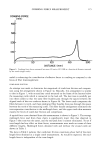
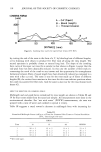
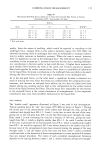
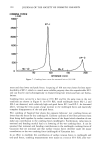
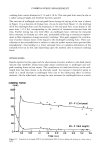
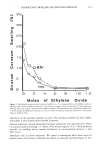
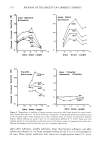
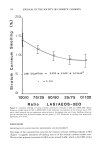
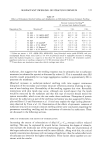
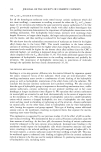
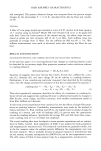
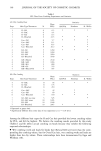
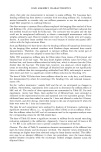
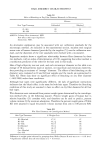
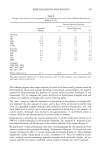
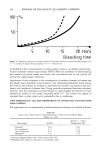
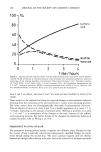
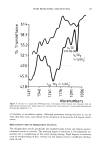
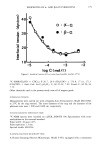
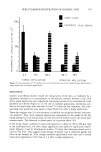
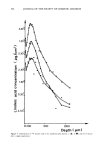
114 JOURNAL OF THE SOCIETY OF COSMETIC CHEMISTS LOAD CELL I COMB 2 i COMB INSTRON CROSSHEAD Figure 2. Comb holder for double-comb combing force measurements. Twenty measurements of combing force were obtained on each tress under each condi- tion. Averages and standard deviations were calculated using the logarithms of the combing forces because the distribution of these forces was slightly skewed towards higher values. In all cases, 95% confidence limits are given. RESULTS AND DISCUSSION COMBING FORCE CURVES A typical combing force curve obtained using method I with a single comb is shown in Figure 3. The force level remains low during the traversal of the comb through the tress (midlength force, ML) until the free end of the tress is reached, at which point the force increases sharply (end-peak force, EP) and drops precipitously as the comb clears the tress. The fundamental processes that give rise to the midlength force are: 1) comb-hair friction, 2) compression of fibers into the spaces between the teeth of the comb, and 3) separation of the tress as the teeth of the comb move through it. The latter two pro- cesses contain elements of fiber bending and interfiber friction and adhesion. In the case of wet hair tresses, even though comb-hair and hair-hair friction may be reduced by lubrication, swelling of the fibers and the forces necessary to separate fibers against the surface tension forces of the liquid holding the fibers together can predominate, leading to an overall increase in the midlength force. The end-peak force results from entanglements formed by the free fiber ends. It is not clear to what extent against-scale friction and interlocking of scale edges contribute to the end-peak force. Interfiber friction forces can be significant in this region because of high normal forces between the fibers in the entangled regions. In experiments in which the tress was combed prior to measurement, end-peak forces are significantly lower than in those cases where the tresses were not precombed. Thus precombing is obviously
Purchased for the exclusive use of nofirst nolast (unknown)
From: SCC Media Library & Resource Center (library.scconline.org)