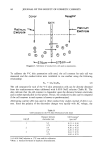
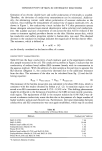
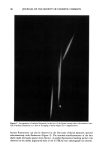
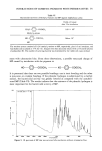
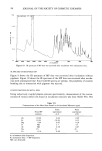
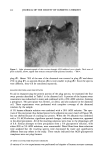
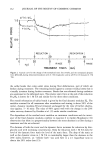
80 JOURNAL OF THE SOCIETY OF COSMETIC CHEMISTS Figure 2. Incorporation of sodium fluorescein in the hair of the Syrian hamster after subcutaneous injec- tion of sodium fluorescein at a dose of 30 mg/kg of body weight (25 x magnification). Intense fluorescence can also be observed in the thin hairs of Syrian hamsters injected subcutaneously with fluorescein (Figure 2). The minimal autofluorescence of the hair shafts made the bands appear more distinct. A similar fluorescence banding pattern was observed in the darkly pigmented hairs of the C57BL/6J mice (photograph not shown).

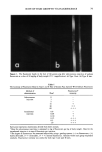
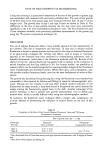
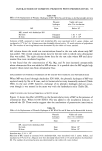
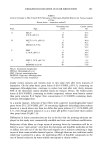
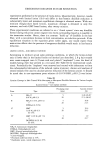
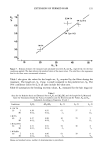
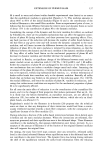
RATE OF HAIR GROWTH VIA FLUORESCENCE 81 Using this technique, a quantitative assessment of the rate of hair growth in guinea pigs was undertaken and compared with previously published data. The rates of hair growth of 40 hairs from seven male guinea pigs were measured between days 10 and 15 of the anagen cycle. The growth rates of type I and type II hairs are shown in Table II. The differences in the rate of hair growth between the two hair types were statistically significant at the 0.01 level of probability (Student's t-test). The data obtained for type II hair compares favorably with previously published measurements in the guinea pig using the 35S-cystine incorporation technique (4). DISCUSSION The use of sodium fluorescein offers a more suitable approach for the measurement of hair growth. This dye is inexpensive and non-toxic. In man and in animals sodium fluorescein is bound to plasma proteins and excreted in the urine as unbound fluorescein or its glucoronide conjugates (8). Adverse side effects, such as nausea or vomiting, reported in the literature have been attributed to contaminating substances, such as dimethyl formamide, rather than to the fluorescein molecule itself (8). Because of the absence of toxicity, sodium fluorescein has gained wide acceptance in the evaluation of retinal disorders and skin flap viability (9, 10). For human studies, the possibility of systemic effects can be avoided altogether by injecting smaller dosages of the fluorescent tracer intradermally into the follicle milieu. While other dyes, such as rhodamine, may also produce similar fluorescent bands, none has the same background of safety as fluo- rescein. The growth rate determined for guinea pig hair using the fluorescein tracer method was comparable to that reported by Jackson and Ebling (4) using the radioautographic tech- nique. Because the dye remains in the hair shaft without marked reduction of the fluorescence for many months, a long-term record of the growth rate can be obtained by simply storing the fluorescently tagged hairs in the dark. Another advantage of the present technique is that it permits hair growth measurements even in darkly pig- mented hairs, which is usually difficult when using the radioautographic method. In summary, the fluorescein tracer technique offers a simple, safe, inexpensive, yet accurate method of determining the influence of various factors on the rate of hair growth. Table II Comparison of the Rate of Hair Growth Between Fluorescein Tracer and 35S-Cystine Incorporation Techniques Rate of growth (mm day-x +_ SE) Guinea pig Fluorescein 35S-Cystineb hair type tracer technique a incorporation method Type I 0.52 +- 0.03 -- Type II 0.66 -+ 0.07 0.61 + 0.01 a Data determined from 40 hairs from seven guinea pigs injected subcutaneously with 30 mg/kg of fluores- cein. b Data derived from Jackson and Ebling (4).
Purchased for the exclusive use of nofirst nolast (unknown)
From: SCC Media Library & Resource Center (library.scconline.org)