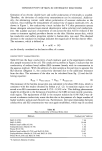
98 JOURNAL OF THE SOCIETY OF COSMETIC CHEMISTS REFERENCES (1) C. W. Bruch, Cosmetics: Sterility vs. microbial control, American Perfumer and Cosmetics, 86, 45-50 (April 1971). (2) M. S. Parker, Microbiologically acceptable cosmetic, American Perfumer and Cosmetics, 86, 35-38 (December' 1971). (3) I. R. Gucklhorn, Cosmetic microbiology, Manufacturing Chemist and Aerosol News, 23- 35, (December 1968). (4) R. A. Anderson and Clara E. Chow, The distribution and activity of benzoic acid in some emulsified systems, J. Soc. Cosmet. Chem., 18, 207-214 (1966). (5) D. Coates and G. Richardson, Relationships between estimates of binding of antimicrobial agents by macromolecules, based on physiochemical and microbiological data: Benzoic acid and a nonionic surfactant, J. Appl. Bacteriol., 36, 257-262 (1973). (6) Seymour M. Blaug and Sayed S. Ahsan, Interaction of parabens with nonionic macromolecules, J. Pharm. Sciences, 50, 441-443 (1961). (7) R. T. Yousef, M. A. EI-Nakeeb and Suzette Salama, Effect of some pharmaceutical materials on the bactericidal activities of preservatives, Cand. J. of Pharm. Sci., 8, 54-56 (1973). (8) A. Kimura, Unpublished. (9) D. N. Entrekin, Relation of pH to preservative effectiveness, J. Pharm. Sci., 50, 743-746 (1961).

j. Soc. Cosmet. Chem., 38, 99-107 (March/April 1987) Reduction of hair in the presence of exogenous disulfide LUDWIG SALCE, JOSEPH J. CINCOTTA, STEPHEN BARROW, ARNOLD RUBINSTEIN, and ERNEST J. KLEMM, Zotos International, Inc., Darien, CT 06820. Received January 7, 1986. Presented at the SCC Annual Scientific Meeting, New York, December 6, 1985. Synopsis Reduction studies on hair tresses were performed with commercially available ammonium thioglycolate and glyceryl monothioglycolate based perm lotions. Products formulated with exogenous disulfide were com- pared with those without added disulfide. Ratios of perming lotion to fiber weight were varied as were other experimental conditions. Reducing experiments were also performed on fiber bundles with am- monium thioglycolate solutions containing dithiodiglycolic acid at concentrations ranging up to 1.0 N. Quantitative results indicate that exogenous disulfide decreases the rate as well as limits the extent of hair fiber reduction. This effect is most marked under immersion conditions. Immersion experiments also show the rate of reduction to be inversely related to the concentration of added disulfide. While the effect is diminished with lower perm lotion-to-hair ratios, corresponding to practical waving conditions, this effect is still analytically evident. Thus the potential for over processing is reduced when exogenous disulfide is formulated into perming lotions. Both ammonium thioglycolate and glyceryl monothioglycolate based perms, containing added disulfide, behave in a similar manner. The effect of exogenous disulfide in permanent-waving lotions appears to be consistent with the equilib- rium nature of the keratin-mercaptan reaction. Excess lotion with exogenous disulfide produces a mass-ac- tion effect that moves the reaction to lower levels of keratin cystine reduction in the fiber. INTRODUCTION Approximately thirty years ago several patents were issued (1-3) describing advantages of waving hair with an aqueous mixture of a water-soluble mercaptan containing a water-soluble disulfide, over a pH range of 8.5 to 10. Formulations outlined in these patents were referred to as "effectively waving hair without imparting undesirable damage thereto." In addition, these perming lotions reportedly allowed greater flexi- bility in processing time while minimizing the possibility of overprocessing which is responsible for brittle, porous, dry, and unmanageable hair fibers. A more recent and novel utilization of disulfide for protecting hair during perming has been described in a patent issued in 1981 (4). This patent claims a "wrapping" composition, containing disulfide, that can be used to permanent wave "a head of hair having fibers of vastly diverse conditions intermixed throughout the head of hair." Although many commercially available waving lotions have utilized these concepts, 99
Purchased for the exclusive use of nofirst nolast (unknown)
From: SCC Media Library & Resource Center (library.scconline.org)