J. Soc. Cosmet. Chem., 38, 125-140 (March/April 1987) Extensional properties of human hair and permanent waving F.-J. WORTMAN and I. SOUREN, Deutsches Wollforschungsinstitut, Veltmanplatz 8, D-51 Aachen, West Germany. Received November 21, 1986. Synopsis The mechanical properties of hair fibers in extension which, from an "engineering" point of view, are expected to control the set imparted to a hair fiber during waving were investigated. An experimental method that combined static and dynamic testing was used to assess to what extent the extensional moduli can be used to follow the course of a treatment and to predict its results. The calculations for fiber recovery were based on linear viscoelastic theory as expressed by Denby's equation and compared to the bending set measured for fiber loops. Assessment of the results on the basis of the two-phase model for hair indicates that reduction mainly affects the properties of the continuous, o•-helical filaments (phase C) in the hair fiber, while the properties of the matrix phase (phase M) are largely unchanged unless severe conditions (i.e., 1 M thioglycolic acid, pH 9) are applied. No length increase was acquired by the fibers during extension testing, but some cases of length contraction were observed on release. The recovery observed for the fiber loops was in all cases smaller than the recovery expected from the change of the extensional moduli. This systematic deviation with theory is attributed to a non-uniform degree of reduction and modulus change over the fiber cross-section. INTRODUCTION A wealth of general information exists on how satisfactory permanent set in keratins, e.g., set in wool fabrics or permanent waves in human hair, can be efficiently gener- ated. The chemistry of setting processes and the changes in the chemical and physical properties of wool and hair with treatment have been studied in great detail and were reviewed for wool by Maclaren et al. (1) and for human hair by Gershon et al. (2) and by Robbins (3). In contrast, there seems to be a less detailed knowledge of the fundamental "engi- neering" mechanics of the formation of chemical set of extensional or bending deforma- tions, of their stabilization, and of the physical parameters controlling the set of a hair curl. This, despite the obvious fact that a wave can only be formed by the application of chemicals or heat and the deformation desired. Concentrating on one special type of set, namely the permanent waving of human hair, which is essentially the chemical set of a bending deformation, a study was undertaken to investigate those mechanical properties of hair fibers that are expected to control the set imparted to a hair fiber during a waving process. 125

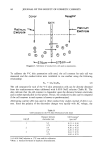
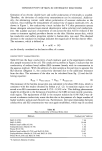
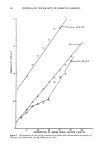
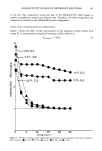
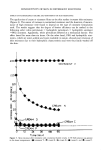
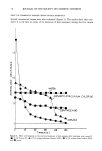
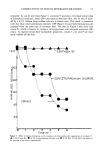
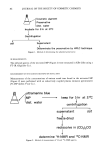
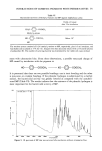
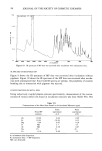
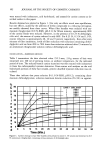
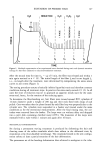
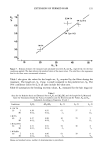
126 JOURNAL OF THE SOCIETY OF COSMETIC CHEMISTS The experimental procedure was developed on the basis of the procedures described by Tobolsky (4), Eriemann (5), and by de Jong (6), and combined with a method for the data evaluation to provide a feasible method for the detailed investigation and to some extent for the prediction of the efficacy of a waving system. EXPERIMENTAL All experiments were carried out on a standard sample of chemically untreated Euro- pean hair. All stress-strain and relaxation experiments were performed with an Instron tensile tester in a temperature controlled room (20øC). To perform the stress-strain measurements, a hair fiber (approx. 12 cm) was mounted as a loop of 50-mm length. The ends of the fiber were clamped in the lower jaw that was mounted on the base plate of the machine. The fiber was passed over a 2-mm diameter stainless steel hook connected to the load cell mounted in the crosshead of the Instron tester. The crosshead speed for all experiments was 10 mm/min, equivalent to 20% strain/min. Prior to the actual experiments the stress-strain diagram in water (20øC) of every hair was determined. After the stress-strain measurement the fibers were released in water at 50øC for one hour to restore their original properties and then stored at 65% RH/20øC for later use. Only fibers showing the "normal" stress-strain curve expected for a keratin fiber (3) were considered as undamaged and were used for further testing. Fibers exhibiting a pronounced yield point or a negative slope in the yield region were discarded. For the dynamic/static test the fiber loop was immersed in water and a small static strain of about 0.5% was applied. This strain lies within the "Hookean" (½ 2%) as well as within the linear viscoelastic (½ 1%) stress-strain region of the fiber. After leaving the fiber in water to relax for about 20 minutes to allow the stress level in the fiber to closely approach its equilibrium value, an additional strain pulse of 0.2% was applied intermittently every minute. The procedure continued for about another 5 minutes in water. Then the treatment of the fiber, consisting of the treatment sequence: reduction/rinse/reoxidation/rinse, was started. Figure 1 gives an idealized representa- tion of the experimental curves and illustrates the definitions of the variables as used below. The following setting treatments were applied: 0.3 M TA: thioglycolic acid, 0.3 M, pH 9, 20 rain reduction, 20øC. 1 M TA: thioglycolic acid, 1 M, pH 9, 20 rain reduction, 20øC. 1 M Cys-HCI: cystein hydrochloride, 1 M, pH 8, 40 min reduction, 20øC. 1 M Sulfite: sodium sulfite, 1 M, pH 6.4, 40 min reduction, 20øC. The pH of the solutions was adjusted either with ammonia or hydrochloric acid. The solutions were applied by immersing the strained fiber for time (t 2 - t•) (Figure 1) in a beaker containing 200 ml of the appropriate reductive solution that was contin- uously stirred. The first rinse for time (t 3 - t2) lasted 25 minutes and consisted of five consecutive changes of distilled water. For reoxidation the fiber was immersed in 200 ml of 2.3% H202 solution at neutral pH for time (t 4 -- t3) , which was 20 minutes.
Purchased for the exclusive use of nofirst nolast (unknown)
From: SCC Media Library & Resource Center (library.scconline.org)