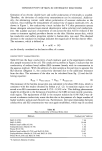
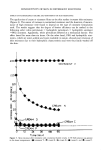
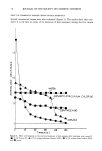
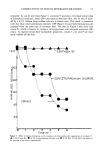
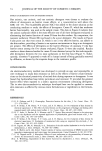
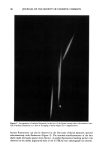
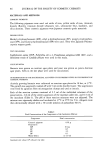
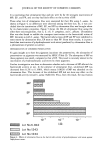
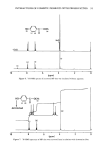
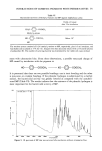
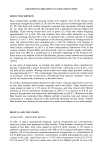
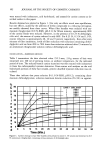
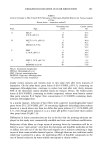
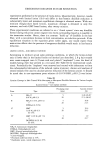
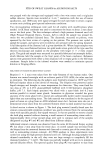
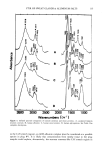
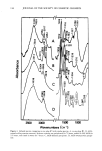
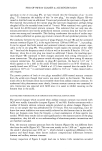
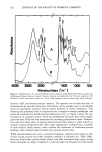
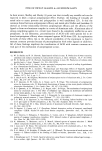
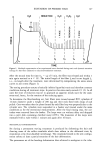
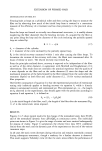
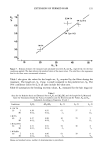
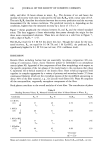
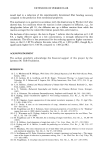
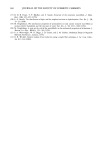
92 JOURNAL OF THE SOCIETY OF COSMETIC CHEMISTS HO(e-'• COOCH3 (b) (d) (f) (a) (b) (f)(e) (d) (c) 1•0 1•0 1{50 8'0 •0 (ppm) (a) TMS go 6 Figure 8. •3C-NMR spectrum of recovered MP that was incubated with ultramarine blue. The next investigation was done to determine whether or not the disappearance of the phenolic hydrogen of MP would occur in the presence of other pigments. Disappearance of the phenolic hydrogen was also observed in the presence of titanium dioxide (A), titanium dioxide (R), and talc (Table V). Consistent with this change, it was found that the bactericidal activity of MP was decreased. In the cases of kaolinite and silica alu- mina, however, there was no disappearance of the phenolic hydrogen or loss of bacteri- cidal activity of MP. When BP was used in place of MP under the same experimental conditions, there was no disappearance of the phenolic hydrogen and no loss of bactericidal activity of BP with all the pigments used. On the basis of these NMR observations, it is assumed that the phenolic hydrogen of MP changed, but surroundings of the phenolic carbon were not changed by the treat- Table V Effects of Pigments on the Phenolic Hydrogen Signals and Bactericidal Activities of MP and BP MP BP Phenolic Phenolic hydrogen ID hydrogen ID Titanium dioxide (R) -- 10- 3 + 10- o Titanium dioxide (A) -- 10 -3 • 10 -2 q- 10 -ø Talc 10 -5 • 10 -4 q- 10 -ø Ultramarine blue -- 10- 5 + 10- 0 Kaolinite q- 10-• • 10 -ø + 10 -ø Silica alumina + 10 -ø + 10 -ø +: exist. -: disappear.

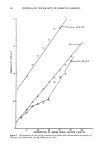
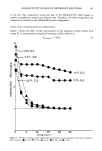
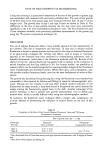
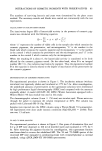
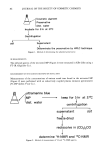
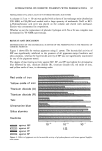
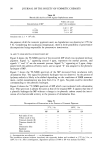
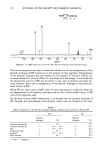
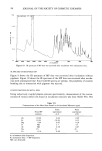
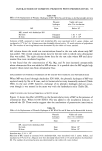
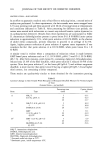
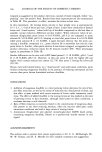
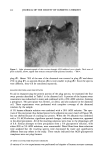
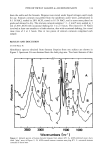
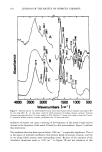
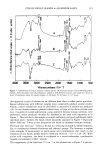
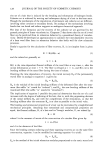
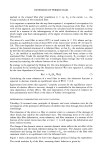
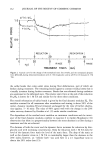
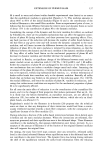
INTERACTIONS OF COSMETIC PIGMENTS WITH PRESERVATIVES 93 Table VI Bactericidal Activities of Methyl p-Anisate and MP Against Staphylococcus aereus Viable cell count after 5-hr incubation CH30 -O- COOCH3 Methyl p-anisate 1.60 x 10⁸ HO -• COOCH 3 MP Below 103 The reaction system consisted of 0.2% methyl p-anisate or MP, respectively, plus 0.5 ml inoculum, and was shaken and incubated at 37øC for 5 hr. Aliquots were then decimally diluted with a 1% sterile solution of polysorbate 80. The number of surviving bacteria was determined by the viable cell count method. ment with ultramarine blue. From these observations, a possible structural change of MP caused by incubation with the pigment is: HO 0 COOCH3 ) xo•O COOCH3 It is presumed that there are two possible bondings: one is ionic bonding and the other is non-ionic or covalent bonding. If the phenolic hydrogen is substituted by a methyl radical, the bactericidal activity was greatly lowered as compared with the unsubsti- tuted MP (Table VI). The results indicate that the existence of the phenolic hydrogen is most important for the bactericidal activity of MP. 150 J I B7.5 WA VENdMSFR$ 0 Figure 9. IR spectrum of MP that was recovered after incubation without ultramarine blue.
Purchased for the exclusive use of nofirst nolast (unknown)
From: SCC Media Library & Resource Center (library.scconline.org)