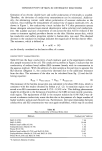
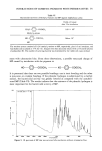
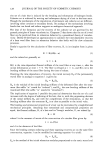
100 JOURNAL OF THE SOCIETY OF COSMETIC CHEMISTS there is little quantitative chemical evidence appearing in the scientific literature that supports the phenomena reported in the patents mentioned above. This paper provides analytical data on the rate and extent of the reaction of hair fibers with mercaptan waving solutions formulated with and without added disulfide. Protective action of exogenous disulfide can best be explained if one considers keratin reduction proceeding through a two-step equilibrium reaction, often cited in the litera- ture (5), and as indicated in Equations I and II. I K-SS-K + RSH • K-SS-R + KSH II K-SS-R + RSH •---R-SS-R + KSH Overall the reaction can be summarized by Equation III, III K-SS-K + 2RSH •,• R-SS-R + 2 KSH and the equilibrium constant can be expressed by: (R-SS-R) (KSH) 2 K= (K-SS-K) (RSH) 2 Certainly, this is an oversimplification of the complex chemical interactions occurring in a system constantly changing from hydrophobic to hydrophilic, during keratin re- duction. That is, when the hydrophobic disulfide is reduced, a more hydrophilic sulf- hydryl group is formed. The latter is capable of ionization, especially under alkaline conditions. Rates of diffusion, complex heterogenous reactions, and true equilibria are ignored. However, as we shall see later in this paper, most of the data will be compara- tive in nature (i.e., thiol perming lotions of approximately similar concentrations with and without dithio compounds) and, therefore, any errors caused by this simplified approach should remain essentially constant throughout. Allowing for these assumptions, the Le Chateljer-Brown principle, at equilibrium, would predict that with exogenous disulfide (R-SS-R) the equilibrium reaction shown above would be displaced to the left so as to effectively decrease the formation of re- duced "keratin (KSH)." We have attempted to determine if addition of exogenous disulfide does indeed decrease reduction of keratin disulfide during hair waving. Several different experimental conditions were explored and the results obtained are presented. METHOD AND EQUIPMENT Virgin hair from a single donor, obtained from R. Parrino Hair Goods, Commack, New York, was used throughout this study. Load extensions were made on an Instron Model 1122 tensile tester interfaced with a Microcon II. Reduced hair strands were reacted with sodium iodoacetate and hydrolyzed by a modification described in the literature (6). The hydrolysis procedure used during this study differed from that ap- pearing in the literature in that an 18-hour atmospheric reflux, in 6 N HC1, was substituted for a sealed-glass-tube acid hydrolysis. Amino acid analyses of hair keratin hydrolysates were run on a Beckman Amino Acid Analyzer, Model ! 18CL, interfaced with a Perkin Elmer data station Model 3600. The methodology employed was recom- mended by Beckman in their application notes.

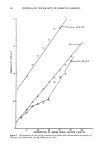
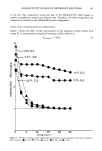
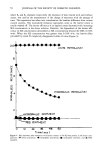
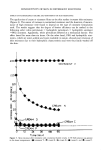
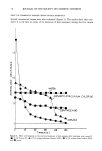
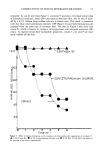
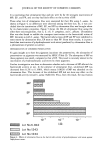
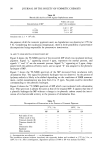
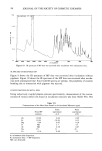
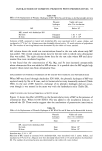
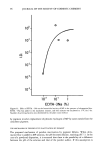
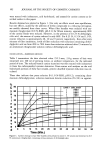
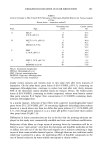
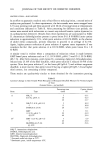
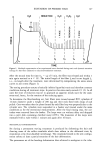
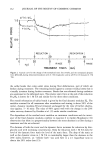
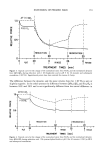
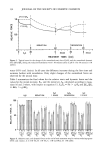
EXOGENOUS DISULFIDE IN HAIR REDUCTION 101 REDUCTION METHOD Four commercially available perming lotions were studied. Two of the lotions were ammonium thioglycolate based (A, B) and two were glyceryl monothioglycolate based (C, D). One from each of these categories contained only mercaptan reducing reagent (A, C), while the other two (B, D) contained both a mercaptan reducing reagent and disulfide. These waving lotions were used to perm 152.5-mm hair tresses weighing approximately 2.0 g each. The hair swatches were then either immersed in a large excess of perming solution (50:1 w/w) or saturated with a limited amount of waving lotion (5:1 or 0.7:1 w/w). After exposure to the reducing medium for varying periods of time, the reduced fibers were immersed into a cold 1% iodoacetic acid solution to prevent further reduction from occurring. The tresses were immediately reacted further with sodium iodoacetate at pH 8.3 to form carboxymethyl derivatives of all of the cysteine residues. Treated fibers were then rinsed, dried to constant weight, and hydro- lyzed with 6 N HCI by a modification of a procedure appearing in the literature (6). From amino acid analyses of the acid hydrolysate, percent cystine cleaved was calculated by comparing the value of cystine obtained after reduction with that of an unreduced control. In one series of experiments, an attempt was made to duplicate salon conditions by placing ("implanting") several previously wound rods, containing 2.0 g of hair, onto the head of live models. Waving lotion-to-hair ratio under these practical conditions was approximately 0.7:1. The cosmetologist then proceeded to perm the model's head in accordance with the use directions. Periodically these reduced "implants" were re- moved and treated with iodoacetate, as described above. To further substantiate results obtained on hair tresses, reducing experiments were run on hair fiber bundles. Each bundle contained twelve hair fibers. These bundles were stress relaxed in water at 1.5% strain, for 30 minutes, and then treated with 500-ml solutions of 0.8 N ammonium thioglycolate at pH-9.2 or a mixture of 0.8 N am- monium thioglycolate and ammonium dithiodiglycolate at pH-9.2. Reduction of each fiber bundle was terminated after different periods of reaction time and treated with iodoacetate in a manner identical to that previously described for hair tresses. Treated fiber bundles were hydrolyzed and subjected to amino acid analysis in the usual manner. RESULTS AND DISCUSSION EXCESS LOTION--FIBER BUNDLE METHOD In order to reduce experimental variations, such as temperature and concentrations, reduction studies were performed on fiber bundles. These bundles, consisting of twelve strands of hair fiber, were stress relaxed in water for thirty minutes (1.5% strain) at ambient temperature and then reduced with 500 ml of an aqueous mercaptan reducing solution. All of the solutions contained ammonium thioglycolate at a concentration of 0.8 N-RSH and pH-9.2. However, concentration of added dithiodiglycolic acid, cal- culated as the acid, varied from zero to 1.0 N with intermediate levels of 0. 125 N, 0.25 N and 0.5 N. After the strands were reduced for different periods of time, they
Purchased for the exclusive use of nofirst nolast (unknown)
From: SCC Media Library & Resource Center (library.scconline.org)