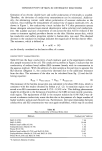
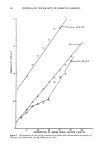
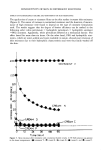
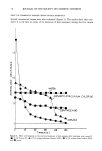
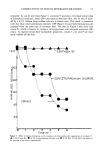
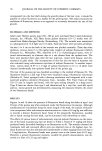
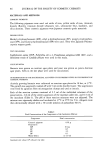
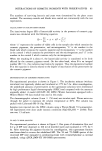
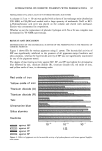
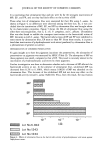
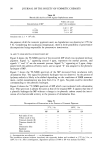
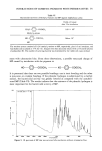
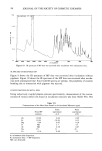
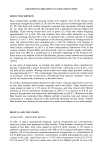
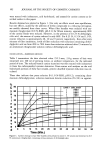
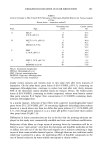
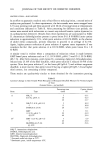
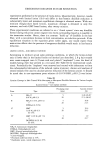
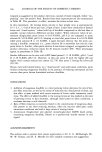
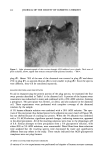
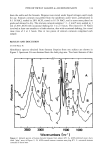
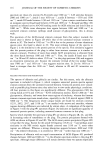
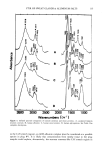
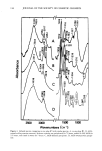
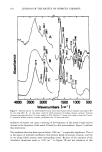
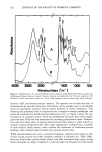
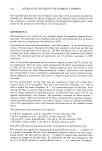
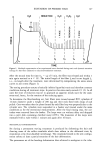
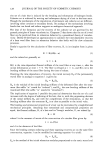
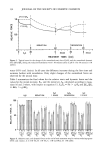
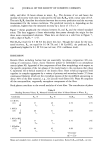
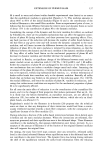
88 JOURNAL OF THE SOCIETY OF COSMETIC CHEMISTS It is interesting that ultramarine blue and talc were by far the strongest inactivators of MP, EP, and PP, and yet they had little effect on the activity of BP. Three other lots of ultramarine blue were examined for their IDs using S. aureus. As shown in Figure 4, no differences were observed among the three lots. So, it was con- cluded that the inactivation of MP, EP, and PP by ultramarine blue was brought about by its characteristic properties. Figure 5 shows the IDs of ultramarine blue using the other three microorganisms, that is, E. coli, P. aeruginosa, and C. albicans. Ultramarine blue was also found to exhibit the strongest inactivation to the bactericidal action of MP, the same as with S. aureus. The bactericidal actions of EP and PP were inhibited to some extent by ultramarine blue, EP more so than PP. From these results, it is postu- lated that inactivation of p-hydroxybenzoic acid esters (parabens) by ultramarine blue is a phenomenon of general occurrence. DETERMINATION OF ADSORBED PRESERVATIVES To gain insight as to how the pigments inactivate the preservatives, the adsorption of preservatives on pigments was measured by HPLC (Table II). The adsorption of MP on these pigments was small, compared to that of EP. This result is inversely related to the inactivation of p-hydroxybenzoic acid esters by these pigments. Further investigation was done to determine whether such a decrease of MP affected the bactericidal activity or not. In the presence of ultramarine blue, solubilized MP was decreased from 0.2% to 0. 198%, which means 0.002% of MP was adsorbed on the ultramarine blue. This decrease of the solubilized MP did not show any effect on the bactericidal activity toward S. aureus (Table III). Thus, from this result, the inactivation MP EP PP BP Lot No.K-842 Lot No.1243 Lot No.1234 .... ...........-.., -,•....-..-.:,., .. '.••• ::::::::::::::::::::::::::::::::::::::::::::::::::::::::::::::::::::::::::::::::::::::::: i ! ! i ! i 10 10-3 10 -1 I.D. Figure 4. Effects of ultramarine blue on the bactericidal activity of p-hydroxybenzoic acid esters against Staphylococcus aureus.

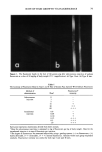
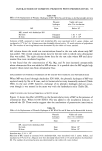
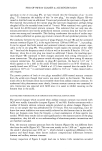
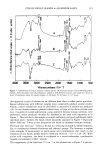
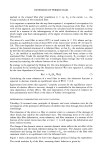
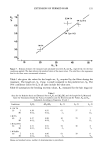
INTERACTIONS OF COSMETIC PIGMENTS WITH PRESERVATIVES 89 MP EP PP BP I •/ /•////////////////////•////.• :::::::::::::::::::::::::::::::::::::::::::::::::::::::::::::::::::::::::::::::::: ::::::::::::::::::::::::::::::::::::::::::::::::::::::::::::::::::::::::::::::::::::::::::: I I i i i i I 10 -• 10 -3 10 -• against EC. I.D. against PA. against CA. Figure 5. Effects of ultramarine blue on the bactericidal activity of p-hydroxybenzoic acid esters against three microorganisms. of p-hydroxybenzoic acid esters by ultramarine blue could hardly be explained by simple adsorption of preservative on the pigment. DECOMPOSITION OF P-HYDROXYBENZOIC ACID ESTERS BY COSMETIC PIGMENTS At 120øC for 1 hr, some of the pigments caused slight decomposition of MP and EP (Table IV). The degradation product was mainly p-hydroxybenzoic acid. However, in Table II Determination of Preservative Adsorption Quantity of adsorbed MP EP Red oxide of iron X X Yellow oxide of iron X C) Titanium dioxide (A) X A Titanium dioxide (R) X X Talc X X Ultramarine blue X C) Kaolinite x x Silica alumina X C) x: less than 5%. A: from 5% to 10%. C): more than 10%.
Purchased for the exclusive use of nofirst nolast (unknown)
From: SCC Media Library & Resource Center (library.scconline.org)