J. Soc. Cosmet. Chem., 38, 109-124 (March/April 1987) Infrared characterization of human sweat glands inhibited with aluminum chlorohydrate JOHN STRASSBURGER and DON W. COBLE, Gillette Research Institute, 1413 Research Boulevard, Rockville, MD 20850. Received October 3 O, 1986. Synopsis Sweat glands from human forearm were inhibited by application of aluminum chlorohydrate (ACH). Poral occlusions in the sweat glands were demonstrated, microdissected, and characterized by Fourier transform infrared spectroscopy. The occluded areas were composed of an aluminum-stratum corneum complex. In vitro treatment of stratum corneum was used to show ACH coordination to carboxylate groups. Ligand binding to nitrogen-containing groups was also indicated. The implication of the aluminum-keratin inter- action in the mechanism of antiperspirant action is discussed and a vital role is suggested. INTRODUCTION Of the various proposed mechanisms for aluminum salt-induced anhidrosis, one general hypothesis is the most widely accepted. Aluminum and other metallic salts that have antiperspirant activity are believed to form an obstruction or plug that blocks the flow of sweat within the eccrine sweat gland. The initial proponents of this so-called plug theory were Shelley and Horvath (1,2), who described hyper- and parakeratotic plugs within sweat ducts after application of aluminum (III) chloride. Later Shelley and Hurley (3) stated that "aluminum combines with the intraductal keratin fibrils, pro- ducing a functional closure, a supercontraction not apparent histologically. The fixed keratin remains as an obstructive block to the free egress of sweat . . ." Reller and Luedders (4) proposed that metal salts formed polymeric metal-hydroxide gels by the slow neutralization of acidic metallic salts in the sweat gland duct. This postulate was derived from their ability to correlate antiperspirant activity of a number of metallic salts with the plugging of millipore filters by neutralization with ammonia vapor. Holzle and Kligman (5) speculated that metal ions formed precipitating complexes with mucopolysaccharides, which damaged luminal epithelial cells and generated an obstructive conglomerate within the acrosyringium. While first rejecting the horny plug theory, they then implicated viable luminal cells as part of the obstruction, appar- ently as a secondary effect. They further stated that these cells subsequently died, sloughed into the lumen, and became part of the obstruction. More recently, Quatrale et al. (6), showed that eccrine sweat units treated with aluminum chlorohydrate (ACH) produced a ductal lumen completely filled with an electron-opaque amorphous mate- 109

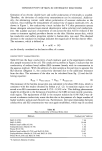
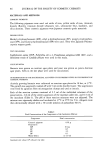
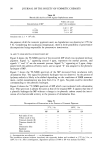
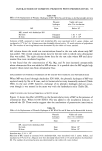
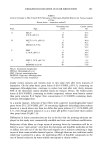
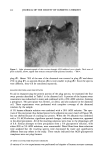
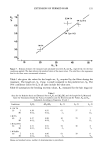
110 JOURNAL OF THE SOCIETY OF COSMETIC CHEMISTS rial. As others have reported (2,4), Quatrale et al. (7) also found that the site of action for ACH was primarily at the level of the stratum corneum compared to a deeper site for A1C13. The presence of aluminum at sites of pore blockage has been demonstrated (4-6), but additional chemical characterization of the inhibited lumen has been speculative at best. How and under what conditions precipitation is favored are factors that remain unclear. Characterizing the contents of an inhibited sweat duct is a first step in answering mech- anistic questions not only for aluminum salts but perhaps for all metal salt antiper- spirants. We have revealed and isolated these minute plug particulates from sweat glands of human forearm inhibited by ACH. With the high energy throughput of the FTIR spectrometer, a beam condenser, and a high pressure diamond anvil cell, we have been able to obtain infrared spectra of human biopsy plug material. We present new infor- mation on the nature of the area of sweat inhibition and hence what may be another significant factor in the mechanism of antiperspirant action. In addition, in vitro experiments were performed to find and characterize ACH-protein coordination sites and to aid in characterizing the in vivo plug spectra. Interactions were anticipated because AI sorption studies performed on guinea pig stratum corneum showed strong binding between these species as determined by bath depletion methods (8). EXPERIMENTAL MATERIALS Stratum corneum and sweat duct material (plugs) were obtained from full-thickness punch biopsies of human male forearm and axilla. For reference, infrared spectra were taken on four other human proteins which could conceivably be contained in a sweat duct. Three were obtained from U.S. Biochemicals (Cleveland, OH), while a fourth was isolated from the upper body (back and chest) perspiration of two thermally stressed males. The description of these proteins is given in Table I. Twenty percent aluminum chlorohydrate (ACH) solutions used for in vitro studies were diluted from 50% solutions (Reheis Chemicals, Phoenix, AZ, Batch #6085). This was a 5/6 basic ACH having an AI analysis of 12.35% w/w. Sodium chloride was A.C.S. certified reagent grade (Fisher Scientific Company, Fairlawn, N J). Fresh preparations of ACH were also made from a 50% solution (Westwood Chemical Company, Lot #PBC 03279). INSTRUMENTATION Infrared spectra were made on a Digilab FTS-10M Fourier transform infrared spectrom- Table I Proteins Used for FTIR Analysis 1. Glycoprotein, Fraction VI Human, Control No. 22777 2. ot-Globulins, Fraction IV Human, Control No. 12823 3. Albumin, Crystallized Human, Control No. 15153 4. Human Sweat--Centrifuged, filtered through 0.22 •xm Falcon sterile filter, dialyzed overnight at 3øC, and lyophilized to dryness
Purchased for the exclusive use of nofirst nolast (unknown)
From: SCC Media Library & Resource Center (library.scconline.org)