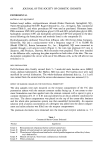
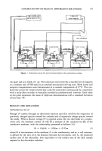
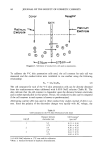
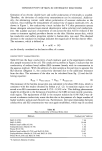
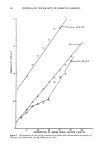
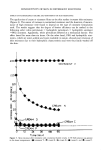
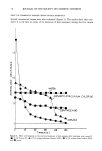
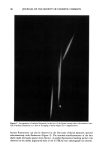
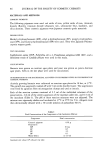
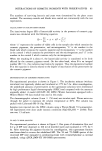
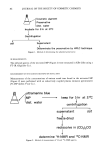
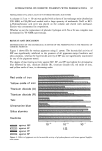
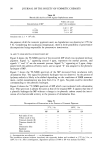
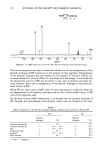
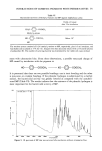
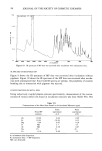
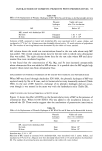
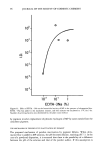
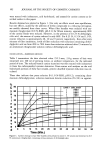
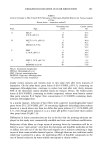
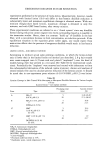
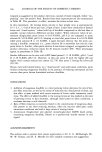
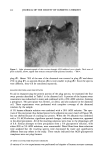
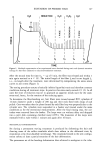
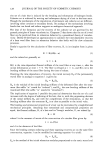
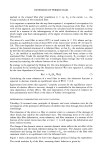
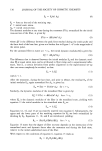
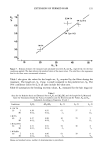
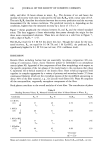
CONDUCTIVITY OF SKIN IN DETERGENT SOLUTIONS 67 formation of an electric double layer and surfce polarization of electrodes is avoided. Therefore, the deviation of conductivity measurements can be minimized. Addition- ally, the alternating current could induce polarization of nonionic molecules in the solution, thus enabling the measurement of conductivity of organic molecules (13). As shown in Figure 1, the conductivity circuit includes the V-C skin permeation system (donor detergent solution/cream-treated skin/receptor saline solution) and conductom- eter. The number and rate of movement of ions across the skin will be reduced if the cream or ointment applied provides a barrier on the skin. Hairless mouse skin, which has conductive and surface properties similar to human skin, was used. The observed decrease in the conductivity readings indicates the magnitude of the skin barrier effect. The resistance, which is defined as R = m/K = 1/G (3) can be directly correlated to the barrier effect of a cream. CONDUCTIVITY CHARACTERISTICS Table III lists the basic conductivity of each medium used in the experiments without skin sample mounted in the cell. The conductivity profiles in Figure 2 indicate that the conductivity of sodium lauryl sulfate (SLS) increases linearly with its concentration in the aqueous medium. With the addition of a skin sample as the partition to separate the SLS solution (Diagram 1), the conductivity decreases due to the additional resistance from the skin. The resistance of the skin can be calculated from Eq. (3) and the fol- lowing equation: Rtotal = Rdonor solution qt_ Rski n _•_ Rrecepto r soln (4) The resistance of the hairless mouse skin was calculated to be about 900 ohms, which is consistent with the results obtained by Serban et al. (2). A transition region was ob- served at an SLS concentration around 0.15%-0.30% w/w. This shifting phenomenon might be attributed to the formation of micelies at the CMC (critical micelie concentra- tion) region. The replacement of SLS in the receptor solution by 0.9% NaCI was ob- served to enhance conductivity across the skin due to the presence of a larger number of higher mobility sodium and chloride ions. Furthermore, the linear relationship between conductivity and SLS concentration was once again established, which may be ascribed Table III Basic Conductivity of Various Media Used Medium Conductivity a (mS/cm) NaC1 (0.45%) NaC1 (0.90%) Sodium lauryl sulfate (0.5%) Cetylpyridinium chloride (0.5 %) Tween 80 (0.5%) Sodium lauryl sulfate (0.25%) and NaC1 (0.45%) Cetylpyridinium chloride (0.25 %) and NaC1 (0.45 %) Tween 80 (0.25%) and NaC1 (0.45%) 7.66 2O.4O 1.32 1.04 0.03 10.67 9.96 7.72 represents Siemens (1/ohms).

68 JOURNAL OF THE SOCIETY OF COSMETIC CHEMISTS SL$/Skin / 0.9% NaCI • // 1.5 E ).. SLS/ Skin/SLS / ß ß 0.5 ,,•"•/ ß 0 I I I I I I 0.1 0.2 0.3 0.4 0.5 0.6 CONCENTRATION OF SODIUM LAURYL SULFATE [W,/W. %} Figure 2. The dependence of conductivity on sodium lauryl sulfate (SLS) concentration in the systems: (©) SLS alone, (&) SLS/skin/SLS, and (1•) SLS/skirf0.9% NaCI.
Purchased for the exclusive use of nofirst nolast (unknown)
From: SCC Media Library & Resource Center (library.scconline.org)