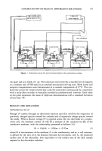
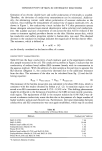
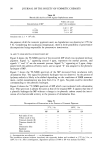
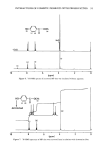
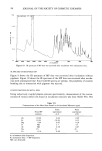
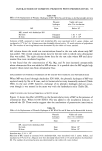
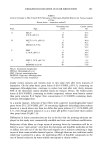
64 JOURNAL OF THE SOCIETY OF COSMETIC CHEMISTS EXPERIMENTAL MATERIAL AND EQUIPMENT Sodium lauryl sulfate, cetylpyridinium chloride (Fisher Chemicals, Springfield, NJ), Tween 80 (polysorbate 80 USP, Ruger Chemical Co., Inc., Irvington, NJ), commercial creams (Table I), and white petrolatum NF were used as purchased. Ointment bases: PEG ointment USP (40% polyethylene glycol 3350 and 60% polyethylene glycol 400), hydrophilic ointment USP, and hydrophilic petrolatum USP were prepared in the labo- ratory following the formulations and methods listed in the compendia (9). Hydrodynamically calibrated Valia-Chien diffusion cells (10) (Crown Glass Company, Somerville, NJ) and a conductometer with a frequency range of 73 to 50,000 Hz (Model CDM 83, Rainin Instrument Co., Inc., Ridgefield, NJ) were connected in parallel through a cell selector switch (Figure 1). Six wire-type platinum (0.5 mm in diameter, Alfa Products, Danvers, MA) electrodes were prepared. They were installed in the diffusion cells, replacing the glas s stopcocks on both sides of the skin. The con- ductometer completed the circuit with one of the diffusion cells, as the cell selector was switched to it. SKIN PREPARATION Full-thickness skin freshly excised from 5-7-week-old male hairless mice (HRS/J strain, Jackson Laboratories, Bar Harbor, ME) was used. The hairless mice were each sacrificed by cervical dislocation. The whole-thickness abdominal skin (ca. 3 x 3 cm 2) was excised from the animal and the excess subcutaneous tissue was removed (11). EFFECT OF BARRIER CREAMS ON THE ELECTRICAL PERMITIVITY The skin samples were each mounted on the receptor compartment of the V-C skin permeation system with the stratum corneum surface facing up. A test cream or oint- ment formulation was then applied onto the stratum corneum with a spacer to give a constant thickness of 0.15 - 0.01 mm and allowed to air dry at ambient conditions for one hour. The donor compartment was placed on the top of the cream-skin laminate and the whole skin permeation system was then assembled horizontally. An aqueous solution with a known concentration of a detergent was added into the donor compart- ment and saline solution was filled into the receptor compartment. The platinum electrodes were immersed into the donor and receptor solutions ca. 5.5 Table I Commercial Barrier Creams Evaluated Product Ingredients Cream C Cream D Cream N Cream P Cream V Beeswax/mineral oil/polyoxyethylene sorbital lanolin/water Mineral oil/water/cetearyl alc./glycerin/sodium lauryl sulfate Water/mineral oil/petrolatum/wax/lanolin alcohol/paraffin/magnesium sulfate/decyl oleate, octyl dodecanol/etc. Mineral oil/cetyl alc./water/stearic acid/potassium hydroxide White petrolatum

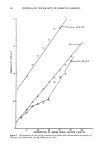
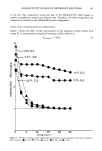
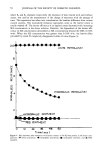
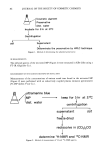
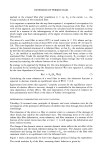
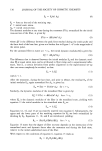
CONDUCTIVITY OF SKIN IN DETERGENT SOLUTIONS 65 I ToeMP. CONTROL UNIT [ C DM 8:3 {WATER BATH, 37'C) ½ONDUCTOMF'TER CELL SELECTOR IlL & I'lklJ•l [.LICl I• [IZT IlOO! Pt ATINU# •K N SKIN SKIN I CELL I -- CELL 2 __ CELL Figure 1. Laboratory setup for electroconductometric skin permeation studies. cm apart and at a depth of 1 cm. The solutions were stirred by a matched set of magnets at a constant rate of 600 rpm by an external syncronized driving unit. Both donor and receptor compartments were thermostated at a constant temperature of 37øC. The con- ductivity across the cream-treated skin could be monitored continuously by connection with a strip-chart recorder or manually recorded at predetermined intervals. Each value in the plots represents the mean of triplicate determinations with a standard deviation of less than 7%. RESULTS AND DISCUSSION EXPERIMENTAL SET-UP Passage of current through an electrolyte solution and skin involves the migration of positively charged species toward the cathode and of negatively charge species toward the anode. When a known voltage (V) is applied across the two electrodes in a conduc- tivity cell, the resultant current (I) will be a measure of the conductivity (K) of the conductive medium, with the relationship presented as follows (12): K = G(d/A) = (1/R)m = (I/V)m (1) where R is the resistance of the medium G is the conductance and m, a cell constant, is defined by the ratio of d, the distance between the electrodes, over A, the projected surface area of the electrodes, here equivalent to the surface area of the skin sample exposed to the electrolyte solution.
Purchased for the exclusive use of nofirst nolast (unknown)
From: SCC Media Library & Resource Center (library.scconline.org)