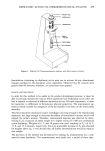
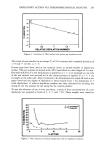
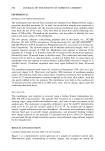
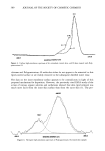
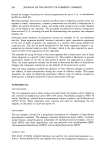
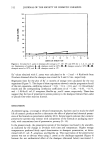
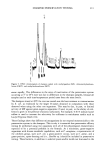
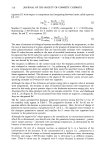
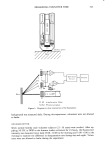
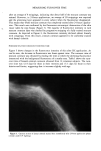
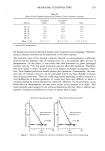
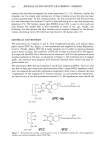
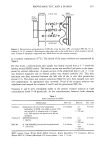
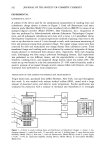
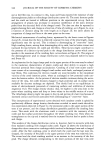
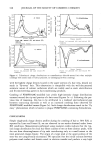
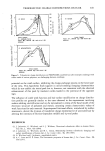
MEASURING TURNOVER TIME 323 --• F1 /Quartz glass Skin F2 I IS2 Fli12 Interference F,Iter Sl,S2 Photomultiplier Figure 1. Diagrams to show construction of the fiuorometer. I D•splay background) was measured daily. During this experiment, volunteers were not allowed to bathe. CIRCADIAN RHYTHM Seven normal healthy male volunteer subjects (21-36 years) were studied. After ap- plying 5% DC in WSP to the forearm (under occlusion) for 24 hours, the fluorescence intensity was measured twice daily (9:00- 10:00 in the morning and 5:00-6:00 in the evening) to examine the difference in desquamation rate during day and night. Volun- teers were not allowed to bathe during the experiment.

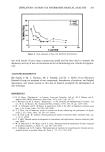
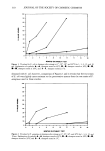
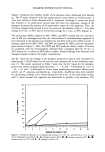
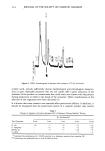
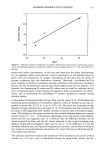
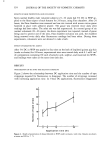
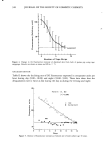
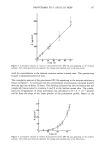
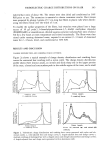
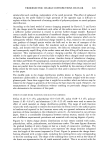
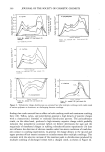
324 JOURNAL OF THE SOCIETY OF COSMETIC CHEMISTS EFFECTS OF SKIN PROTECTION AND OCCLUSION Seven normal healthy male volunteer subjects (21-36 years) had 5% DC in WSP ap- plied to the flexor aspect of each forearm for 24 hours, using Finn chambers. After 24 hours, the Finn chambers were removed and one site covered with woven cotton gauze fastened in place with adhesive plaster. The gauze was renewed twice daily after readings had been taken. The other site was left unprotected. In a second group of six normal volunteers (23-46 years), the above experiment was repeated instead of gauze being used to protect one of the sites, Finn chamber occlusion was used, the chamber being renewed twice daily after fluorescence readings had been taken. During these experiments, volunteers were not allowed to take a bath. EFFECT OF KERATOLYTIC AGENT After 5 % DC in WSP was applied to four sites on the back of depilated guinea pig skin (under occlusion) for 24 hours, experimental sites were treated daily with 0.1 ml/4 cm 2 of a preparation containing 6% each of salicylic acid, sulphur, and resorcinol (in WSP), and readings were taken at the same time each day. RESULTS PENETRATION OF DC INTO THE STRATUM CORNEUM Figure 2 shows the relationship between DC application time and the number of tape strippings required for fluorescence to disappear. The number of strippings increased with increasing application time. In 3-hour DC applications, fluorescence disappeared 25 20 "• lo -.,, .5 Z 0 I I I I 3 6 12 24 Application time (hr) Figure 2. Depth of penetration of dansyl chloride in WSP under occlusion, with time. Results are shown as mean and SD (n = 7).
Purchased for the exclusive use of nofirst nolast (unknown)
From: SCC Media Library & Resource Center (library.scconline.org)